
 By
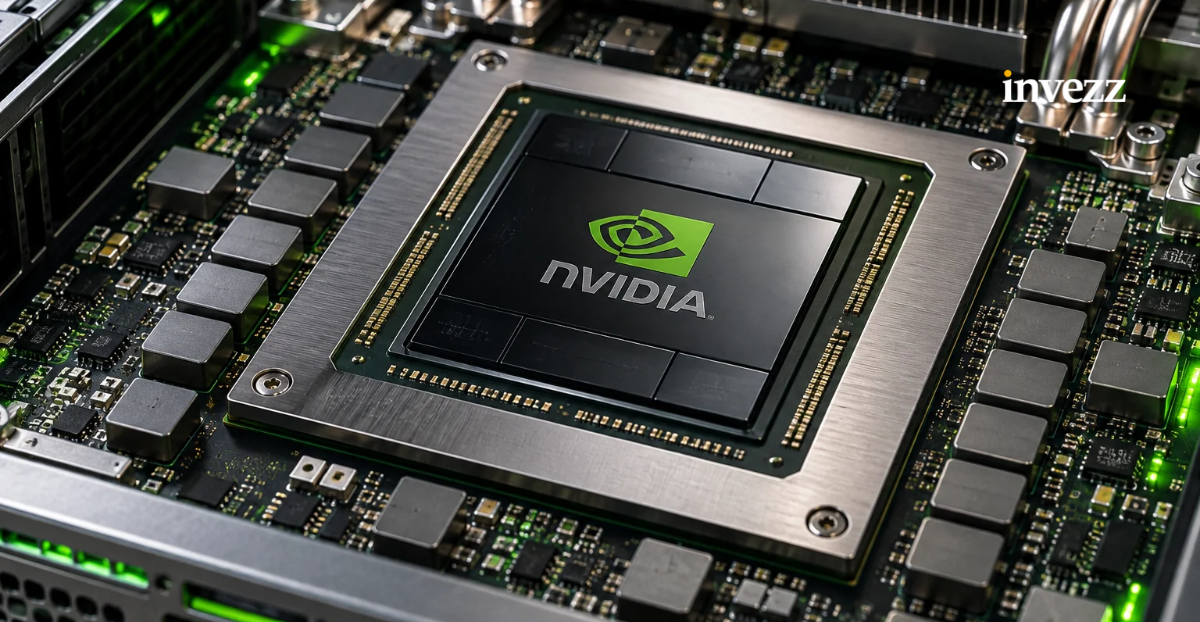
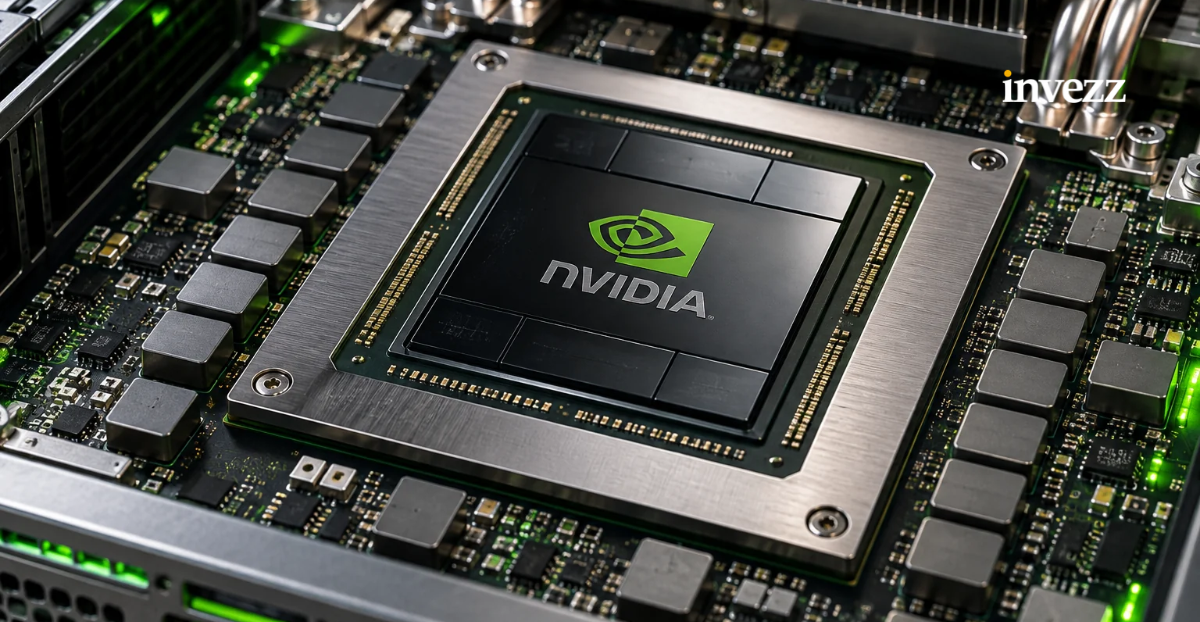
Nvidia has told its manufacturing partners to stop shipping servers to four Southeast Asian countries as the US steps up export controls aimed at preventing Chinese companies from accessing advanced artificial intelligence computing power, the Financial Times reported.
Manufacturing partners including Dell and Super Micro Computer, which package Nvidia’s processors into servers, have informed buyers in Malaysia, Singapore, Thailand and Indonesia that the chipmaker will not allow their orders to be shipped, according to three people familiar with the matter cited by the newspaper.
It remains unclear whether the suspension is temporary, as Nvidia and its partners work out how to comply with Washington’s latest export restrictions, the people said.
The development threatens to complicate Nvidia’s business in a region that has become an important gateway for Chinese AI developers seeking access to advanced US-made processors.
Washington has restricted direct exports of the most powerful Nvidia chips to China, prompting some companies to seek computing capacity through overseas cloud providers.
US tightens scrutiny of overseas data centres
The US Commerce Department introduced new rules last week to close loopholes that have allowed Chinese companies to access restricted computing power through data centres located outside China.
The crackdown came amid growing scrutiny of whether the Commerce Department has done enough to prevent sensitive American technology from reaching China following reports of Jensen Huang’s affair with Alice Huang of Megaspeed, a cloud provider under investigation for alleged chip-smuggling activity, who was suspected by US officials of also being a Chinese spy.
Earlier this week, the US Commerce Department added Singapore-based Megaspeed to its trade blacklist.
The measures impose new restrictions on shipments of advanced chips to countries including Malaysia, Singapore and Thailand, which have emerged as destinations for Chinese companies seeking computing capacity to train AI models.
They also introduce requirements for overseas data centres supplying “significant volumes of computing power” to companies headquartered in China.
Cloud providers have been given 90 days to obtain licences by demonstrating that their end users do not include restricted entities.
The latest restrictions also complicate Huang’s argument that Washington should continue allowing Nvidia to sell chips to Chinese customers to maintain their dependence on American technology.
Despite Beijing’s efforts to develop domestic alternatives, leading Chinese AI laboratories remain heavily reliant on Nvidia processors, particularly for the compute-intensive initial training of their flagship models.
Southeast Asia is a lucrative market for Nvidia
The restrictions could affect a significant source of revenue for Nvidia.
The company booked $104 billion in revenue through its Singapore subsidiary in 2025, a 72% increase from the previous year, according to its accounts.
Nvidia also records some of its revenue from Taiwan and China through the Singapore unit.
Chinese companies have increasingly relied on cloud computing providers in Southeast Asia to rent access to servers equipped with Nvidia processors, allowing them to obtain computing capacity without directly importing restricted chips.
There had been expectations that Huang’s return to the helm might open the door to a softer approach to enforcement.
However, people familiar with the matter told the FT there was little indication that Nvidia intended to hold back from implementing the new rules.
Analysts estimate billions of dollars in potential revenue at risk
The financial implications could be substantial, although analysts differ on the extent of the potential disruption.
Jefferies estimates that the new rules could put between $44 billion and $62 billion of Nvidia’s data centre revenue at risk next year.
The brokerage also estimates that about 1GW of data centre expansion capacity could be affected.
“Diversion of advanced NVDA chips to China has diminished significantly in the past 6 months, driven by both tighter US control and tighter Chinese control,” said Jefferies analysts, led by Edison Lee, in a report earlier this month.
“China has been blocking illegal imports of NVDA chips as part of its efforts to pressure the local AI industry to adopt local chips (and local memory).”
“However, we believe if GPU leasing is blocked in SEA for Chinese companies, it could have a larger impact on NVDA’s 2027 chip sales,” Lee added.
“Using consensus forecasts for Chinese hyperscalers’ 2027 capex, we estimate the potential impact on NVDA’s chip revenue at ~US$44bn.”
UBS said the potential impact remained difficult to quantify but could affect as much as 2GW of new data centre demand.
“There is a carve-out in the new rule for online retailers and social media companies, but we would think that US companies would err on the side of conservatism unless they can be continuously assured of the end customer,” said UBS analysts, led by Timothy Arcuri, in a note.
“Ergo, it is possible that this new rule could strip 1-2GW out of current demand, with most of this likely being from NVDA.”
“At $30B+/GW, this is roughly consistent with our estimate of a 10% demand impact, though NVDA should still be able to divert these shipments to other customers to mitigate any near-term impact, so we see this as more of a longer-term issue, especially if powered shell permitting gets more restrictive in the US,” Arcuri added.
Gene Munster, managing partner at Deepwater Asset Management, said the new restrictions will reduce CY27 revenue by 2-5%.
“Even with that impact, I expect Nvidia to grow north of 75% in CY27 (the Street is looking for 72%), given my belief that the underlying demand for its GPUs can more than offset the loss of China revenue,” Munster wrote.
“As for CY28, I feel growth will be above the Street’s 28%,” he said.
The estimates point to a potentially significant challenge for Nvidia as Washington tightens oversight of the global AI computing supply chain.
While the company could redirect some shipments to other customers, restrictions on overseas cloud access may limit a route through which Chinese developers have continued to obtain access to its technology.
AI disclosure: AI tools assisted with research and drafting of this piece. An Invezz editor reviewed the facts, sources and wording before publication. Any opinions or analysis are Invezz’s, not those of an automated system.
The post NVDA stock: how will new US chip-export rules affect Nvidia’s revenue and growth? appeared first on Invezz