
 By
Executive Summary
The United States spends more on healthcare per capita than any other nation on earth, and twice as much as the average developed nation. Despite the high price we pay, Americans aren’t getting what they’re paying for as measured in important measures of well-being like average life expectancy and chronic disease. While many factors contribute to this paradox, one stands out for its combination of obscurity and impact: certificate of need (CON) laws. These state-level regulations require entrepreneurs, healthcare systems, and nonprofit organizations to obtain government permission before building new health facilities, expanding existing ones, or introducing new medical services. In practice, they have become instruments of protectionism for incumbent providers, enabling a monopoly-privilege system that suppresses competition, restricts supply, and burdens the very populations it was designed to serve.
This paper argues the case for the abolition of CON laws, presenting evidence demonstrating CON’s harm is extensive and unambiguous. The economic, institutional, constitutional, and moral failures produced by this type of legislation are equally clear. The stakes for abolishing CON are high and urgent, especially for the nation’s aging population.
CON boards were created in response to a flawed intellectual framework. In 1959, researchers at UCLA suggested that more hospital beds produce more hospital stays. What became known as Roemer’s Law led policymakers to conclude, wrongly, that restricting the supply of hospital beds would lower prices. Congress enshrined this faulty economic reasoning in the National Health Planning and Resources Development Act (NHPRDA) of 1974. The law used the promise of federal funding to encourage CON programs. By 1982, all 50 states operated some form of CON or equivalent program. In 1986, after the federal program’s failures became manifest, Congress repealed the law. Nevertheless, some 40 years later, 39 jurisdictions retain CON programs, due in large part to the lobbying power and regulatory capture of incumbent providers who benefit from creating and upholding barriers to competitors’ entry.
In the pages ahead, CON’s failures are examined on four grounds. Economically, CON increases costs, restricts supply, and benefits incumbent providers at consumers’ expense. Matthew Mitchell’s comprehensive review of 128 peer-reviewed studies, published in the Southern Economic Journal (2025), found that studies associating CON with negative outcomes outnumber those finding positive outcomes by more than four to one. From a public choice perspective, CON boards are textbook examples of regulatory capture. Boards throughout the nation are populated by industry representatives with direct financial interests in limiting competition and insulated from accountability to the patients they nominally serve. Constitutionally, CON laws raise serious concerns under the Due Process and Equal Protection Clauses, as documented in litigation pursued by the Pacific Legal Foundation on behalf of entrepreneurs whose only disqualification was a willingness to compete. And morally, CON laws violate the property rights of providers and the dignity of patients, particularly the elderly.
The solution is state-by-state abolition of certificate of need legislation. A federal solution would be both constitutionally suspect under the Tenth Amendment and strategically dangerous, as any federal authority broad enough to ban CON could equally be used to mandate it again. The pathway toward greater medical freedom and lower healthcare costs runs through state capitals, starting with the jurisdictions where CON regimes are most rigid and the harms are most visible.
By 2030, over 71 million Americans will be aged 65 or older. Over 3,000 new nursing home facilities will be needed to serve them. CON laws stand directly in the way. The abolition of certificate of need regulations is not just good policy. It is essential to a healthier American future.
Key Points
- CON supporters claim that limiting new services will produce lower costs, improved access, and higher quality care. The empirical evidence points in the opposite direction: CON states tend to have higher costs, poorer access, diminished quality, and fewer services for underserved populations.
- By 2030, more than 71 million Americans will be 65 and older, but CON laws restrict nursing home construction and the addition of new beds. Non-CON states have averaged monthly nursing home prices of $1,500 lower than CON states, where restrictions limit the supply of facilities and beds.
- CON boards should be abolished on a state-by-state basis. Economically, institutionally, constitutionally, medically, and morally, CON regimes have consistently resulted in worse outcomes for vulnerable Americans compared to their non-CON peers.
Introduction: The Context and Consequences of Certificate of Need Boards
Certificate of Need (CON) boards represent a monopoly-producing policy failure decades in the making. While politically generated and concentrated benefits have been allotted to incumbent healthcare providers, the costs have been disbursed across society through Medicare and Medicaid expenditures.[1][2] Those costs have become too great for the general public to ignore. These rising prices are a legacy of what economist Ludwig von Mises called “the crisis of interventionism,” where a government regulation creates a new problem, which is compounded by the next intervention, eventually leading to fully socialized industries.[3] While the US healthcare system hasn’t been fully socialized, it has a heavy degree of intervention, and has a price tag to match. The US spends nearly $15,000 per person on healthcare, more than double the OECD average, with taxpayers covering at least 40 percent of national expenditure. Reducing those costs requires confronting the policies that drive them, including CON laws.[4]
UCLA researchers Max Shain and Milton Roemer wrote a 1959 paper that reported a positive relationship between the quantity of hospital beds per capita and the number of “used hospital days per capita,” thereafter known as Roemer’s law.[5] Later, their finding was shortened to claim that “in an insured population, a hospital bed built is a hospital bed filled.”[6] This pithy-but-misleading claim became the slogan used to justify certificate of need laws throughout the US. Roemer’s law still serves as a primary justification for today’s limits on the production of healthcare facilities and services. The key proviso in Roemer’s law is that it allegedly applies to “an insured population.” The heavy use of third-party payers for medical services wasn’t always the norm in the US. The US healthcare system’s reliance on third-party payers began to take shape in 1929 at Baylor University Hospital in Dallas, Texas. There, school teachers paid 50 cents (the equivalent of seven dollars) each month for hospital services. That program eventually became Blue Cross. Other industries added physicians’ services for additional premiums, and both services were combined into Blue Cross and Blue Shield. These simple, pre-paid plans first emerged in Texas and became more widespread due to their popularity.[7]
Amid the wartime wage controls of the FDR administration, employers needed a way to incentivize more labor into their employ. Many concluded that offering expanded health insurance would attract workers. Seeing the success of this labor market incentive, the War Labor Board exempted the so-called “fringe benefits” from the limits of those wage controls. The following year, the IRS added a rule to make employer-paid group premiums non-taxable income. Congress codified this exclusion in the Revenue Act of 1954, as the postwar ranks of insured Americans had grown sixfold from the beginning of the war. Today, that exemption for health insurance premiums is the single largest individual tax break in the federal budget.[8]
Layer by layer, regulations have been stacked on top of earlier interventions: the progressive growth in intervention that economists of the past have warned about.[9] Certificate of Need specifically persists based on promises of lower costs, improved access and quality, as well as improved availability for the underserved. But jurisdictions that have retained CON restrictions have consistently failed to meet those lofty aspirations. Indeed, as the remainder of this paper will show, CON has delivered the opposite of what was promised in numerous ways. In the best-case scenarios, researchers find mixed results, but these typically appear amid other interventions that alter those outcomes, creating a tangled web of intervention better described as a ‘healthcare system’ rather than a ‘healthcare market.’ Whether competitive markets would produce better outcomes is a separate question. What the record establishes at this point is narrower: the promises made on CON’s behalf have not been kept.
CON’s Failures and Grounds for Abolition
The stated intentions of the NHPRDA and certificate of need legislation have failed to materialize along multiple dimensions. In addition to these failures, CON systems have shortchanged their populations on economic, public choice, constitutional, and moral grounds. The proper response to these realities isn’t reform or refinement. It is abolition.
The following sections examine each of CON’s failures in turn. The economic and financial shortcomings will show how faulty assumptions have driven the states that adopted or retained these regulatory bodies to lower supplies, higher costs, and diminished quality. Public choice analysis will reveal how the incentives at work inside this institutional framework have contributed to cartelization of major healthcare services. Court evidence demonstrates that basic constitutional rights are undermined by judicial deference to CON boards. The moral analysis will look through the lens of classical liberal ethics to demonstrate the importance of defending property rights as essential to human dignity and peaceful, voluntary exchange. Bolstered by medicine, history, and philosophy, the various failures of certificate of need legislation will be made clear, and the case for their abolition undeniable.
Economic & Financial Grounds
The intellectual foundations of certificate of need legislation rest on two serious and related economic errors. The first is the mistaken belief that hospitals, nursing homes, and other healthcare facilities should be treated as natural monopolies requiring centralized planning rather than entrepreneurial investment and rivalrous competition.[10] The second stems from policymakers’ interpretation of Roemer’s Law.[11] They concluded that restricting the supply of healthcare facilities and beds would reduce expenditures, even in the face of rising demand. Combined, these ideas provided the dominant justifications for CON regulation throughout the United States.[12] Yet both assumptions are deeply flawed. Indeed, the case for abolishing CON laws could be made on the basis of these economic errors alone.
Economists typically define a natural monopoly as an industry characterized by substantial economies of scale, where production costs decline as output increases and market demand is insufficient to support more than one profitable supplier. Under these conditions, a single firm can allegedly provide services more efficiently than multiple competing firms. Classic examples include electricity grids, water systems, and other utility infrastructure that require enormous fixed investments before a single customer can be served.[13]
In the 1970s, advocates of healthcare planning increasingly applied this logic to hospitals and nursing homes. Because healthcare facilities require significant upfront investments in land, buildings, equipment, and personnel, policymakers reasoned that competition would create unnecessary duplication and excess capacity. From this perspective, limiting the entry of new providers would reduce costs to consumers. Certificate of Need laws emerged from this questionable belief, granting regulators the authority to determine whether additional facilities, beds, or technologies were “necessary” before they could be constructed.[14]
But hospitals and nursing homes do not, in fact, satisfy the conditions of a natural monopoly. In most metropolitan areas, several hospitals coexist, competing for patients, physicians, staff, and specialized services. Unlike utility networks, healthcare facilities do not require a single integrated infrastructure serving an entire region. More importantly, demand for healthcare is sufficiently large and geographically dispersed to support multiple profitable providers. Indeed, smaller operations could enter the market with decidedly smaller investments, and provide better service to patients, if hospitals were not treated as though they were public utilities. The relevant question is therefore not whether competition is possible, but whether regulators should be permitted to prevent it, regardless of the size or investment required from the new entrant.
Ironically, the impact of CON laws has been to transform an alleged natural monopoly market into something much closer to an actual monopoly for privileged incumbents. Whereas a natural monopoly emerges from cost conditions, a statutory monopoly arises when government restrictions prevent potential rivals from entering a market. By requiring regulatory approval before new facilities may be built — and often allowing existing hospitals to influence that approval — CON laws grant incumbent providers market power and protection by law, rather than by superior efficiency. The statutory monopoly power is granted by an unaccountable governmental body. Often, that board includes competing interests that seek to artificially lower the supply — and raise the prices — of medical services in CON states.
Artificial Supply Constraints
Certificate of need laws present an economic problem: the artificial restriction of healthcare supplies.[15] While policymakers often describe CON laws as planning tools designed to prevent wasteful duplication, their practical effect, by design, is to limit the number of providers, facilities, beds, and services that may serve a certain region. In most industries, rising demand encourages new investment.[16] Not so in CON states. Under those regimes, regulatory approval requirements allow existing providers to object and even veto new services offered by potential competitors. The market cannot adjust when need grows.
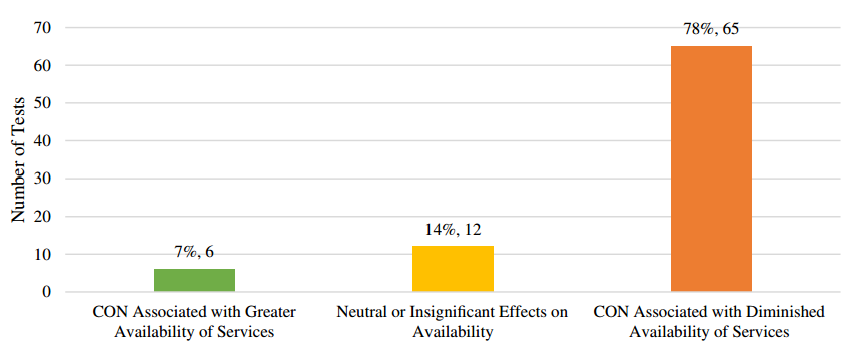
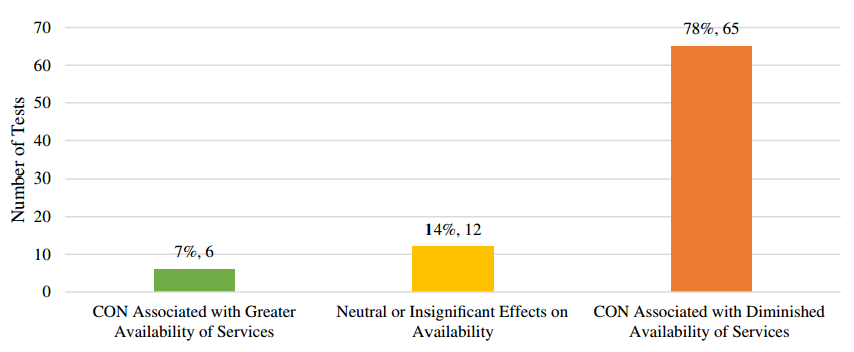
The result of these restrictive measures is a healthcare system in which supply frequently grows more slowly than demand, creating monopoly privileges for incumbent firms, and harming consumers through needless scarcity and the higher prices that come with it.[17] Sectors such as long-term care, nursing facilities, and hospital services are especially vulnerable. Indeed, Matthew Mitchell’s metastudy on the issue shows that 78 percent of studies on CON show a reduced availability of services (Figure 1, below), and 60 percent demonstrated higher expenditures per service.[18]
Figure 1: Percentage of Empirical Tests Showing CON and Reduced Service Availability
Source: Matthew Mitchell, “A Review of the CON Literature” (2025)
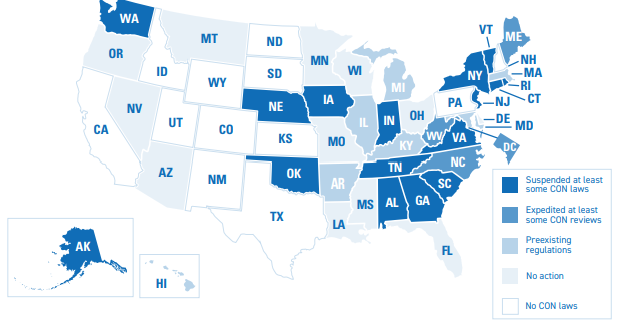
One interesting and overlooked detail in the restrictions placed on healthcare productivity under CON regulations revealed itself in the COVID era. If it were the case that policymakers genuinely believed that certificate of need laws lowered costs and increased quality, then the COVID crisis would have been the perfect opportunity to demonstrate their effectiveness. Instead, multiple states suspended their CON regulations in part or in whole (Figure 2, below). The suspensions suggest that policymakers themselves recognize CON restrictions could impede the healthcare system’s ability to respond to rapidly changing demand. By allowing more competitive arrangements to prevail during the crisis, states temporarily relaxed the very restrictions that CON advocates argue are necessary to control costs and improve quality.
Figure 2: Treatment of CON During the COVID-19 Response
Source: The Institute of Justice’s “Conning the Competition”
Higher Healthcare Prices
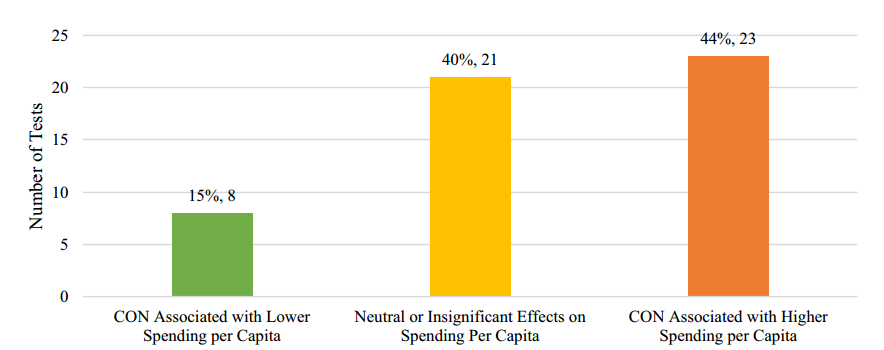
If supply restrictions are effective, one would expect them to contribute to increases in healthcare services prices. But the question is not whether healthcare prices have risen nationally; they clearly have. What is most relevant is whether, and to what extent, CON states have experienced systematically different price levels than states that allow more competition. Decades of empirical research on barriers to entry have attempted to answer this question. Although the findings vary in magnitude, the broad pattern is clear: CON regulations have consistently failed to generate the cost savings promised by their advocates. Indeed, in many cases, prices are higher, investment is redirected to protected incumbents rather than reduced, and consumers ultimately bear the burden through increased insurance premiums, Medicare expenditures, and out-of-pocket costs (Figure 3, next page).
Figure 3: CON’s Association with Higher per Capita Healthcare Spending
Source: Matthew Mitchell, “A Review of the CON Literature” (2025)
While a number of studies report “neutral or insignificant effects” on per capita spending, very few show expenditures being reduced under CON, even when controlling for other factors. Promises to deliver lower costs to insurers, Medicare and Medicaid, and to patients through CON have failed. Not only do CON states exhibit higher prices and elder mortality rates than their non-CON peers.[19] Rahman et al. (2016) found that “Compared with states without CON laws, Medicare and Medicaid spending in states with CON laws grew faster for nursing home care and more slowly for home health care.”[20]
The Elder Care Bottleneck
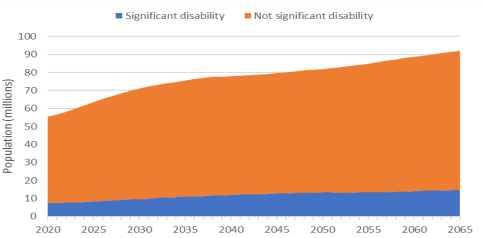
As millions of Americans reach retirement age, demand for nursing homes, assisted living facilities, memory care units, and skilled nursing beds is increasing at an unprecedented pace.[21] Importantly, the total number of US residents aged 65 and older is set to reach about 71 million by 2030 (Figure 4, next page). These are precisely the vulnerable populations with the greatest need, but they face the most often CON-regulated sector: nursing homes.[22]
Figure 4: Projected Number of Americans Aged 65+ with Disabilities
Source: US Department of Health and Human Services
Despite this growing and highly anticipated need, the number of nursing facilities eligible to receive Medicare and Medicaid reimbursement has declined by 6 percent between 2015 and 2025.[23] The most commonly cited explanations for these closures and contractions include declining quality metrics, staffing shortages, low wages, and inadequate staff-to-resident ratios.
Economist Matthew Mitchell (2024) found that in CON states, mortality rates were higher for heart attacks, heart failure, diabetes, chronic lower respiratory disease, Alzheimer’s, and even COVID-19. CON states exhibit a higher incidence of nursing home neglect and abuse of patients.[24] What began as a planning mechanism has become a bottleneck in one of the nation’s most important healthcare markets. This has had, and will continue to have, devastating consequences for the US’s aging population.
CON versus Non-CON Outcomes
The most direct test of CON policy is a comparison between states that retain these laws and states that have repealed them. If CON regulations achieve their intended goals, lower costs, greater access, and improved quality should be evident in states that employ them. If not, measurable differences should emerge in areas such as hospitalization costs, nursing home prices, bed availability, and healthcare investment. Accordingly, state-level comparisons offer an important opportunity to evaluate whether the promises of CON regulation have been realized — or the reverse.
The Department of Justice and the Federal Trade Commission addressed this question in a 2004 report:
The Agencies believe that CON programs can pose serious competitive concerns that generally outweigh CON programs’ purported economic benefits. Where CON programs are intended to control health care costs, there is considerable evidence that they can actually drive up prices by fostering anticompetitive barriers to entry.[25]
As a result of these and other findings, the DOJ and the FTC urged “states with CON programs involving long-term care facilities to reconsider whether they are best serving their citizens’ health care needs by allowing these programs to continue.”
When states have repealed their CON regulations for elder care services, the results have been positive: competition increased, supply grew, and costs declined. In fact, Bjoerkheim and Melad (2025) found that:
Repealing CON laws leads to an increase in the number of LTACs [Long Term Acute Care facilities]; specifically, the repeal will lead to 6.3 more LTACs per million elderly individuals, which is a 69 percent increase. We also see that this leads to a 63 percent increase in the number of certified beds. This shows the role CON laws play as barriers to entry within healthcare, and it shows how their removal fosters greater access to specialized, high-acuity medical care, particularly for aging populations.[26]
Further examination of average nursing home costs from seniorliving.org shows that CON state status is associated with higher monthly median costs (Figure 5, Table 1, both next page).[27] CON states exhibit average monthly nursing home costs of $12,347, compared to $10,831 in states without CON laws. That’s a significant difference of $1,516 per month, or approximately 14 percent. While that positive and suggestive correlation does not establish causation, the direction of the relationship is consistent with a large body of empirical research finding that CON laws restrict healthcare supply and tend to increase costs.[28]
Figure 5: Average Monthly Nursing Home Costs by CON Status
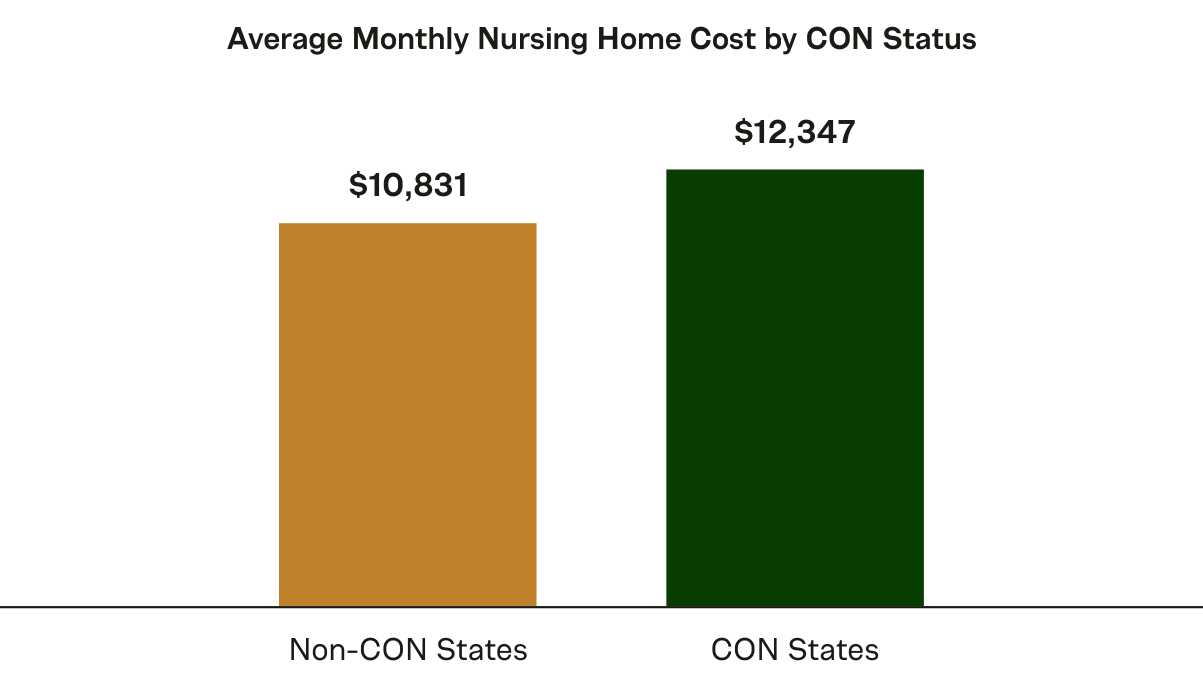
Table 1: Variation in Median Nursing Home Monthly Price in CON v. Non-CON States
| Average Monthly Nursing Home Cost | |
| Non-CON States | $10,831 |
| CON States | $12,347 |
| Metric | Value |
| Monthly Difference | $1,517 |
| Percent Difference | 14.0% |
Public Choice Grounds
The Incumbent Veto Power
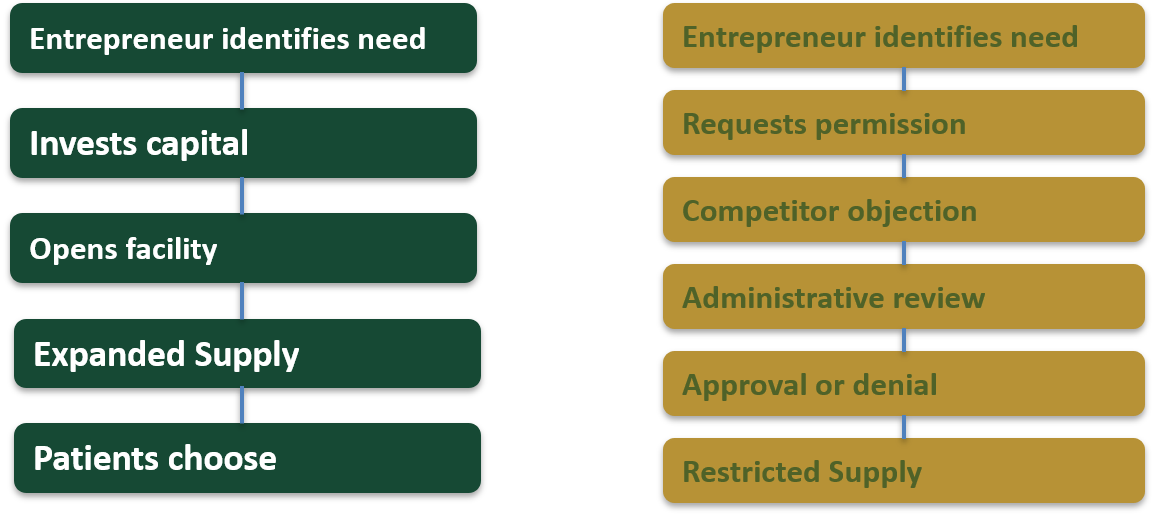
Perhaps the most unusual feature of certificate of need regulation is that it often grants existing providers a formal opportunity to challenge prospective competitors.[29] In few other industries do incumbent firms participate directly in determining whether new rivals may enter the marketplace. Yet, CON proceedings routinely allow hospitals, nursing homes, and healthcare systems to object to proposed facilities and expansions by their would-be competitors.[30] This arrangement turns a process that should be governed by entrepreneurial risk and customer service into one shaped by political entrepreneurship, serving incumbent firms’ interests and effectively giving them the protections of a statutory monopoly.[31]
This unique power of incumbent firms has been widely regarded as a monopoly-forming mechanism (Figure 6, below). Christina Sandefur (2020) argues that existing healthcare providers vigorously defend CON regulations because “existing providers benefit handsomely from CON laws, which allow them to block would-be competitors. Given the monopoly profits that CON laws enable incumbent providers to realize, these firms invest time and resources in preserving the anti-competitive power that these laws give them. As a result, most efforts to repeal CON laws have been unsuccessful in recent years.”[32]
Figure 6: Competitive vs CON Processes
Massive expenditures are made to uphold these unique privileges. For instance, in the fight for repealing Tennessee’s regulatory body in 2023, the Tennessee Hospital Association spent over $482,000 defending CON. Others joined the battle to uphold their monopolistic privileges: Ballad Health expending $463,096, the Beacon Center with $257,000, and the HCA Healthcare System shelled out $307,116. Meanwhile, The Center for Individual Freedom spent more than $662,000 opposing Tennessee’s CON legislation, bringing total spending in the state’s 2023 repeal fight to more than $2.1 million.[33]
Governor Bill Lee signed Senate Bill 1369 into law. It fell well short of full CON repeal. A handful of CON regulations will expire in 2030. Board approval will still be required for nursing homes, long-term care, and rehabilitation hospitals among others.[34]
The extent of lobbying efforts is circumstantial evidence that the incumbents within the healthcare industry are engaged in broad attempts to deploy political entrepreneurship in pursuit of protecting market share and profitability. At worst, they represent open attempts at cartelization and monopoly position using the levers of government.
Rent-Seeking
Hospital systems and associations have been largely successful in their lobbying efforts to preserve CON laws. More than half of Americans live in such states, despite decades of disappointing results, illustrating a classic public choice problem. The benefits of restricting competition are concentrated among incumbent providers, while the costs are dispersed across taxpayers, patients, insurance companies, and healthcare consumers. Under these conditions, the beneficiaries have immense incentive to organize politically in defense of these regulations, while those harmed often remain unaware of the policy’s existence.[35] But what they don’t know can kill them.
The rent-seeking problem is defined by economists as “[s]pending time and money not on the production of real goods and services, but rather on trying to get the government to change the rules so as to make one’s business more profitable. This can take various forms, including seeking subsidies on the outputs or the inputs of a business, or persuading the government to change the rules to keep out competitors, tolerate or promote collusion between those already engaged in an activity, or make legally compulsory the use of professional services.”[36]
Conflicts of Interest
While definitions of what constitutes a conflict of interest vary across institutions, the possibility that an individual has the ability to influence law-making to benefit themselves or their former, current, or future associates is a reasonable standard.[37] The individuals on CON boards are very often in this category.
Michigan’s 11-member CON board, for example, includes individuals who are specifically assigned to represent special interest groups and are associated with organizations with a natural interest in limiting competition. Among the groups represented are Blue Cross Blue Shield of Michigan, Beaumont Hospital, The Health Care Association of Michigan, Henry Ford Hospital, The Mackinac Straits Health System, The Detroit Medical Center, the Michigan State Department of Radiology, and the Service Employees International Union: Healthcare Michigan.[38]
Public choice problems become most acute when individuals attached to healthcare providers create regulations that govern their markets.[39] Incumbent hospitals and healthcare systems have enhanced ability to navigate CON proceedings in ways that new entrants cannot match. Besides having board members directly representing their interests, they also have specialized technical knowledge of the approval and appeal process, established political relationships, and substantial financial resources.[40] These advantages are developed not by understanding consumer needs but rather by leveraging influence and power. An incumbent that already dominates a market has both the means and the motive to use regulatory barriers against potential competition, and Certificate of Need proceedings give them precisely that opportunity.
The Institute for Justice provides a comprehensive survey of the 39 jurisdictions that maintain CON boards in its 2025 report, Conning the Competition. The report details who participates in CON proceedings and what standing they hold. It’s clear that incumbent providers may formally intervene in applications to block new entrants and protect their own profits. Further, they may present testimony and expert evidence, and both select and hire legal counsel at their competitors’ expense. In states like Mississippi and Oklahoma, incumbents can even appeal approvals, forcing additional hearings and delays. CON applicants also face fees ranging from $100 in Arizona to $250,000 in Maine, while Hawaii and New Jersey charge open-ended percentages of total project costs. When competitors intervene and trigger litigation, applicants unable to afford attorneys may be forced to abandon their plans. The true losing party is the patients they could’ve helped.
Just as striking as who is represented on CON boards nationwide is who is conspicuously absent: patients. Patient advocacy groups do not appear as participants, not as intervenors, and not as appellants. They are the stated beneficiaries of a system from which they are structurally excluded.[41]
Figure 7: Graphic Analysis of Patients’ Lack of Representation on CON Boards
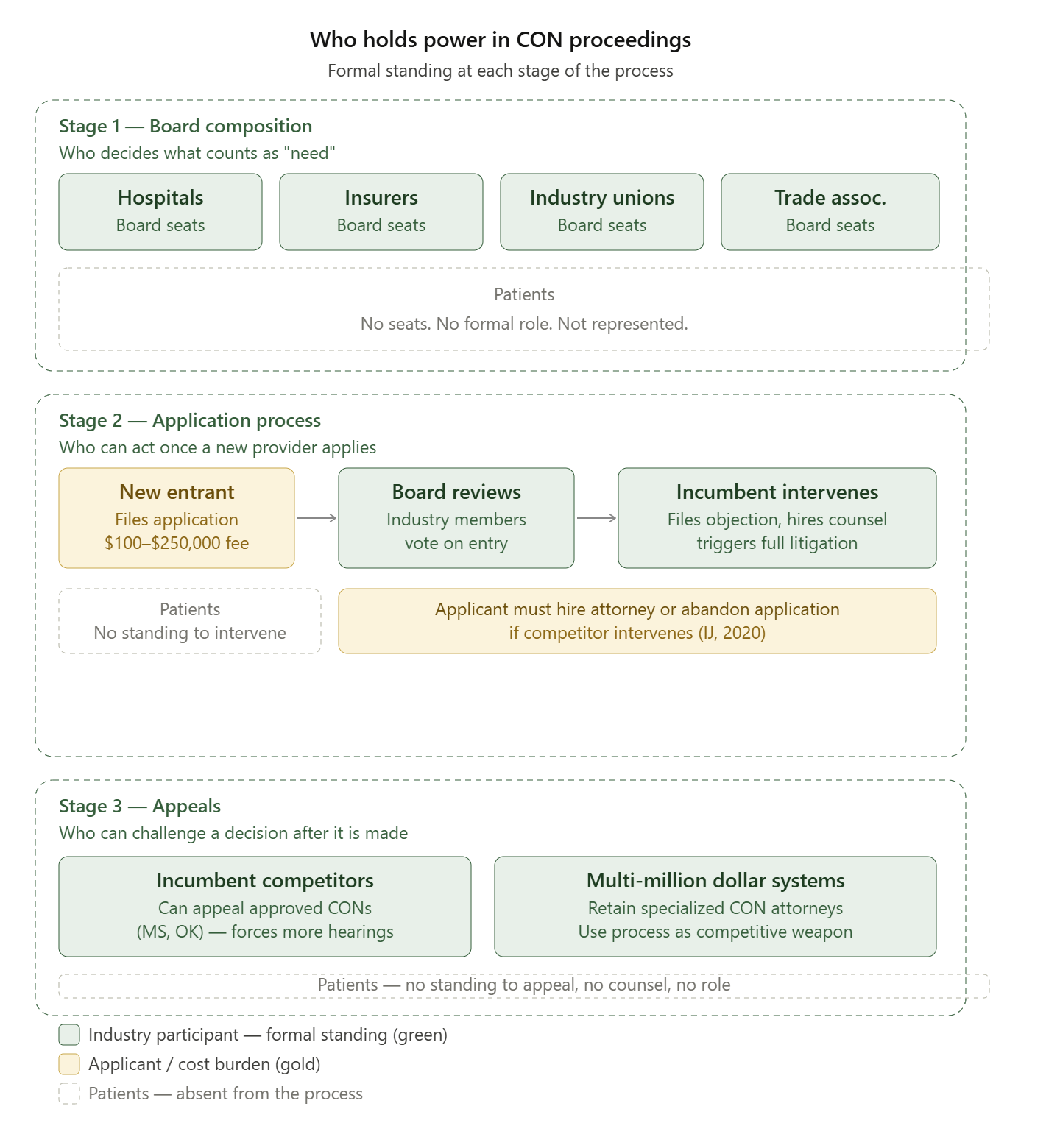
Generated by Claude/Sonnet 4.6. Author’s prompt provided the analysis of The Institute of Justice’s (IJ) “Conning the Competition” (2020, 2025).
Cronyism Enabling Higher Prices
The record of CON systems demonstrates how regulatory privilege becomes self-reinforcing over time. Across numerous states, incumbent providers have used CON procedures to delay, challenge, and ultimately prevent competing facilities from entering their markets. The justifications typically include a mixture of protecting quality, avoiding duplication of services, and controlling costs. But outcomes tell a different story. What CON proceedings most reliably protect is existing market share, as reflected in market concentration, high utilization rates, and longer wait times.[42]
Twenty years after the large-scale implementation of CON laws through the NHPRDA, John Nyman’s study (1994) indicated that boards reduced new entrants and even placed moratoria on nursing home care, with predictable outcomes. First, market concentration of the existing firms increased until they could no longer meet demand. Combined, they led to higher prices.[43] Additional consequences of these policies have been for nursing homes to “reduce the costs of care by 1) reducing quality of care and 2) choosing not to serve the heavy-care Medicaid patients.” Furthermore, CON acts as “a barrier to entry” used to “both limit the number of firms in a market and eliminate contestability of the market by potential firms, resulting in larger price mark-ups than would otherwise be the case.”
Nursing home occupancy rates vary throughout the nation (Figure 8, next page) and CON regulation is associated with higher occupancy rates.[44] Further analysis shows that states with certificate of need laws deliver consistently higher nursing home costs, approaching a $1,000 per month difference. That gap narrows significantly once differences in occupancy (demand), facility size, and market size are taken into account.
With the current data available, none of these estimates are statistically reliable (Figure 9, page 23). The margin of error is wide enough in every case to include no difference at all. With only 12 jurisdictions lacking CON laws, a state-by-state comparison is unable to isolate the effect of CON’s presence with current prices. A measured reading is that even though the data doesn’t close the case, at the very least, CON laws are associated with higher nursing home costs even when multiple controls are introduced.
Nursing home costs rise with higher occupancy. Across the US, each additional percentage point of occupancy is associated with roughly $150 more charged per resident per month. This relationship is statistically reliable. The data does support a clear conclusion: where beds are scarce relative to the current demand, residents pay more. Any regulation that holds bed supply below what providers would otherwise build will tend to increase prices, which is precisely what the data show (Figure 10, next page). Not only does higher occupancy create upward price pressure, it is also associated with lower quality.[45] CON’s promise of more availability, lower prices, and better care simply doesn’t hold up to scrutiny.
Figure 8: Nursing Home Utilization in the US – July 2025
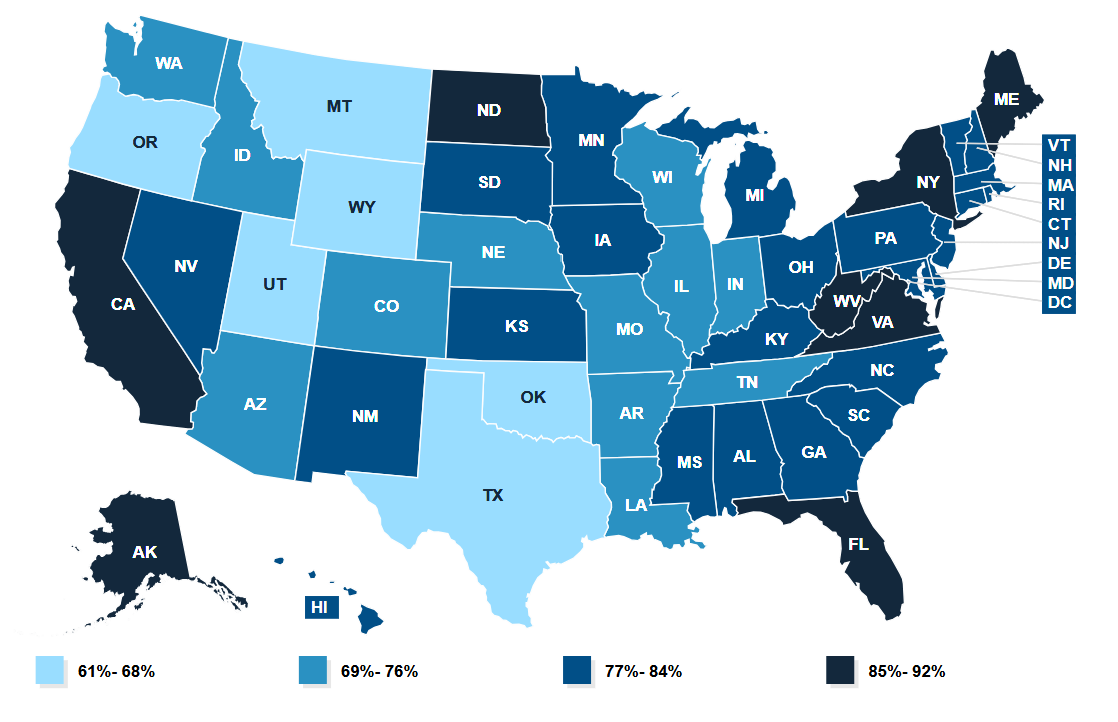
Source: The Kaiser Family Foundation
Figure 9: Nursing Home Occupancy and Average Monthly Costs in the US – 2025
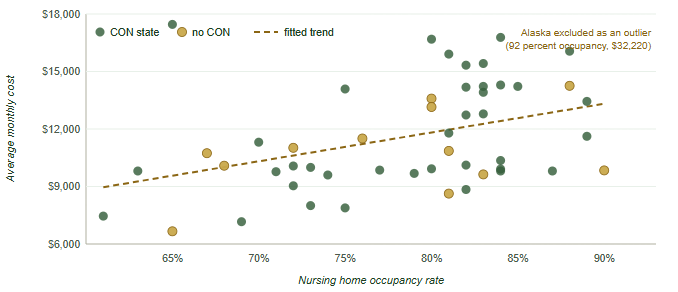
Source: SNF Data and Senior Living[46]
Figure 10: Factors Influencing Nursing Home Prices in the US – 2025
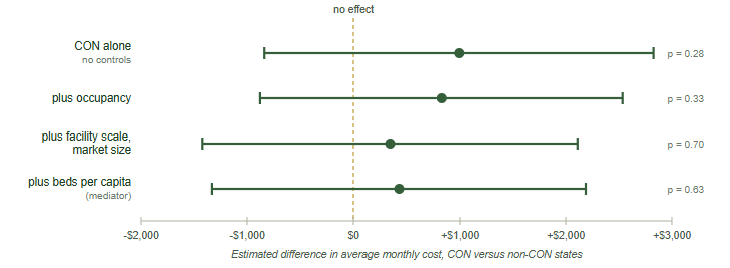
Source: SNF Data and Senior Living
The ability to legally restrict competition with CON laws has allowed existing healthcare providers to diminish capacity, contributing to higher prices. This pattern remains consistent throughout the US. Furthermore, the inability of new competitors or patients to veto CON board decisions constitutes a level of legal privilege that few other industries possess. CON proponents argue that even existing providers have to receive CON board approval to expand their services. In addition, states such as Michigan have existing hospital systems that compete (e.g. Henry Ford Health System and Beaumont Health) and can object to new services being provided by their in-state rivals. But in practice, a quid pro quo relationship is likely to exist where one large provider agrees to approve a competitor expansion of hospital beds in exchange for agreeing to expand services in another area.
While this phenomenon requires further study, including an examination of CON board meeting minutes, the incentives for this type of cartelization behavior remain firmly in place wherever these boards exist.
Constitutional Grounds
In recent years, the Pacific Legal Foundation has represented individuals and organizations challenging certificate of need regulations and boards on constitutional grounds.[47] The following section examines the legal principles at stake in several of those cases, providing insight into CON barriers, regulations, and boards and the case for their abolition. The analysis also emphasizes the need for state-level action, as discussed later in the pathways to abolition section, page 32. While the Fourteenth Amendment does enshrine equal protection under the law, the regulation of healthcare is nowhere to be found among the enumerated powers, and therefore, remains a matter for individual states. The economic reasons for abolition alone should be sufficient for state lawmakers to aim for CON’s elimination. Further reasons, if they are needed, are demonstrated in the next two sections.
Due Process
The legal essence of certificate of need regulation is a government-imposed requirement to seek the permission of both regulators and competitors to conduct lawful business. An entrepreneur, firm, religious group or any other entity that wishes to build a hospital, expand a nursing facility, or offer new healthcare services must first satisfy an administrative body, populated with incumbent firms’ agents who are empowered to say no.
This is not a licensing requirement for demonstrated competence. Rather, it is analogous to prior restraint on economic activity. CON laws presume that a citizen or firm is prohibited from using their property as they see fit and may not do so unless prior restraint is lifted. This reverses the ordinary presumption of liberty and places the burden on citizens to justify the lawful use of their property. The inversion raises serious due process concerns, and competitors work in concert with regulators, raising further concerns about equal protection.
The concrete nature of this prior restraint problem isn’t hypothetical. It has played out in numerous cases. One of the most notable comes from Katie Chubb of Georgia. Chubb spent years trying to open a nonprofit birth center in Augusta, a region where state health officials conceded her services were needed, and where childbirth outcomes ranked among the worst in the nation. Nevertheless, the CON board denied her application, as local hospitals refused to enter into transfer agreements with a facility they regarded as a competitor. The government ratified that refusal. In 2022, Chubb sued, arguing that the process she faced was not simply a licensing process designed to protect the public, but a permission structure designed to protect incumbents. In 2024, Georgia reformed its CON law under Governor Brian Kemp, but only after years of litigation. When due process protections are absent from the gateway to lawful enterprise, livelihoods and human lives are jeopardized.[48]
Equal Protection
CON laws do not apply evenly across interstate or intrastate markets. Indeed, because many CON applications are denied on geographic grounds by regional competitors, states themselves are often internally inconsistent and incoherent in the application of the law. Existing providers often hold advantages that prospective entrants do not, including to participate in proceedings that determine whether new rivals may enter the market. This is not a procedural accident. It is a structural feature that systematically favors established interests.
One of the clearest manifestations of CON’s unequal protections arose in New Orleans.[49] In February 2020, Louisiana’s Facility Need Review program denied Ursula Newell-Davis, a social worker with a master’s degree and twenty years of community service experience, permission to open a respite care business for special needs children. She was rejected not once, but twice. The state sent her the same form denial letter it sent to 86 other applicants in the same review cycle. Neither Newell-Davis nor New Orleans city officials were given an opportunity to be heard by the “Facility Need Review” board, which functions as a Certificate of Need board. The state ignored the evidence she submitted on juvenile crime rates, unmet community need, and research on the benefits of respite care and simply said her services were not needed.[50]
In 2023, the Fifth Circuit court upheld the denial under rational basis review, a standard that asks whether a law is related to a legitimate government interest and, according to the Pacific Legal Foundation, “almost always favors the government.” The US Supreme Court later refused to hear her case that October.
Undeterred, she applied to provide services in January 2025 and was denied by the committee a second time, claiming that her services were not needed. Her latest suit, filed in Louisiana state court in March 2026 under the state’s Right to Earn a Living Act, is still pending.[51] Her advocates assert that her case is “about far more than one woman’s fight to open a small business. It asks whether the government should be able to bar a qualified, dedicated professional from entering a field simply to protect established players from competition.”[52]
Interstate Commerce
Healthcare markets increasingly operate across state lines through investment capital, ownership structures, and regional systems of care. CON laws routinely impede out-of-state providers and investors from entering markets on equal terms with incumbents. These barriers raise genuine questions about the essential principle that individuals and firms have the right to offer services that consumers are willing to purchase.
The interstate dimension of the nature of modern commerce and service needs came into focus in 2019 with Legacy Medical Transport v. Meier.[53] Phillip Truesdell built a seven-vehicle non-emergency ambulance company in Ohio, serving clients whose medical appointments frequently required crossing the Kentucky border. But Kentucky’s CON laws, administered by its Cabinet of Health and Family Services, prohibited him from returning those clients to Ohio without first obtaining a certificate. There, incumbent Kentucky operators filed a protest over his application and triggered a full administrative hearing, in an attempt to block his delivery of health services.
Four years later, the Sixth Circuit ruled in 2023 that Kentucky could not use CON requirements to restrict interstate ambulance trips on the grounds that new competition was “undesirable.” Importantly, the court found that those seeking to block Truesdell presented “no link between the protest and hearing procedures and any alleged government interest in health and safety.”[54] Highlighting the arbitrary nature of these regulations, the court noted that “an applicant seeking to offer ambulance services must show a ‘need’ for them in a ‘defined’ ‘geographic service area’ and prove that it can meet this need…The Cabinet [equivalent of a CON board] otherwise has no benchmarks to guide this ‘need’ inquiry.”[55]
While the decision was a meaningful victory, it remains a partial one. Trips wholly within Kentucky remained subject to the same competitor-veto structure. Furthermore, the constitutional question of whether CON laws may categorically exclude out-of-state entrants from intrastate markets was left unresolved. The case highlights the degree to which CON laws in their current form operate as internal trade barriers that aren’t designed to protect public health. Rather, they protect the market share of incumbent firms against providers whose only disqualification is that they operate across a state line from their customers.
Rational Basis Review and Judicial Deference
One of the reasons for CON’s persistence is the use of the rational basis test. That standard requires that a law only be conceivably related to a legitimate government interest. It doesn’t require that the government’s alleged interest be achieved. Courts applying this standard have upheld CON laws even when the empirical case for them is weak. A case in point is the PLF case on behalf of Newell-Davis. Though the Supreme Court declined to hear her case, the evidence showed that the regulation serves incumbent financial interests rather than public health or the government’s interests.
The high court’s refusal to hear the case reflects a longstanding judicial reluctance to revisit the rational basis framework for economic regulation, a framework established in Williamson v. Lee Optical (1955).[56] That ruling opened the door for ongoing protectionism within the states under the guise of legislatures having plausible reasons (or a rational basis) for enacting legislation or for regulatory bodies to impose rules limiting economic freedom. This notoriously loose standard of constitutional review has undergirded the persistence of CON laws, despite their record of failing to achieve their stated goals.
As the empirical case against CON laws has continued to accumulate, the question courts and policymakers must answer is how much deference a regulation deserves when it consistently fails to achieve the ends used to justify it.
Moral Grounds
Property Rights of Providers
Certificate of Need laws restrict what owners may do with their own property and capital. A landowner, investor, or healthcare entrepreneur who possesses the resources and the willingness to serve patients may nonetheless be legally prohibited from doing so until an administrative board grants permission. No mere regulatory inconvenience, this restriction is a fundamental constraint on ownership itself, curtailing the fundamental right to put private property to productive use in voluntary exchange with others.
The philosophical foundation for this objection runs deep. John Locke argued in his Second Treatise of Government (1689) that property rights are pre-political, not a creation of government but the reason government exists. He was equally clear about the limits that places on authority: “What men enter into societies with governments for is the preservation of their property; so it would be a gross absurdity to have a government that deprived them of that very property!”[57] Adam Smith reinforced the point from a different direction, calling the right to one’s own labor the most sacred of all property rights in the Wealth of Nations (1776): “The property which every man has in his own labor, as it is the original foundation of all other property, so it is the most sacred and inviolable…to hinder him from employing this strength and dexterity in what manner he thinks proper without injury to his neighbor is a plain violation of this most sacred property.”[58] Smith had guild restrictions and mercantilist licensing schemes in view; Certificate of Need is their descendant. Frédéric Bastiat pressed further in The Law (1850): “It is not true that the function of law is to regulate…our work, our trade, our talents, or our pleasures. The function of law is to protect the free exercise of these rights, and to prevent any person from interfering with the free exercise of these same rights by any other person.”[59] When a law is used to restrict market entry on behalf of incumbents, it has been converted from an instrument of justice into an instrument of cartelization. These laws do not prevent harm; they prevent competition and value creation, at the expense of entrepreneurs, new providers, and buyers.
The Human Dignity of Patients
The moral consequences of CON laws are not abstract. Even though the NHPRDA was designed to provide expanded care for the disadvantaged, the economic realities of its consequences have produced the opposite result. CON regulations limit healthcare capacity, delay facility construction, restrict the supply of elder care, and even place moratoria on nursing home construction or additional beds. Real people bear those costs: the elderly and their families waiting for nursing home placement, the disabled patient in need of specialized services, and families navigating a fragmented, supply-constrained system that prioritizes administrative planning and competitor vetoes over patient access.
The human cost of supply restriction is not evenly distributed: it falls with particular weight on those who have the fewest alternatives. Among them are the elderly, the rural poor, and those with dementia and other conditions requiring sustained, specialized care. In 2024, 46 percent of nursing homes had to limit new admissions, while nearly 57 percent maintained waiting lists for new residents.[60] CON laws have artificially suppressed nursing facilities for decades by preventing new facilities from entering markets where incumbent providers’ consent was withheld, while incumbent health systems rapidly consolidated. From 2020 to 2024, 40 additional counties became “nursing home deserts,” leaving residents without skilled nursing options.
A 2025 study published in the Journals of Gerontology, analyzed data from 818,878 Medicare beneficiaries diagnosed with Alzheimer’s disease and related dementias. CON laws on home health services were found to be associated with approximately 10 percent lower home health utilization among this population compared to states without such restrictions.[61] For a patient with dementia, home health care is not supplementary; it may be essential.
Lord Acton’s observation — that the progress of liberty has always been impeded, in every age, by the strong man’s craving for power at the expense of those who cannot defend themselves against it — finds a concrete institutional expression in CON regulation.[62]
When incumbent providers, acting through CON boards, ensure that their markets remain closed to competitors who would serve patients, the harm falls on the most vulnerable in society.
Political vs Market Entrepreneurship
Society offers two ways to gain profit. The first, and legitimate, means is through voluntary exchange, and the second, illegitimate, means is through coercion and force. Profits gained by incumbent firms when CON boards block potential competition are clearly in the latter category. One of the best articulations of this moral distinction is made by Franz Oppenheimer in The State (1908).[63] There, he articulates the economic versus the political means of gain. He explains that when the opportunity presents itself, people will prefer the political means of gain rather than the economic, simply because it is easier. Whenever incumbent nursing home providers and hospital systems use a CON board position to exclude rivals, they prove Oppenheimer’s point. These members use their privileged position to engage in political entrepreneurship to keep and to take unearned gains.
Oppenheimer’s distinction is further described in the later twentieth century by Murray Rothbard, who would have regarded CON boards as a type of “triangular intervention”.[64] Under such an intervention, the state agent acts to prohibit a voluntary exchange between two other parties: a buyer and a seller. The state agency is, in turn, often comprised of the seller’s competitors. When denials are issued, they necessarily result in value destruction, as providers and consumers are prohibited from serving one another.
Both Oppenheimer’s and Rothbard’s positions illustrate that CON boards aren’t merely inefficient by reducing total welfare. In fact, they institutionalize injustice and immorality. They use regulatory intervention to maintain and increase unearned profits for the special interests that are often represented on their committees. States that continue to uphold these boards, courts that continue to look the other way under the cover of “rational basis,” and legislators who enshrine monopoly privileges for incumbents are not serving the common good. Rather, they serve entrenched interests at the expense of some of the most vulnerable members of our nation.
The Moral Case for Non-Intervention in Healthcare
The financial, public choice, constitutional, and moral failures of CON laws are not independent problems with separate causes. Each one emerges from the same source: the substitution of administrative intervention for the coordinating mechanisms of prices, profit and loss, competition, and entrepreneurial judgment and discovery.
What makes this error all the clearer, and far more than theoretical, is the vast empirical evidence that CON fails to deliver on its promises. Matthew Mitchell’s comprehensive review of the literature in the Southern Economic Journal (2025) surveyed 128 peer-reviewed studies containing over 450 separate tests of CON’s consequences. The results are not ambiguous. Of all the empirical studies, only 13 percent associate CON with what researchers deemed to be a positive result, while negative results outnumber positive results fourfold (Figure 11, next page). Negative effects include higher spending, reduced access, lower quality, and diminished care for underserved populations. More specifically, 78 percent of tests find that CON states see reduced access to services, with only 7 percent of tests showing improved access. With respect to vulnerable populations, the record is even clearer: 82 percent of tests found CON weakened the provision of services to them, and not a single study showed improvement in service availability for underserved populations.
Figure 11: Normative Results from CON Empirical Literature through October 2024
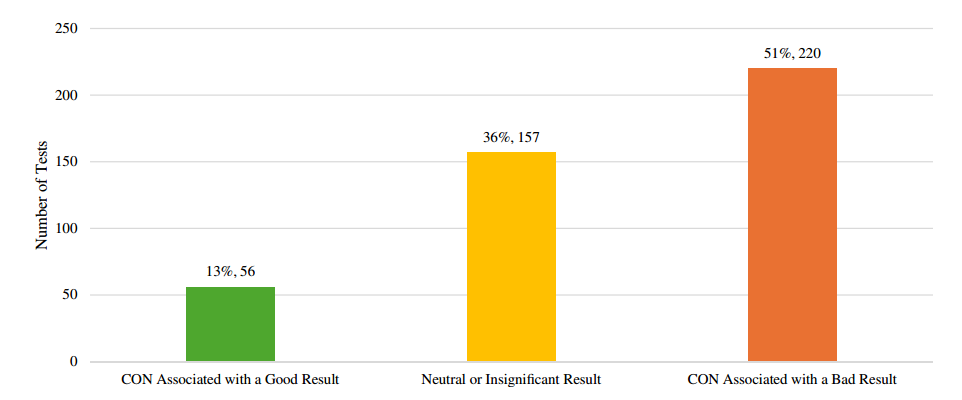
Source: Matthew Mitchell, “A Review of the CON Literature” (2025)
These findings are neither ambiguous nor immensely complex. Rather, this record of regulatory protectionism has failed in every vector upon which it was supposed to succeed. When the theoretical patterns identified by Locke, Smith, Bastiat, Oppenheimer, Rothbard and others meet so squarely with empirical evidence, the consequences of these regulatory bodies and their actions can no longer be ignored. It is past time for their abolition.
Pathways to Abolition
The classical liberal tradition of laissez-faire is sometimes caricatured with the claim that “the solution is to do nothing.” In fact, nothing could be further from the truth. Removing unjust laws and inefficient institutions takes political courage, determined action, and a willingness to challenge powerful special interests. Such is the task before policymakers and patient advocates who wish to see the lower costs and expanded care that the NHPRDA and its CON boards have failed to deliver. Those goals can only be achieved by enhanced economic freedom in American healthcare.
Full Repeal
The case against CON laws points to a straightforward conclusion: repeal is preferable to reform. Because these regulations have failed to reduce costs, expand access, improve quality, or protect vulnerable populations across decades of operation in numerous states, no principled basis for preserving them remains. Indeed, these failures have emerged with a plethora of empirical evidence and morally dubious realities. Full repeal would return healthcare investment decisions to entrepreneurs, providers, investors, and consumers. Further, state-by-state repeal would remove artificial barriers to entry and allow capacity to grow in response to genuine demand. Every area in which services are restricted, consumers are harmed. Perhaps nowhere is this more unjust than in cases where the elderly and their families are materially, emotionally, and physically harmed.
In an effort toward justice and a repeal of CON legislation and boards, some may be inclined to seek a federal solution. The appeal of this approach is understandable. It would provide a single legislative victory and would present a swifter solution than fighting for it in 39 jurisdictions. But the efficiency argument can cut both ways: a national standard would permit the federal government to reinstate it in every corner of the nation through a regulatory body such as the Department of Health and Human Services (HHS). This would be a most undesirable outcome. Indeed, the NHPRDA of 1974, which used federal funding leverage to push CON implementation, is a reminder of how such political dynamics operate.[65] Instead, CON abolition should proceed at the state level, consistent with the Tenth Amendment, which clearly reserves to the states all powers not delegated to the federal government.
Given these political and constitutional dynamics, a state-by-state approach is the proper course and the path most likely to prevent federal authorities from reclaiming such prerogatives while engaging political actors who can organize and influence state-level policymakers. Some states that currently impose CON requirements only on nursing homes, such as Indiana, Montana, and Ohio, are natural locales for the first moves to be made. Since their CON regimes are narrow in scope and because the harm is concentrated and documented, CON abolitionists are more likely to meet with success. Similar approaches to repealing the statutes in Arizona, Minnesota, and New Mexico, where ambulance restrictions exist, also provide straightforward paths to patient-oriented victories. Frequent successes can provide momentum for coalition building across the nation. While admittedly slower, this approach is more constitutional, durable, and consistent with the classical liberal tradition of decentralized governance and free markets.
Banning Moratoria
While little attention in this paper has been given to states that have imposed service and facility moratoria — temporary or permanent restrictions on new activity — these moratoria represent perhaps the most acute and harmful form of restriction facing the citizens of those states. Moratoria are a heavy handed approach to regulating supply that reflect an anti-competitive approach to health services provision. Harrington et al. reached the clear conclusion that states that abandoned CON or moratoria made a clear judgment to open markets to competition, and the result was an increase in supply that lowered Medicare costs.[66] Not only that, but in such “underbedded” markets, Nyman (1989) found that facilities with “excess demand,” are found predominantly in CON states. That study found that “despite the presence of an effective program to enforce these [quality] certification standards through fines…it is found that, where the bed supply is tight, an additional empty bed in every nursing home in a county is associated with between five and six fewer violations” of quality of care.[67] Nyman’s findings were ignored by the Wisconsin legislature as it instituted a moratorium in 1992, capping the number of nursing home beds at 51,795. That cap still stands 34 years later, despite rising demand from the state’s aging population. The results in Wisconsin should inform efforts to strike down moratoria in the 13 states where such harmful measures still exist, and where they are largely applied to nursing homes and long-term care facilities.[68]
Incremental Reform
Where full repeal faces political obstacles, incremental reforms can reduce the most harmful distortions while the case for complete abolition continues to gain momentum. The political economy surrounding CON retention, documented by Teske and Chard (2004), is rife with special interest power. Their research found that lobbying efforts by hospitals are significantly and positively associated with CON retention. In brief, hospital associations’ lobbying efforts make abolishing CON exceedingly difficult.[69]
Where quick repeal is implausible, two reforms deserve priority. First, immediately pursue a halt to competitor veto provisions that allow incumbent providers to formally challenge and obstruct competing applications. From a tactical standpoint, left-leaning policymakers are more willing to oppose dominance by large firms, consistent with traditional political goals. Second, nursing homes, assisted living facilities, memory care facilities, and related elder care services should be exempted from CON review entirely. The supply shortage in this sector is already serious, and the demographic pressure is well-documented. Continued CON-based restriction of capacity in this type of care causes direct and measurable harm to the elderly population.
Litigation Strategies
Legislative reform is not the only possible avenue for CON abolition. In states where incumbent firms, special interests, and leftist politics have made reform exceedingly difficult, reform legislation may be difficult to achieve. But because CON laws raise genuine Due Process and Equal Protection concerns, litigation offers a parallel pathway toward repeal or limitation.
Because the empirical record continues to stack itself against the alleged benefits of CON regulation, litigants possess a substantial and increasingly large body of peer-reviewed evidence of its harmful consequences. As Mitchell’s work establishes, not a single study in the testable hypotheses shows that CON improves care for the underserved. As the basis for these boards collapses, opponents can show regulators, legislators, and above all the courts that CON’s material harms cannot be relegated to the “rational basis” standard. This might entail a plaintiff bringing a tort case near a state border, showing that a bed in a CON-state nursing home is unjustifiably and significantly more expensive than one in a comparable facility across nearby state lines. The Legacy Medical Transport v. Meier case may provide a precedent for challenging CON states.
Conclusion: We Don’t Need Certificates of Need
Discussions of certificate of need laws have often been relegated to wonkish debates among scholars and policymakers. It is well past time for these debates and policy outcomes to be brought to the broader public’s attention. The ultimate question to be settled is whether the allocation of scarce healthcare services should be governed by voluntary exchange in pursuit of value creation, or whether it should be steered by administrative permission, special interests, and political favoritism. After more than six decades, the theoretical arguments and empirical record have delivered their verdict: CON laws have not reduced costs, expanded access, improved quality, or enhanced services for the vulnerable. They’ve consistently delivered the opposite.
The case for abolishing CON boards at the state level is based on the overwhelming balance of more than 450 empirical tests. But that’s not all. CON’s abolition rests on the stories of Ursula Newell-Davis, twice blocked from serving special needs children, and prohibited from her right to earn a living. It also rests on the injustice done to Phillip Truesdell, and his ambulance patients who dared to challenge Kentucky’s incumbent cartel. Further, it rests on the fact that despite a growing senior population, 46 percent of nursing homes in America limited their new admissions in 2024 and that 40 counties have become nursing home deserts in recent years, while more than 70 million seniors will be faced with supply shortages for long-term care and nursing facilities. Ultimately, the case rests on the most fundamental foundation of a free society: that property belongs to those who earn it, that labor can’t be restricted by uninterested parties, and that the law exists to protect property rights, not to secure unearned profits for the politically connected.
Abolition is best carried out state by state and is long overdue. For every state that repeals a CON law, access is expanded, costs are reduced, and property rights that were violated are restored. Every new hospital or nursing home constructed is a win for the most vulnerable in society and for the entrepreneurs willing to risk financial losses to serve the sick and infirm.
Political will, legal persistence, and moral clarity may be required to name CON boards for what they actually are: monopoly-creators who serve special, rather than public, interests. Certificate of need laws must be abolished, not merely because they fail on economic grounds, but because they fail institutionally, constitutionally, and morally. The most vulnerable Americans are sick and tired of waiting.
Glossary
ACA— Affordable Care Act
AHA— American Hospital Association
AMA— American Medical Association
ASC— Ambulatory Surgical Center
CON— Certificate of Need
CT— Computed Tomography
DOJ— Department of Justice
FNR— Facility Need Review
FTC— Federal Trade Commission
HHS— Department of Health and Human Services
ICF— Intermediate Care Facility
IJ— Institute for Justice
LTAC— Long-Term Acute Care
MRI— Magnetic Resonance Imaging
NHPRDA— National Health Planning and Resources Development Act (1974)
OECD— Organisation for Economic Co-operation and Development
PET— Positron Emission Tomography
PLF— Pacific Legal Foundation
SNF— Skilled Nursing Facility
Notes
[1] Matthew Mitchell has convincingly demonstrated the impact of CON has been to restrict entry, rather than expanding access, while reducing rivalrous competition and protecting incumbent healthcare providers. See: Matthew D. Mitchell, Do Certificate-of-Need Laws Limit Spending? Mercatus Working Paper (Arlington, VA: Mercatus Center at George Mason University, 2016).
[2] Certificate of Need Boards and the incumbent firms that benefit from their protection may be regarded as a classic case of rent-seeking and finds its strongest critique in the Public Choice framework of Buchanan and Tullock. See: James M. Buchanan and Gordon Tullock. The Theory of Public Choice (Ann Arbor: University of Michigan Press, 1984). Available at: https://www.fulcrum.org/concern/monographs/cf95jg333
[3] Mises’s 1929, Kritik des Interventionismus: Untersuchungen zur Wirtschaftspolitik undWirtschaftsideologie der Gegenwart (Critique of interventionism: Inquiries intopresent day economic policy and ideology) describes what some have called an intervention spiral or vortex, where increasing chaos in economies arise from added, rather than repealed interventions into an unhampered market. See: Ludwig Von Mises. Critique of Interventionism: Inquiries into Present Day Economic Policy and Ideology (Irvington-on-Hudson, NY: Foundation for Economic Education, 1929, 1996). Available at: https://mises.org/library/book/critique-interventionism
[4] US healthcare spending per capita is twice the average of other wealthy countries per the OECD and the Peter G. Peterson Foundation. Available at: https://www.pgpf.org/article/how-does-the-us-healthcare-system-compare-to-other-countries/ See also, the OECD report, Health at a Glance (2025), available at: https://www.oecd.org/content/dam/oecd/en/publications/reports/2025/11/health-at-a-glance-2025_a894f72e/8f9e3f98-en.pdf
[5] Milton Roemer and Max Shain. Hospitalization Under Insurance (Chicago: American Hospital Association, 1959).
[6] See: Matthew D. Mitchell, Certificate-of-Need laws in healthcare: A comprehensive review of the literature (Southern Economic Journal, Vol. 92,1, 2025) pp. 6-43. With more critiques to follow, it can suffice to say that there are numerous economists and policy experts who reject Roemer’s law on both theoretical and empirical grounds. See for example: https://www.georgiapolicy.org/news/myth-busters-1-roemers-law/
[7] See: “A Brief History of Private Insurance in the United States”. Available at: https://www.ahpcare.com/a-brief-history-of-private-insurance-in-the-united-states/
[8] See: The Tax Exclusion for Employer-Provided Health Insurance: Issues for Congress. Available at: https://www.everycrsreport.com/reports/RL34767.html
[9] Ludwig von Mises warned in 1929 that once interventionism is allowed to take root in economic decision-making, that the unforeseen consequences would give rise to further intervention, causing society to lurch toward socialism. See: A Critique of Interventionism. Available at: https://mises.org/library/book/critique-interventionism
[10] See: National Health Planning and Resources Development Act of 1974, Pub. L. No. 93-641, 88 Stat. 2225 (1974). Available at: https://www.congress.gov/93/statute/STATUTE-88/STATUTE-88-Pg2225.pdf
[11] See: Milton I. Roemer, “Bed Supply and Hospital Utilization: A Natural Experiment,” Hospitals 35 (1961), and Milton I. Roemer and Max Shain, “Hospital utilization under insurance,” Hospital Monograph, no. 6 (Chicago; American Hospital Association, 1959). These papers articulate what became known as Roemer’s Law, which asserts that in an insured population, a hospital bed built is a hospital bed filled.
[12] In 1976, Roemer would go on to celebrate the increased role of central planning in hospital construction, claiming that it was necessary because “While some 16 factors – involving characteristics of patients physicians, and hospitals – could be identified as affecting hospital use rates in an area, none seemed to have a greater of more consistent influence than the available bed supply.” He further asserted in the same paper that, “the provider of service largely determines the level of consumption” comparing the behaviors of patients to those of consumers seeking car repairs who “meekly” accept the mechanic’s diagnosis and pay whatever is asked. However, what this assertion ignores is that prices for health services are hidden from consumers due to the US’s third party payer system in his paper: Milton Roemer “Hospital utilization and the health care system” American Journal of Public Health, 66: pp 953-955. Available at: https://ajph.aphapublications.org/doi/abs/10.2105/AJPH.66.10.953
[13] The Oxford Dictionary of Economics defines a natural monopoly in the following way: “A natural monopoly occurs when the production technology is characterized by “increasing returns to scale and the level of demand is such that only a single firm can be profitable. High fixed costs can be the explanation of the increasing returns. For example, it may not be profitable for two electricity suppliers to serve a single town if both have to bear the fixed costs of installing an electricity supply network. The existence of a natural monopoly provides justification for government intervention since efficiency will not otherwise be achieved. This is contrasted with a statutory monopoly, where the incumbent’s position is based on laws to exclude possible rivals. An example of statutory monopoly is sole access to necessary technology because of the exclusive possession of patents.” See: John Black, Nigar Hashimzade, and Gareth Myles, A Dictionary of Economics, 4th ed. (Oxford: Oxford University Press, 2017), s.v. “Natural Monopoly.”
[14] See: Rosemary Stevens, In Sickness and in Wealth: American Hospitals in the Twentieth Century (New York: Basic Books, 1989). One reviewer of her book aptly noted that, “hospitals are now required to behave like efficient corporations in the marketplace while being regulared more than public utilities.” See: Jeffrey O’Connell. “In Sickness and in Wealth: American Hospitals in The Twentieth Century”. By Rosemary Stevens. Journal of Contemporary Health Law and Policy, 7; pp. 433-435.
[15] See: Mitchell, Matthew D., “Certificate-of-Need Laws in Healthcare: A Comprehensive Review of the Literature,” Southern Economic Journal 92, no. 1 (2025): 6-43. Available at: https://onlinelibrary.wiley.com/doi/abs/10.1002/soej.12698 A paper by Ford and Kaserman also reveals how CON specifically reduces dialysis supply in an area of critical need. Jon M. Ford and David L. Kaserman, “Certificate-of-Need Regulation and Entry: Evidence from the Dialysis Industry,” Southern Economic Journal 59, no. 4 (1993), pp. 783-791.
[16] On how CON impacts the number of hospital bed reductions among other factors, see: P.L. Joskow, “The effects of competition and regulation on hospital bed supply and the reservation quality of the hospital,” The Bell Journal of Economics, 11, no.2 (1980), 421–447. Available from: https://doi.org/10.2307/3003372 . Also, on the role CON has played in reducing the number and growth of nursing home beds in the US through the 1990s, see: Charlene Harrington, et al. “The Effect of Certificate of Need and Moratoria Policy on Change in Nursing Home Beds in the United States,” Medical Care 35, no. 6 (1997), 574-588. Available at: https://journals.lww.com/lww-medicalcare/abstract/1997/06000/the_effect_of_certificate_of_need_and_moratoria.4.aspx
[17] The Institute for Justice’s report entitled, “Conning the Competition” (2020) provides an updated and in-depth look at CON regulations on a state-by-state basis. It further makes the case that genuine consumer harm is done through theses restrictions to entry. Available at: https://ij.org/wp-content/uploads/2020/08/CTC-Report-March-10-2025.pdf
[18] See: Mitchell, Matthew D., “Certificate-of-Need Laws in Healthcare: A Comprehensive Review of the Literature,” Southern Economic Journal 92, no. 1 (2025): 6-43. Available at: https://onlinelibrary.wiley.com/doi/abs/10.1002/soej.12698
[19] See: Christopher Conover and James Bailey, “Certificate of need laws: A systematic review and cost-effectiveness analysis” BMC Health Services Research, 20, no. 748 (2020).
[20] See: Momotazur Rahman, et al. “The Impact of Certificate-of-Need Laws on Nursing Home and Home Health Care Expenditures.” Medical Care Research and Review, 73, no. 1 (2016): 85-105. Available at: doi:10.1177/1077558715597161
[21] For projections on the needs based on elders with and without disabilities, see: Richard Johnson and Judity Dey, “Long-Term Services and Supports for Older Americans: Risks and Financing, 2022” US Department of Health and Human Services (2022). Available at: https://aspe.hhs.gov/sites/default/files/documents/08b8b7825f7bc12d2c79261fd7641c88/ltss-risks-financing-2022.pdf
[22] See: Matthew Mitchell, “The State of Certificate-of-Need Laws: Past Present and Future” (Mercatus Center, 2024).
[23] Chidambaram, P. and Burns, A. “A Look at Nursing Facility Characteristics in 2025”. The Kaiser Family Foundation. https://www.kff.org/medicaid/a-look-at-nursing-facility-characteristics/
[24] Ibid.
[25] See: Federal Trade Commission and Department of Justice, Improving Health Care: A Dose of Competition (2004). Available at: https://www.ftc.gov/sites/default/files/documents/reports/improving-health-care-dose-competition-report-federal-trade-commission-and-department-justice/040723healthcarerpt.pdf
[26] Available at: https://www.mercatus.org/research/working-papers/impact-deregulation-long-term-acute-care-hospitals-evidence-certificate
[27] See: https://www.seniorliving.org/nursing-homes/costs/
[28] Data on nursing home pricing was obtained from seniorliving.org available at: https://www.seniorliving.org/nursing-homes/costs/ The author’s calculations using state-level nursing home cost data utilized a two-sample Welch t-test comparing mean costs in CON and non-CON states producing a p-value of 0.111. While the observed difference ($1,517 per month, approximately 14 percent) is substantial in economic terms, it does not meet conventional thresholds for statistical significance (p < 0.05). However, this p-value provides a strong suggestion rather than a conclusive finding and should be considered alongside the broader empirical literature on Certificate of Need laws.
[29] The Institute for Justice’s report entitled, “Conning the Competition” (2020) provides an updated and in-depth look at CON regulations on a state-by-state basis. For this note, they do provide information on the Incumbent Veto and the extent to which it is used and the parameters that permit its use in the various states. Available at: https://ij.org/wp-content/uploads/2020/08/CTC-Report-March-10-2025.pdf. Further evidence of this practice is provided by: Maureen Ohlhausen and Gregory Luib, “Brother, may I?: The Challenge of Competitor Control Over Market Entry” Journal of Antitrust Enforcement, 0 (2015): 1-23. Available at: https://doi.org/10.1093/jaenfo/jnv028
[30] See: Matthew Mitchell, “The State of Certificate-of-Need Laws: Past Present and Future” (Mercatus Center, 2024). And also: Mitchell, Matthew D., “Certificate-of-Need Laws in Healthcare: A Comprehensive Review of the Literature,” Southern Economic Journal 92, no. 1 (2025): 6-43. Available at: https://onlinelibrary.wiley.com/doi/abs/10.1002/soej.12698
[31] For a deeper look into the mechanisms that are at play in the public choice theoretical framework, and for how they may be applied in the healthcare industry see: Gordon Tullock, “The Welfare Costs of Tariffs, Monopolies, and Theft,” Western Economic Journal 5, no. 3 (1967): 224–232, and James M. Buchanan and Gordon Tullock, The Calculus of Consent (1962) and Thomas Stratmann and Jacob Russ, Do Certificate-of-Need Laws Increase Indigent Care? Mercatus Center Working Paper (2014), available at: https://www.mercatus.org/students/research/working-papers/do-certificate-need-laws-increase-indigent-care
[32] See: Christina Sandefur, “Competitor’s Veto: State Certificate of Need Laws Violate State Prohibitions on Monopolies” Regulatory Transparency Project (2020). Available at: https://rtp.fedsoc.org/wp-content/uploads/RTP-FDA-Health-Working-Group-Paper-Certificate-of-Need.pdf
[33] See: https://tennesseelookout.com/2024/04/03/hospital-certificate-of-need-pits-two-deep-pocketed-interest-groups-against-each-other/
[34] Attorneys Williamson and Adams summarized SB 1369 concluding that “Tennessee’s recent CON reforms likely do not represent the end of the state’s broader reevaluation of its CON framework. In connection with broader rural health care initiatives and funding efforts, Tennessee policymakers have continued to emphasize health care regulatory modernization, provider investment and expanded access to care in underserved and rural communities.” See: https://www.polsinelli.com/publications/tennessee-enacts-certificate-of-need-reform-for-hospitals-and-key-service-lines
[35] For additional explanations and the theoretical problems that lead to this real-world result see: Mancur Olson, The Logic of Collective Action (1965).
[36] See: John Black, Nigar Hashimzade, and Gareth Myles, A Dictionary of Economics, 4th ed. (Oxford: Oxford University Press, 2017), s.v. “rent-seeking”
[37] While the public’s understanding is broad, many institutions have defined the term specifically to their contexts. For leading examples, see: OECD, Recommendation of the Council on OECD Guidelines for Managing Conflict of Interest in the Public Service, OECD/LEGAL/0316 Available at: https://legalinstruments.oecd.org/public/doc/130/130.en.pdf See also: U.S. Office of Government Ethics, “Conflicts of Interest.” Available at: https://www.oge.gov/web/oge.nsf/Resources/Analyzing+Potential+Conflicts+of+Interest
[38] See: https://www.michigan.gov/mdhhs/doing-business/providers/certificateofneed/commission/commission-overview-and-members The Institute for Justice’s “Conning the Competition” report (2025) also provides some details on how various state boards that are alleged to be “independent” behaved during the Covid-19 response, and simple internet searches can yield the reader details of which special interests are represented on those boards.
[39] An important text in regards to describing this problem, see: Sam Peltzman, “Toward a More General Theory of Regulation” (1976).
[40] For a compelling display of how sophisticated and technical the legal argumentation, not to mention the expenditures required to get such legal counsel, see: Maureen Ohlhausen and Gregory Luib, “Brother, may I?: The Challenge of Competitor Control Over Market Entry” Journal of Antitrust Enforcement, 0 (2015): 1-23. Available at: https://doi.org/10.1093/jaenfo/jnv028
[41] See: Institute for Justice, Conning the Competition (Arlington, VA, 2020, 2025). Available at: https://ij.org/report/conning-the-competition/
[42] See the Pacific Legal Foundation’s website: Certificate of Need Laws – Bad for America’s Health. Available at: https://pacificlegal.org/equality-and-opportunity/certificate-of-need/
[43] See: John Nyman. “The Effects of Market Concentration and Excess Demand on the Price of Nursing Home Care” Journal of Industrial Economics XLII, no. 2 (1994). Available at: https://www.jstor.org/stable/2950490
[44] See: Mitchell, Matthew D., “Certificate-of-Need Laws in Healthcare: A Comprehensive Review of the Literature,” Southern Economic Journal 92, no. 1 (2025): 6-43. Available at: https://onlinelibrary.wiley.com/doi/abs/10.1002/soej.12698
[45] J.A. Nyman. “Excess demand, consumer rationality, and the quality of care in regulated nursing homes” Health Services Research 24, no. 1 (1989). Available at: https://pmc.ncbi.nlm.nih.gov/articles/PMC1065554/
[46] Alaska is excluded from figures 8 and 9. Its average monthly cost of $32,220 is more than twice that of the next highest jurisdiction, and at 92 percent is the highest occupancy rate in the nation. Excluding it reduces the estimated CON effect rather than enlarging it. If it were retained the gap between CON and non-CON states nursing home monthly charges would reach over $1,500 per month with the fully specified coefficient at $1,230 more per month. Once Alaska’s data is set aside, the differences show $994 and $345 respectively.
[47] See: Pacific Legal Foundation, “Certificate of Need Laws – Bad for America’s Health” Available at: https://pacificlegal.org/equality-and-opportunity/certificate-of-need/
[48] See: Pacific Legal Foundation, “Georgia takes first steps to end antiquated CON laws”. April, 22, 2024. Available at: https://pacificlegal.org/press-release/georgia-takes-first-steps-to-end-antiquated-con-laws/
[49] The state of Louisiana operates what is known as the “Facility Need Review”. It is a Certificate of Need board by another name and is constituted under the Louisiana Department of Health. It operates according to one of the most strict criteria for bet-to-population ratios in the nation. This assumes that health needs are strictly a function of population size, rather than the emerging needs of the various communities throughout the state. Further, this produces a tendency to concentrate care options in urban areas, diminishing services to rural residents. In addition, its moratorium on nursing home facility construction is notorious for limiting nursing home services. See the Pelican Institute for Public Policy’s “Louisiana’s Nursing Home Moratorium is Protectionism” (April 2, 2026). Available at: https://pelicanpolicy.org/tax-budget/louisianas-nursing-home-moratorium-is-protectionism/
[50] For details on Ms. Newell-Davis’s initial rounds in court, see: https://pacificlegal.org/case/newell-davis-louisiana-con/
[51] Raheem Williams’ of the Alliance for Opportunity took note of the legislation in January of 2022, noting “Louisiana law and administrative codes are chock-full of burdensome regulations that keep countless Louisianans from realizing their full potential.” Available at: https://allianceforopportunity.com/louisiana-needs-policies-that-protect-the-right-to-earn-a-living/
[52] See: Pacific Legal Foundation. “New Orleans Social worker returns to court to fight for her right to serve families of kids with special needs” (March 18, 2026). Available at: https://pacificlegal.org/case/newell-davis-louisiana-fnr-law/
[53] Pacific Legal Foundation. “Kentucky’s Ambulance Cartel is Afraid of Phillip Truesdell.” (October 4, 2019). Available at: https://pacificlegal.org/wall-street-journal-kentuckys-ambulance-cartel-is-afraid-of-phillip-truesdell/
[54] See: https://pacificlegal.org/wall-street-journal-kentuckys-ambulance-cartel-is-afraid-of-phillip-truesdell/
[55] See: Sitxh District Court, Truesdell, et al. v. Friedlander, et al. Case: 22-5805, Document 35-2, p. 5. Available at: https://pacificlegal.org/wp-content/uploads/2019/09/2023-09-01-Truesdell-opinion.pdf
[56] Williamson v. Lee Optical, Inc established the highly deferential “rational basis” standard for courts with respect to hearing economic arguments. It stems from an Oklahoma law that prohibited opticians from fitting or replacing eyeglass lenses unless customers first obtained prescriptions from the office of an ophthalmologist or optometrist. The law is on its face a protectionist and cartelization move by incumbent ophthalmologists and opticians. Nevertheless, the state legislature passed this bold-faced crony measure. Lee Optical challenged the law, correctly arguing that it arbitrarily restricted their business operations and violated both Due Process and Equal Protection. In a shocking decision, the Supreme court upheld the law. Justice William O. Douglas wrote the majority opinion that courts shouldn’t determine whether a law is wise, efficient or sensible. Instead, the courts only job is to determine whether the legislators could have had a “rational basis” for creating the law. Perhaps more tragically, the court ruled unanimously to uphold the Oklahoma law, and no minority opinion exists to sow the seeds of its reversal. However, lower courts who were in opposition did provide important records of how the Oklahoma statute clearly violates the 14th amendment. See: Williamson v. Lee Optical, Inc., 348 U.S. 483 (1955). Available at: https://supreme.justia.com/cases/federal/us/348/483/
[57] John Locke, Second Treatise of Government (1689), Chapter 11, Section 138. Available at: https://www.earlymoderntexts.com/assets/pdfs/locke1689a.pdf
[58] See: Adam Smith, An Inquiry into the Nature and Causes of the Wealth of Nations (1776), Book 1, Chapter 10.
[59] Frederic Bastiat, The Law: Proper Legislative Functions (1850). Available at: https://fee.org/ebooks/the-law/#link-0
[60] See the report from the American Health Care Association and the national Center for Assisted Living, “Access to Nursing Home Care is Worsening” (August 22, 2024). Available at: https://www.ahcancal.org/News-and-Communications/Press-Releases/Pages/Report-Access-to-Nursing-Home-Care-is-Worsening-.aspx
[61] Jacy Weems et al. “The Impact of Certificate of Need Laws on Home Health Care Access for Medicare Beneficiaries with Dementia” Journals of Gerontology, (2025). Available at: https://pmc.ncbi.nlm.nih.gov/articles/PMC12759458/
[62] Lord Acton, “The History of Freedom in Antiquity” (address delivered Feb. 26, 1877), Essays on Freedom and Power, ed. Gertrude Himmelfarb (Boston: The Beacon Press, 1949). Available at: https://cdn.mises.org/Essays%20on%20Freedom%20and%20Power_3.pdf
[63] Franz Oppenheimer, The State: Its History and Development Viewed Sociologically, trans. John M. Gitterman (New York: B.W. Huebsch, 1922). The work was originally published in German as Der Staat, 1907. Available at: https://mises.org/library/book/state
[64] See: Murray N. Rothbard. “Man, Economy, and State with Power and Market” (Auburn, AL: 2009). Available at: https://mises.org/library/book/man-economy-and-state-power-and-market
[65] The reader should recall that the National Health Planning and Resources Development Act of 1974, Pub. L. 93-641, 88 Stat. 2225 was a nationwide statute. For the mechanism by which federal funding leverage produced near-universal state adoption within a decade, see Mitchell, M.D., “Certificate-of-Need Laws in Healthcare: A Comprehensive Review of the Literature,” Southern Economic Journal 92(1): 6–43 (2025).
[66] See: Charlene Harrington, et al. “The Effect of Certificate of Need and Moratoria Polity on Change in Nursing Home Beds in the United States” Medical Care, 35, no. 6 (1997). Available at: https://www.jstor.org/stable/3766456
[67] See: J.A. Nyman. “Excess demand, consumer rationality, and the quality of care in regulated nursing homes” Health Services Research 24, no. 1 (1989). Available at: https://pmc.ncbi.nlm.nih.gov/articles/PMC1065554/
[68] For more information on CON and moratoria states, see the National Conference of State Legislatures website. Available at: https://www.ncsl.org/health/certificate-of-need-state-laws
[69] Certificate of need findings by Teske and Chard are found in the Chapter on Asymmetric Information. See: Paul Teske and Richard Chard. “Regulation in the States: Hospital Certificates-of-Need” (Brookings Institution, 2004) pp. 125-132.