
 By
SpaceX shares SPCX edged lower on Wednesday as investors weighed concerns about artificial intelligence infrastructure spending and awaited the company’s next Starship test flight, scheduled for Friday.
The stock fell 0.44%, extending its recent weakness after a sharp decline following the November 3 US midterm elections.
SpaceX shares had closed above $159 on October 21 after reporting third-quarter results but ended below $124 last Thursday, losing 12.5% over the two sessions following the elections.
The company had reported $7.6 billion in AI revenue for the third quarter, nearly $1 billion above analysts’ expectations and almost 200% higher than in the second quarter.
However, investors subsequently raised questions about the financing required for its data-centre expansion and the potential impact of political developments on AI infrastructure projects.
SpaceX stock faces AI spending and financing concerns
Concerns about the sustainability of data-centre investment have continued to weigh on sentiment.
JPMorgan said on Wednesday that there were signs hyperscaler spending on data centres could be peaking, while the Democratic gains in the midterm elections could delay some projects.
However, the broader technology sector showed strength during Wednesday’s session.
The iShares Semiconductor ETF rose 7.7%, while CoreWeave shares gained about 26% after the AI cloud infrastructure provider reported better-than-expected quarterly results.
CoreWeave’s performance helped ease some concerns about financing for AI infrastructure.
Its shares had fallen about 45% over the previous month, as borrowing costs rose and its bond yields reached 15%.
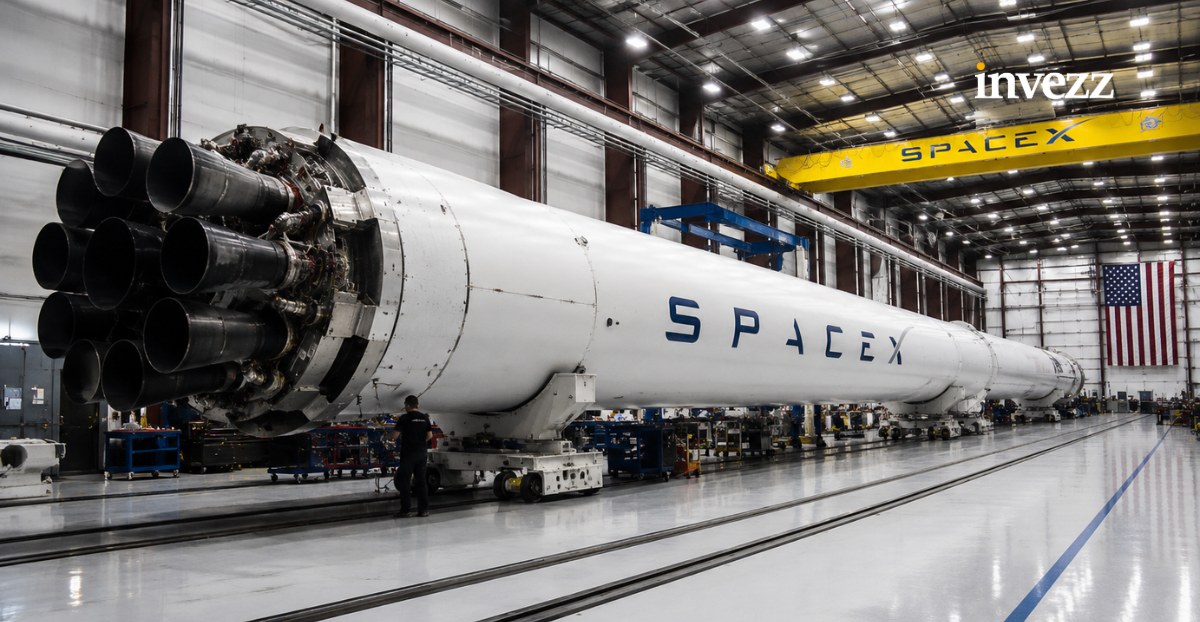
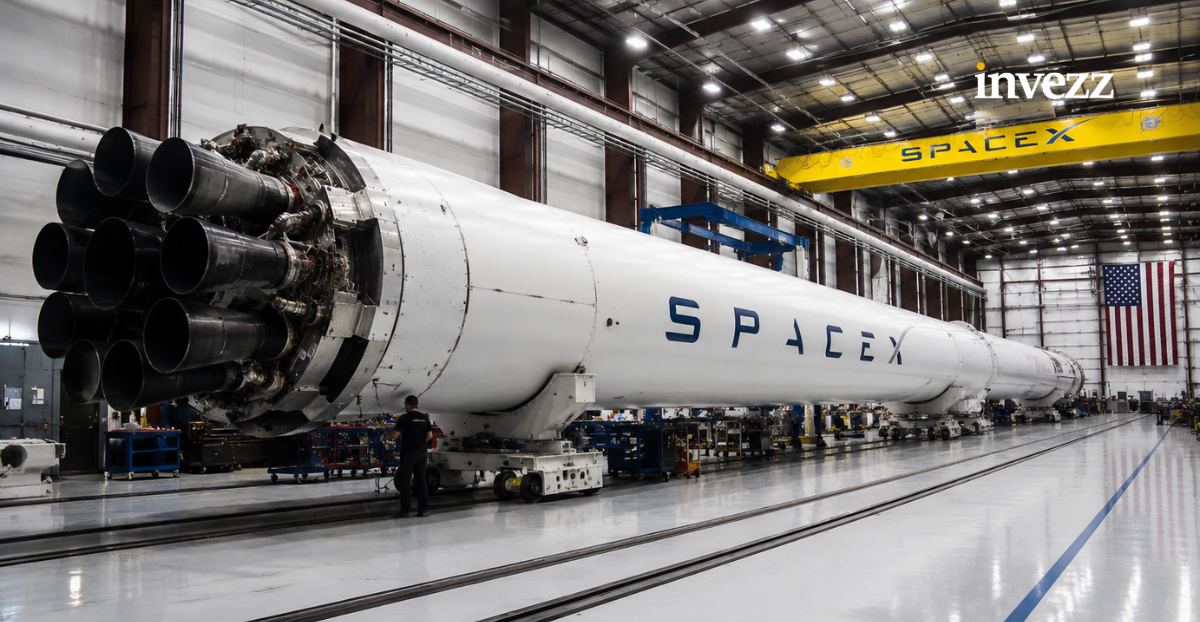
For SpaceX, the upcoming Starship test is another important event.
The company is developing the fully reusable rocket to reduce launch costs and increase its capacity to transport equipment into orbit.
That capability is expected to support its plans for space-based AI data centres and upgrades to the Starlink communications network.
Starship Flight 15 puts reusability in focus
The next Starship test flight is scheduled for Friday afternoon, with the launch window opening at 5:45 p.m. Eastern time.
SpaceX plans to attempt to catch both the upper and lower stages of the rocket using mechanical arms.
The recovery process is a significant engineering challenge, but successful reuse could help the company accelerate launches and reduce costs.
The flight is also expected to carry another 26 next-generation V3 Starlink satellites into orbit.
SpaceX deployed its first 26 V3 satellites during Starship Flight 14 in September.
The company’s ability to expand Starship’s launch capacity and improve rocket reusability will be important to its broader plans for satellite infrastructure and space-based computing.
Starlink download speeds raise capacity questions
Meanwhile, a report from network testing firm Ookla has raised questions about whether Starlink can maintain service quality as its customer base expands.
In the first half of 2026, the number of US Starlink Speedtest samples increased 41.8% year over year.
Median upload speeds rose 42% to 20.73 Mbps, while download speeds improved 12% to 119.71 Mbps. Latency also improved across 49 states and Washington, D.C.
However, median download speeds declined in 16 states and Washington, D.C. Texas, Florida and Washington, some of Starlink’s busiest markets, recorded relatively slow download speeds.
Ookla said the second half of the year would show whether network capacity can keep pace with customer growth.
It also noted that urban Speedtest users grew at more than twice the rate of rural users between the first half of 2025 and the same period in 2026.
SpaceX is relying on its V3 satellites to expand capacity.
The company says each satellite can provide about 10 times the downlink capacity of previous-generation models.
SpaceX is also expanding its terrestrial network ambitions through an agreement to acquire Grain Management’s nationwide 800 MHz spectrum portfolio, potentially positioning Starlink Mobile to compete more directly with US wireless carriers.
AI disclosure: AI tools assisted with research and drafting of this piece. An Invezz editor reviewed the facts, sources and wording before publication. Any opinions or analysis are Invezz’s, not those of an automated system.
The post SpaceX stock slips ahead of Starship test as Starlink speeds face scrutiny appeared first on Invezz