 By
By 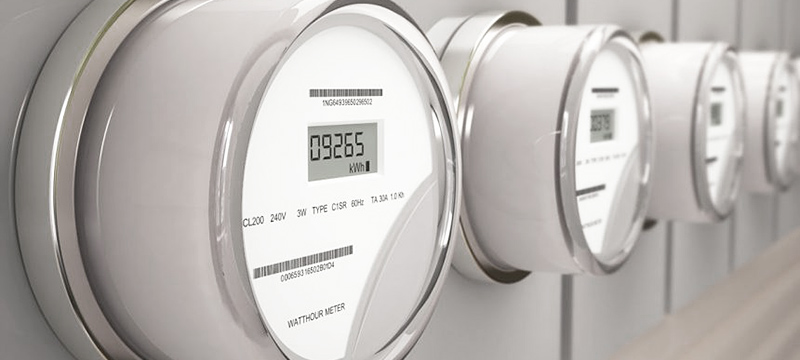
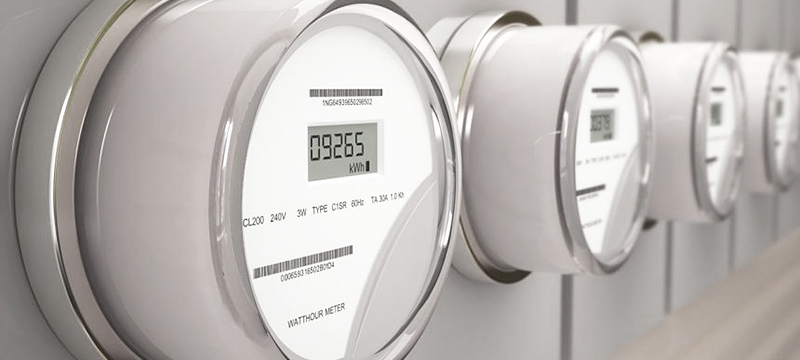
Landis+Gyr is integrating Thales’ SGP.32-compliant eSIM technology and connectivity management capabilities into its smart metering platforms, giving utilities more control over cellular connectivity throughout the operational life of deployed meters.
Smart meters are expected to remain in the field for many years, while the cellular networks supporting them can change considerably during the same period. Operators consolidate networks, coverage conditions evolve, technologies are retired and connectivity contracts change. For utilities managing large meter estates, replacing SIM cards or visiting devices simply to change network connectivity can therefore become a significant operational burden.
Landis+Gyr and Thales are addressing that lifecycle problem through a new collaboration focused initially on smart meter deployments in North America. Thales will provide its eSIM technology and IoT connectivity management capabilities, while the resulting connectivity functions will become part of Landis+Gyr’s Revelo and Surent platforms.
Moving the network decision beyond installation
The technical foundation is Thales’ latest IoT eSIM technology, which complies with the GSMA SGP.32 specification. SGP.32 enables connectivity profiles to be provisioned and managed remotely, allowing the network associated with an IoT device to change without replacing its SIM hardware.
This is particularly relevant to smart metering because the lifetime of the communications infrastructure does not necessarily match that of the meter itself. Separating the physical device from a fixed operator profile gives utilities more room to respond to changes in coverage, commercial arrangements or network availability after equipment has already been installed.
That principle is increasingly appearing elsewhere in cellular IoT. IoT Business News recently examined how SGP.32 is turning connectivity into a remotely programmable part of the IoT lifecycle in NTT DOCOMO BUSINESS’s latest IoT connectivity platform. The Landis+Gyr deployment applies the same underlying concept to a particularly long-lived and operationally sensitive class of infrastructure: utility meters.
A management layer spanning SIM and eSIM devices
The collaboration goes beyond remote eSIM provisioning. Thales’ technology will be combined with Simetric’s connectivity management platform, providing utilities with a centralized environment for monitoring, analysing and controlling connectivity across their meter fleets.
An important distinction is that the management environment supports both conventional SIM and eSIM-enabled devices. Utilities rarely replace an entire meter estate at once, so a platform limited to new eSIM equipment would leave operators managing separate generations of connectivity infrastructure. Supporting both allows existing devices and newer SGP.32-capable meters to remain visible through a common operational layer.
This makes the announcement different from a typical eSIM deployment focused primarily on simplifying initial device activation. Here, the emphasis is on managing a heterogeneous installed base over time. The value of remote provisioning therefore lies as much in operations after deployment as in eliminating SIM handling during installation.
Why lifecycle connectivity matters for utilities
The scale of the potential operational problem is substantial. Landis+Gyr says it serves more than 2,000 utilities worldwide and has more than 180 million connected intelligent devices in the field. Citing Berg Insight, the companies also expect the North American installed base of smart electricity meters to increase from 152.4 million in 2024 to 180.9 million by 2030.
At that scale, even relatively infrequent connectivity interventions can translate into large numbers of field visits. Remote profile management changes the economics: network changes can potentially become software operations applied to individual meters or groups of devices rather than physical maintenance tasks.
There is also a broader architectural implication. Smart metering does not have a single connectivity model. Recent deployments have demonstrated alternatives including RF mesh architectures that use cellular connectivity selectively. Landis+Gyr and Thales are addressing the other side of that equation: where cellular is part of the AMI architecture, making the cellular relationship itself more adaptable over the meter’s lifetime.
For utilities and system integrators, that shifts part of connectivity planning away from choosing the “right” operator at deployment time toward ensuring that the choice can be changed later. For connectivity providers, it also means that maintaining a position within a large utility fleet increasingly depends on software-based provisioning and lifecycle orchestration rather than a SIM installed permanently with the device.
The result is a more software-defined approach to smart meter connectivity. The meter may remain physically unchanged for years, while the network relationship behind it becomes something utilities can monitor and modify remotely as operational requirements evolve.
The post Thales and Landis+Gyr Bring SGP.32 eSIM Management to Smart Meter Fleets appeared first on IoT Business News.