
 By
By 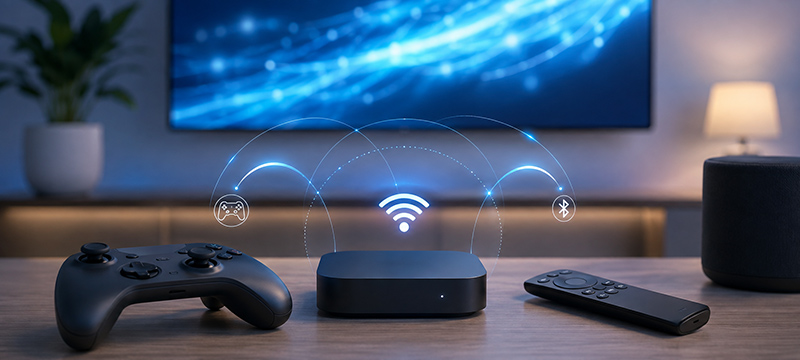
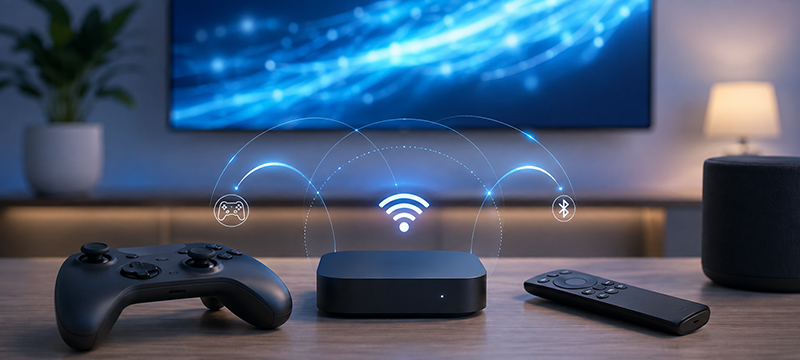
Quectel has introduced the FCE870X and FME170X, two tri-band Wi-Fi 7 modules that also integrate Bluetooth 6.0. The modules are positioned for products such as set-top boxes, gaming devices and other connected equipment where local wireless performance and peripheral connectivity increasingly matter.
As connected devices move more data locally and depend on lower-latency wireless links, the choice of embedded Wi-Fi module is becoming a more strategic design decision for OEMs. This is particularly true in consumer electronics and edge-connected products, where wireless connectivity is no longer limited to basic internet access but also supports streaming, interactive services, controllers, accessories and device-to-device communication.
Against that backdrop, Quectel has launched two new module families, the FCE870X and FME170X, combining tri-band Wi-Fi 7 with Bluetooth 6.0. The company identifies set-top boxes and gaming devices among the target applications, which points to use cases where sustained local connectivity, device responsiveness and support for multiple wireless functions are central to the user experience.
The distinctive aspect of the announcement is not simply that Quectel is adding another Wi-Fi module to its portfolio. The relevant point for device makers is the combination of Wi-Fi 7, tri-band operation and Bluetooth 6.0 in embedded module form. That positions the products for equipment designs that need both high-capacity local networking and short-range accessory or peripheral connectivity without requiring OEMs to source those capabilities as unrelated components.
For set-top box manufacturers, this matters because broadband gateways and home entertainment platforms are increasingly expected to handle richer media and more complex in-home wireless environments. For gaming device makers, the same module-level integration can support designs where Wi-Fi connectivity and Bluetooth-based interaction coexist within tight board, power and certification constraints. The press release does not provide throughput figures, interface details or certification information, so the practical evaluation will still depend on the full technical documentation available to OEM engineering teams.
A concrete implication is that module integration may reduce some design complexity compared with building equivalent Wi-Fi and Bluetooth subsystems separately. That does not eliminate RF design work, antenna planning or software integration, but it can shift part of the burden toward a pre-integrated connectivity component. For system integrators and product teams, this can shorten the path from wireless feature selection to product architecture, provided the module aligns with the host platform and regional regulatory requirements.
The broader industry relevance is that Wi-Fi 7 is moving beyond routers and premium networking equipment into embedded device categories. This transition is important for the IoT and connected-device ecosystem because local wireless performance increasingly influences cloud service quality, edge processing workflows and user-facing responsiveness. A device may rely on cloud platforms, content services or remote management, but its perceived performance often depends on the local wireless link.
Connectivity providers are less directly affected than OEMs, since the announcement concerns local-area wireless rather than cellular or LPWAN connectivity. However, it reinforces a wider architectural trend: connected products are becoming multi-radio systems, and cellular, Wi-Fi and Bluetooth choices are increasingly evaluated together at the design stage. Industrial and enterprise buyers should also note the direction of travel, even if the cited target markets are consumer-oriented, because module-level adoption of newer Wi-Fi generations tends to precede wider availability across edge gateways and professional equipment.
Quectel’s announcement therefore sits at the intersection of embedded wireless design and the growing performance expectations placed on connected devices. The significance will ultimately depend on how the FCE870X and FME170X are implemented in real products, but the launch signals that Wi-Fi 7 and Bluetooth 6.0 are now being packaged for device categories where wireless capability is part of the core product experience rather than an add-on feature.
The post Quectel Adds Wi-Fi 7 and Bluetooth 6.0 Modules for Consumer and Edge Devices appeared first on IoT Business News.