
 By
By 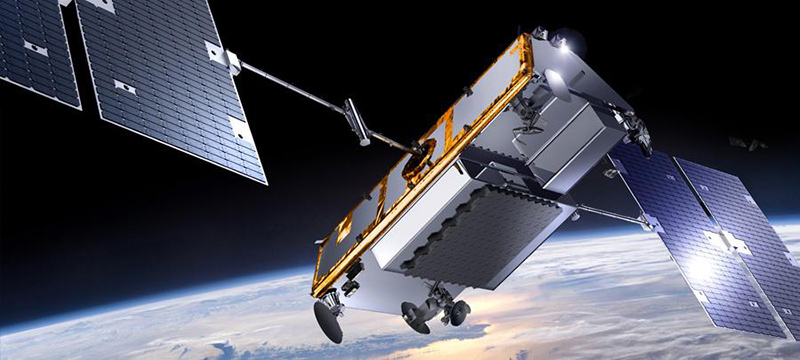
Rocket Lab has agreed to acquire Iridium in a cash-and-stock transaction valuing Iridium at about $8.0 billion. For the IoT market, the proposed deal is notable because it would combine a global L-band satellite communications network and subscriber base with launch and satellite manufacturing capabilities under one owner.
Satellite IoT is no longer defined only by coverage maps. For remote monitoring, maritime tracking, aviation, defense and industrial assets outside terrestrial network reach, the harder questions increasingly concern spectrum access, constellation renewal, device ecosystem support and the economics of keeping services available over long operating lifecycles.
That is the context behind Rocket Lab’s agreement to acquire Iridium Communications, a transaction that would move Rocket Lab beyond launch services and spacecraft systems into the operation of a global satellite services business. Under the agreement, Iridium shareholders would receive $54 per share in a cash-and-stock transaction, with the deal implying an enterprise value of approximately $8.0 billion. Completion is expected in mid-2027, subject to Iridium shareholder approval, regulatory approvals and other customary closing conditions.
Why this is different from a typical satellite IoT announcement
Most satellite IoT announcements involve a new constellation plan, a module integration, a roaming arrangement or a standards-based NTN initiative. This proposed deal is different because it links several layers of the space connectivity stack that are usually managed by separate companies: launch, spacecraft manufacturing, satellite components, spectrum rights, on-orbit network operations, and a commercial partner ecosystem.
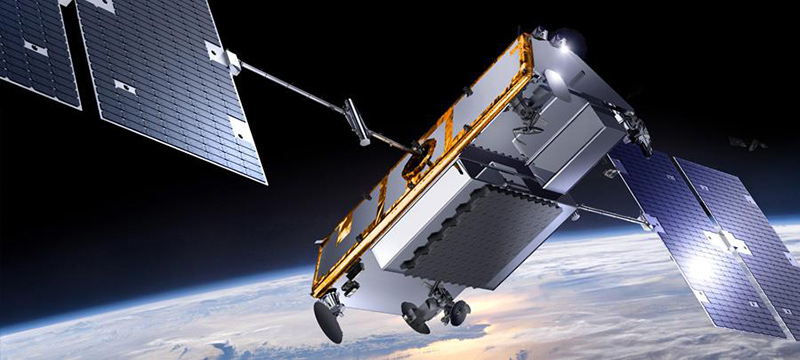
Iridium brings globally coordinated L-band spectrum, a low Earth orbit satellite network, more than 2.55 million active subscribers and a partner ecosystem of more than 500 companies. Rocket Lab brings launch capabilities, spacecraft manufacturing and space systems expertise. If the transaction closes, the combined company would not merely resell satellite capacity or manufacture satellites for third parties; it would own the infrastructure needed to design, build, launch and operate its own space-based communications services.
For IoT professionals, the most important asset in the transaction may not be the satellites themselves but the combination of L-band spectrum and an established service ecosystem. Spectrum is a gating factor in satellite communications, and L-band remains relevant for applications that prioritize reliability and availability over broadband throughput. That makes the deal particularly relevant to low-data-rate and mission-critical use cases such as remote asset monitoring, maritime operations, aviation communications, emergency services and industrial activity in off-grid locations.
The announcement also places Iridium’s satellite IoT, direct-to-device, PNT and safety-of-life services inside a company whose business already includes launch and spacecraft production. A practical implication is that future constellation deployment and replenishment decisions could be coordinated more tightly with manufacturing and launch planning. That does not remove the regulatory, technical or capital requirements associated with satellite networks, but it could reduce the number of organizational handoffs involved in maintaining and evolving the infrastructure.
Implications for IoT device and connectivity strategies
For OEMs and device makers, the transaction does not immediately change hardware requirements or service availability. The deal has not yet closed, and the companies have not announced new device specifications, module programs or pricing changes. The relevant near-term takeaway is more strategic: a major satellite IoT network could become part of a vertically integrated space company with an incentive to expand recurring services, not just supply launch capacity or spacecraft hardware.
Connectivity providers and system integrators will be watching how Rocket Lab handles Iridium’s existing partner-led go-to-market model. The press release specifically references Iridium’s 500-plus partner ecosystem, which is central to how satellite connectivity reaches specialized vertical markets. Preserving that ecosystem matters because satellite IoT deployments often depend on integration knowledge around antennas, power budgets, enclosure design, certification processes, cloud ingestion and field maintenance.
Enterprises and industrial users should view the announcement through the lens of resilience rather than replacement. Iridium’s network supports applications where terrestrial cellular, LPWAN or GNSS-based systems may be unavailable, degraded or unsuitable. In practical IoT architectures, satellite links typically complement terrestrial networks by covering remote assets, emergency fallback paths or mobile operations outside reliable ground coverage.
The transaction also reflects a broader shift in the space and telecom sectors: satellite connectivity is moving closer to mainstream communications infrastructure, including standards-based direct-to-device services and alternative PNT. The companies specifically point to proprietary and standards-based satellite IoT, Iridium NTN Direct, PNT and safety-of-life services as areas of focus. For the IoT ecosystem, that convergence could increase the importance of multi-network device design and service orchestration across terrestrial and non-terrestrial networks.
The deal still faces a long approval path. Until it closes, customers and partners should avoid assuming product-level changes. But the strategic direction is clear: Rocket Lab is attempting to move from enabling space infrastructure to owning a global communications service layer. In satellite IoT, where coverage, spectrum, device ecosystems and constellation continuity all matter, that vertical integration is what makes this announcement stand apart.
The post Rocket Lab’s $8 Billion Iridium Acquisition Reshapes the Satellite IoT Landscape appeared first on IoT Business News.