
 By
By 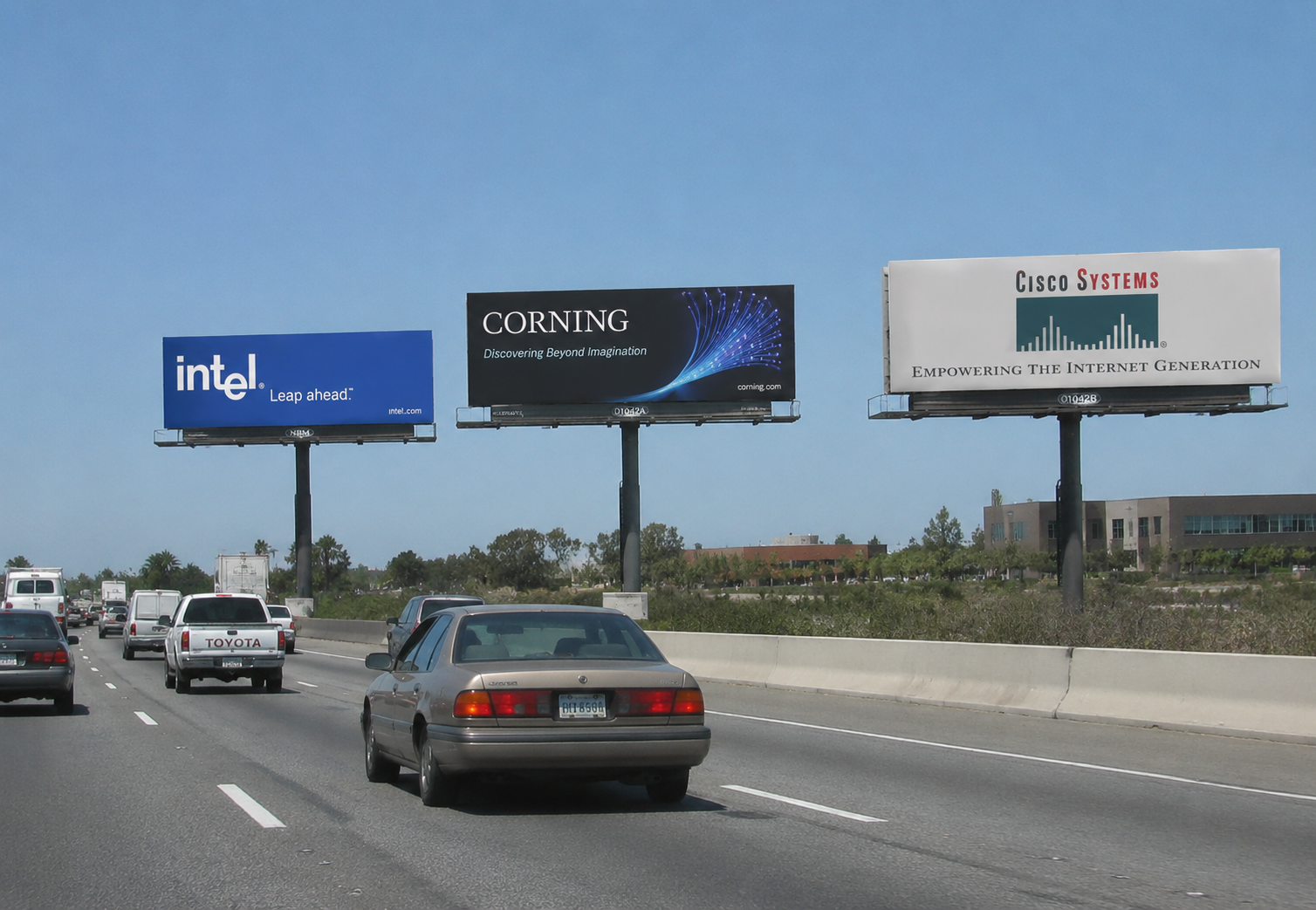
More than 25 years after the dot-com crash wiped out trillions of dollars in market value, some of the same companies that once symbolised the excesses of the internet boom are once again at the centre of Wall Street’s hottest rally.
Cisco Systems, Intel and Corning — three companies whose meteoric rise and collapse came to define the technology bubble of 2000 — are now staging dramatic comebacks powered by investor enthusiasm around artificial intelligence.
Their combined resurgence has reignited debate over whether markets are witnessing the early stages of another speculative mania.
The renewed rally accelerated this week after Cisco delivered stronger-than-expected earnings and sharply raised its outlook for AI-related demand.
The networking giant’s shares surged 17% on Thursday to a record high, marking their biggest single-day gain in more than two decades and their best performance since the aftermath of the dot-com collapse in 2002.
The move added to a broader rally across legacy technology stocks tied to AI infrastructure, helping propel the State Street Technology Select Sector ETF to fresh all-time highs earlier this week.
Yet the similarities to the late 1990s are becoming difficult for many investors to ignore.
Cisco’s AI comeback surprises Wall Street
Earlier this week, options traders had begun piling into bullish bets on Cisco, anticipating a strong earnings report driven by its AI infrastructure business.
Those wagers paid off.
Cisco beat Wall Street expectations on both revenue and earnings while reporting a sharp rise in demand from hyperscale cloud providers investing heavily in AI data centres.
The company said it had booked $5.3 billion in AI infrastructure orders from hyperscalers so far this fiscal year and raised its full-year expectations to $9 billion from $5 billion previously.
Management said the increase was driven by booming demand that showed little sign of slowing.
Cisco has increasingly positioned itself as a crucial supplier of networking gear, optics and silicon used in AI data centres, benefiting from massive spending by technology giants racing to build AI infrastructure.
The stock has gained more than 50% this year alone.
“Massive déjà vu here from 1990s — but it actually could be just beginning for Cisco as their investments in silicon and optics pay off,” Melius Research analyst Ben Reitzes wrote in a note.
“Cisco feels a lot like Intel here, as the puck has gone to where CEO Chuck Robbins invested — rewarding the company for its custom silicon and optics,” analysts at Melius added.
Evercore ISI analyst Amit Daryanani also pointed to echoes of the internet boom era.
“1999 called, and it wants its networking boom back,” Daryanani said in a Barron’s report while lifting his price target on Cisco shares.
“This is a breakout print, and we expect as investors appreciate the durability of growth here the stock should work higher.”
Intel and Corning join the old-tech revival
Cisco is not alone in its resurgence.
Intel, once considered one of the biggest casualties of the post-dot-com era, surpassed its pre-crash peak last month amid a rally that has seen the stock surge roughly 200% this year.
The company’s revival has been tied partly to optimism surrounding artificial intelligence chips and confidence in CEO Lip-Bu Tan’s turnaround strategy.
Since Tan took over in March last year, Intel has added more than $500 billion in market value.
Corning, the fibre-optics and specialty glass maker whose shares collapsed after the internet bubble burst, has also staged a remarkable rebound.
The stock has climbed more than 115% this year and exceeded its previous record high set in September 2000.
Corning has benefited from deals tied to AI infrastructure, including partnerships with Nvidia, while also supplying glass for Apple’s iPhones.
Together, Cisco, Intel and Corning have become symbols of a broader “old tech” revival that has swept through markets as investors hunt for infrastructure companies positioned to benefit from AI spending.
Bubble fears begin to resurface
However, the rally has also revived uncomfortable memories of the late 1990s.
In the spring of 2000, Cisco, Intel and Corning all hit record highs shortly before technology markets collapsed in spectacular fashion.
Cisco, which had surged more than 126% during the internet boom in 1999, went on to lose roughly 90% of its value over the following 18 months as the dot-com bubble burst.
The stock failed to close above its March 2000 peak on a monthly basis until last month.
Some market veterans now worry that the current obsession with AI is beginning to resemble the speculative fervour of that era.
Last week, famed investor Michael Burry — known for predicting the housing crash depicted in “The Big Short” — warned that the market’s fixation on AI looked increasingly similar to the final phase of the dot-com bubble.
“Absolutely non-stop AI. Nobody is talking about anything else all day,” Burry wrote in a Substack post.
“Stocks are not up or down because of jobs or consumer sentiment,” he wrote.
“They are going straight up because they have been going straight up. On a two letter thesis that everyone thinks they understand. … Feeling like the last months of the 1999-2000 bubble.”
Hedge fund billionaire Paul Tudor Jones has also drawn comparisons between the current AI rally and the environment that preceded the technology crash more than two decades ago.
Jones said this week that markets today feel similar to 1999 — roughly a year before technology stocks peaked — though he believes the rally may still have room to continue.
“Just imagine the stock market went up another 40%,” Jones said on CNBC.
“The stock market GDP is going to probably be good lord 300%, 350%. You just know that there’ll be some … breathtaking kind of corrections.”
Why analysts say this cycle may be different
Despite growing concerns, many analysts argue there are important differences between today’s AI boom and the speculative excesses of the dot-com era.
“There are clear similarities between the AI bull market cycle and the dot-com boom of the late 1990s,” Jeff Buchbinder, chief equity strategist at LPL Financial, said in a Barron’s report.
“Technology stocks provided market leadership; valuations were elevated; there were segments of market speculation; and technology advances were life changing.”
However, Buchbinder noted that the AI buildout is being funded largely through real cash flows rather than speculation alone.
Today’s dominant technology companies are also vastly more profitable than many internet firms during the late 1990s.
“In terms of what companies are leading the current technology revolution, how the stock market is valuing them, how much speculation is taking place, and what stage of the cycle we’re in, we see important distinctions,” he added.
“We think this bull market still has a way to go and expect the technology sector to lead.”
Former Chase chief economist Anthony Chan echoed that view.
“Many of the leading AI companies currently dominating the market are profitable and generating enormous cash flows,” Chan wrote.
“During the dot-com era, numerous internet companies had little or no earnings and limited revenues. Today’s leading technology firms are among the most profitable corporations in history. Companies like Microsoft, Alphabet, and NVIDIA generate billions in earnings and possess substantial pricing power in critical areas of the digital economy.”
The post AI’s time machine: How Cisco, Intel, and Corning are reviving fears of the tech crash appeared first on Invezz