
 By
By 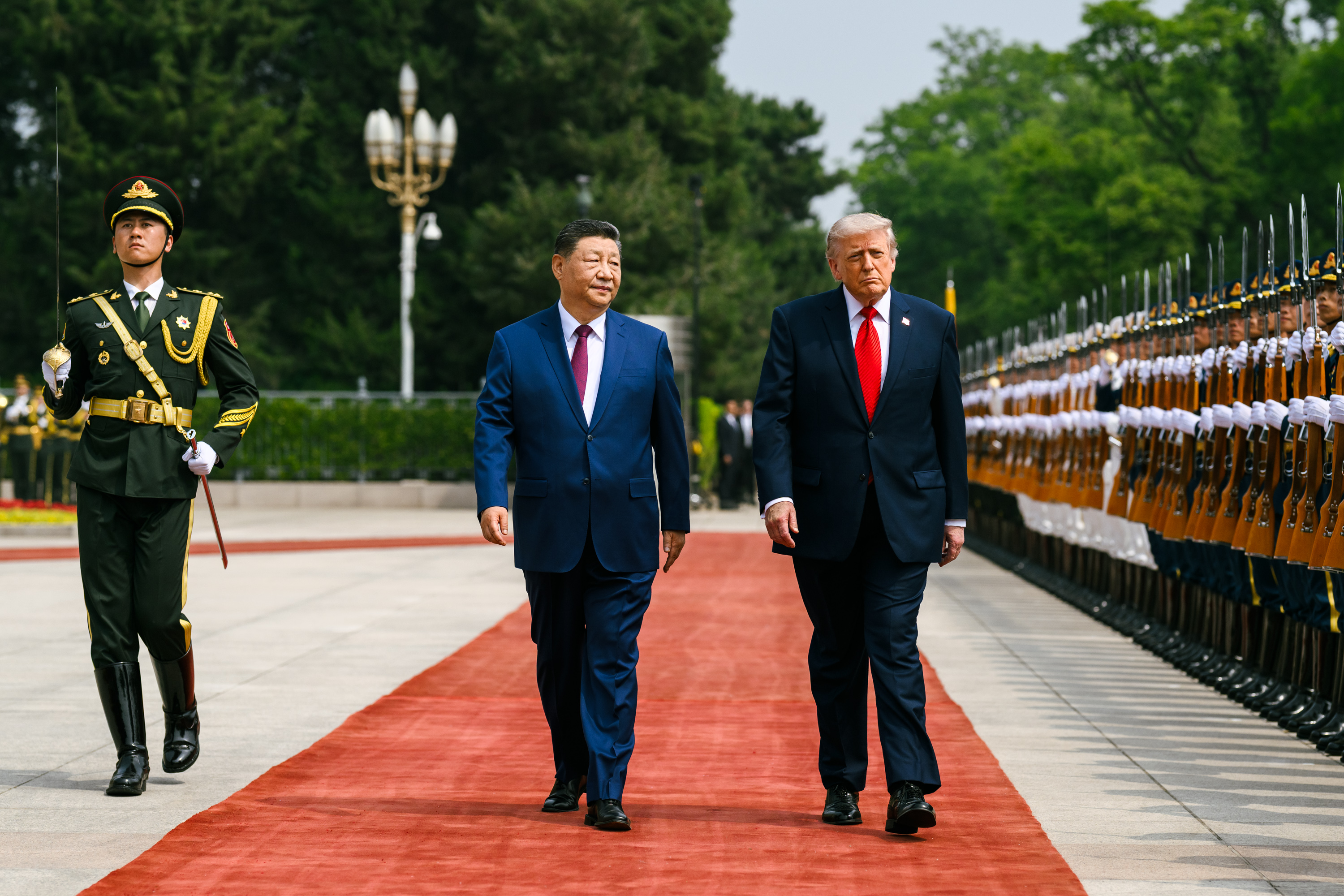
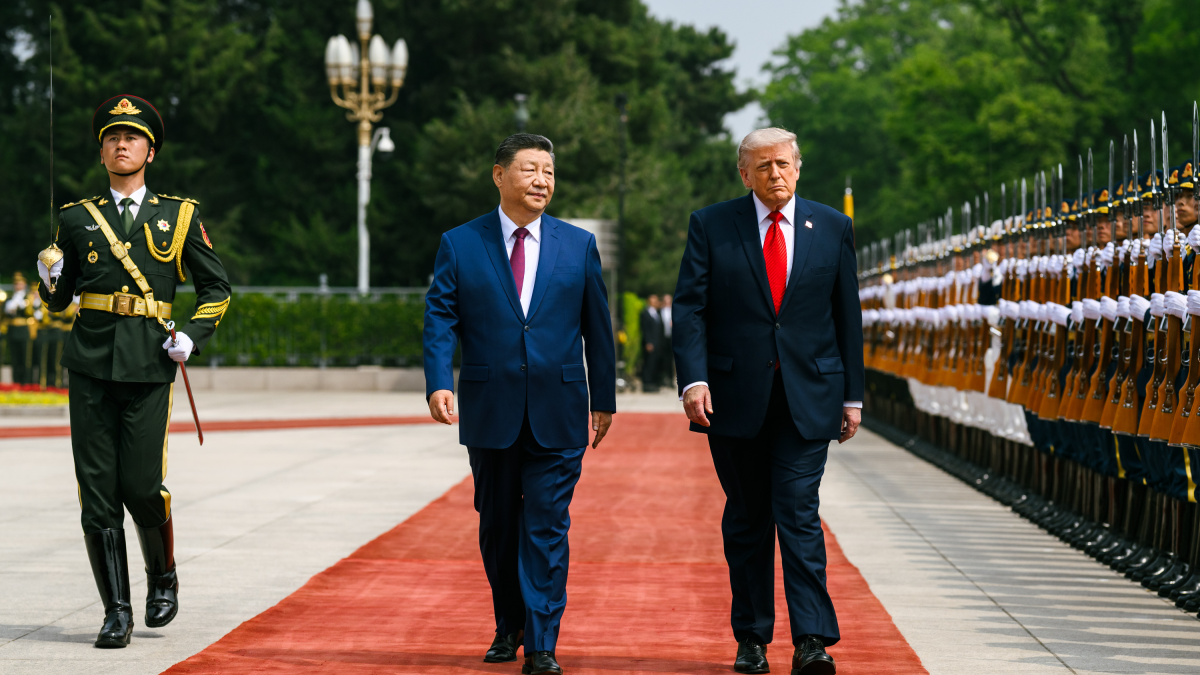
At the time of writing, President Trump, along with a clutch of top US corporate executives, is in China.
Mr Trump and Chinese President Xi Jinping have already held a formal meeting in Beijing.
But as things stand, there have been scant details over what has been discussed, let alone agreed.
What is known so far is that the meeting lasted over two hours, well beyond the hour allotted for talks.
Mr Trump described the discussions as “great” and said the relationship between the two countries would be “better than ever before.”
But Xi Jinping warned that the US and China could ‘come into conflict’ should the issue of Taiwan be mishandled.
So far, there have been no direct announcements related to trade, artificial intelligence, rare earth exports and the ongoing Middle East conflict.
Yet, as of Thursday afternoon, both the NASDAQ and S&P were trading at fresh all-time highs, and it looks as if investors expect the US contingent to leave with a durable deal.
In perhaps the best outcome, some analysts believe this could result in a significant tariff reduction, affecting as much as £30 billion (approx. $39.6 billion) worth of goods.
Otherwise, an agreement to extend the existing tariff pause would be viewed as a kind of basic compromise that would work for both sides.
What is not being priced in is the prospect that no deal is reached, and the current pause in tariffs is left to expire in August. But that is not what the current mood music suggests.
Meanwhile, semiconductors remain at the forefront of the breathtaking US stock market rally, which took off at the end of March.
This has been spectacular, with triple-digit percentage gains for certain corporations over the past six weeks.
These include Micron Technologies, which is up around 150%, while AMD and Intel have added 127% and 200%, respectively.
The tech-heavy NASDAQ is up over 28% over the same period.
While impressive, periods like this, when growth stocks dominate market action, often end with a pullback.
But as we’ve seen on numerous occasions since the latest leg of the rally began in October 2022, such pullbacks rarely put a dent in the bull market.
Those investors who are in a position to book profits on their growth stock holdings then seek out value and reallocate their profits to overlooked corners of the market.
But every time this situation plays out, and with every new record high posted (bear in mind that both the Dow and small-cap Russell 2000 are currently underperforming), the risk rises.
That’s especially true currently when record market moves in the NASDAQ and S&P come against an uncertain background, both geopolitically and economically.
There is no indication that the war between the US and Iran could end anytime soon, with even the prospect of restarting peace negotiations looking bleak.
Meanwhile, the Strait of Hormuz remains closed and effectively controlled by Tehran, although the US Naval blockade of Iranian ports in the region appears to be hurting Iran.
Economically, the latest US data releases have shown an unwelcome jump in inflation.
The latest updates on CPI and PPI came in hotter-than-expected.
Core PPI, a measure of wholesale inflation that excludes food and energy, shot up to 5.2% year-on-year, its highest level since December 2022 and well above expectations and the prior month’s reading of 4.0%.
This complicates matters for incoming Fed Chair Kevin Warsh, particularly as his own favourite inflation measure, ‘trimmed mean’ CPI, just posted its biggest month-on-month rise in over two years.
Not only does Mr Warsh take up the position as Fed Chair when the FOMC is more divided than at any time since 1992, but he will also be under pressure from President Trump to cut rates, even as inflation spikes, the labour market is stable and economic growth is relatively robust.
A look at the CME’s FedWatch Tool shows that the likelihood of a 25-basis point rate cut before year-end is now less than 2%.
Meanwhile, the probability of a quarter point rate hike is above 30%, having been below 1% this time last month.
The chance that rates remain unchanged for the rest of this year currently stands at 62%.
So Mr Warsh has a battle ahead, assuming he really believes that looser monetary policy is really what the US economy needs right now.
Chart-wise, both the NASDAQ and S&P appear to be experiencing melt-ups.
Could this prove to be a blow-off top like those seen in precious metals at the end of January?
Or will there be an orderly end to the rally, with a decent period of consolidation before it takes off again?
The purchases up here look as if they are being driven by FOMO and the belief that US equities only ever go up.
But that ignores the fact that the risk of a significant pullback increases at every new high.
(This is a fortnightly column by David Morrison. He is a Senior Market Analyst at Trade Nation. Views are his own.)
The post Column: All-time highs, hot inflation and a deal that isn’t done yet appeared first on Invezz