
 By
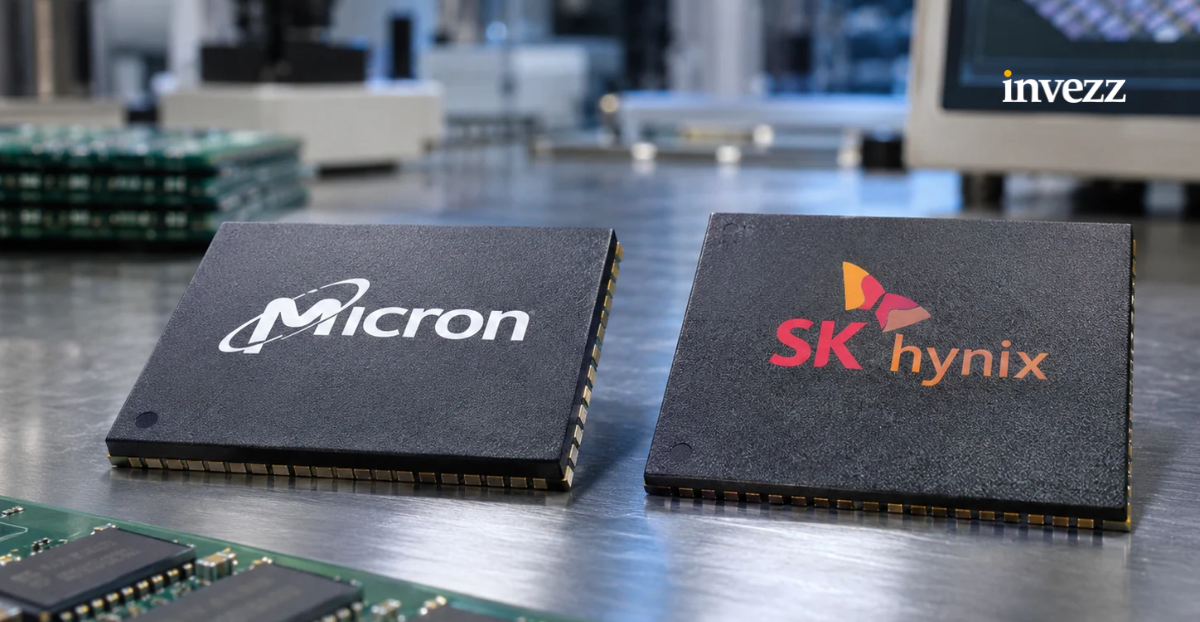
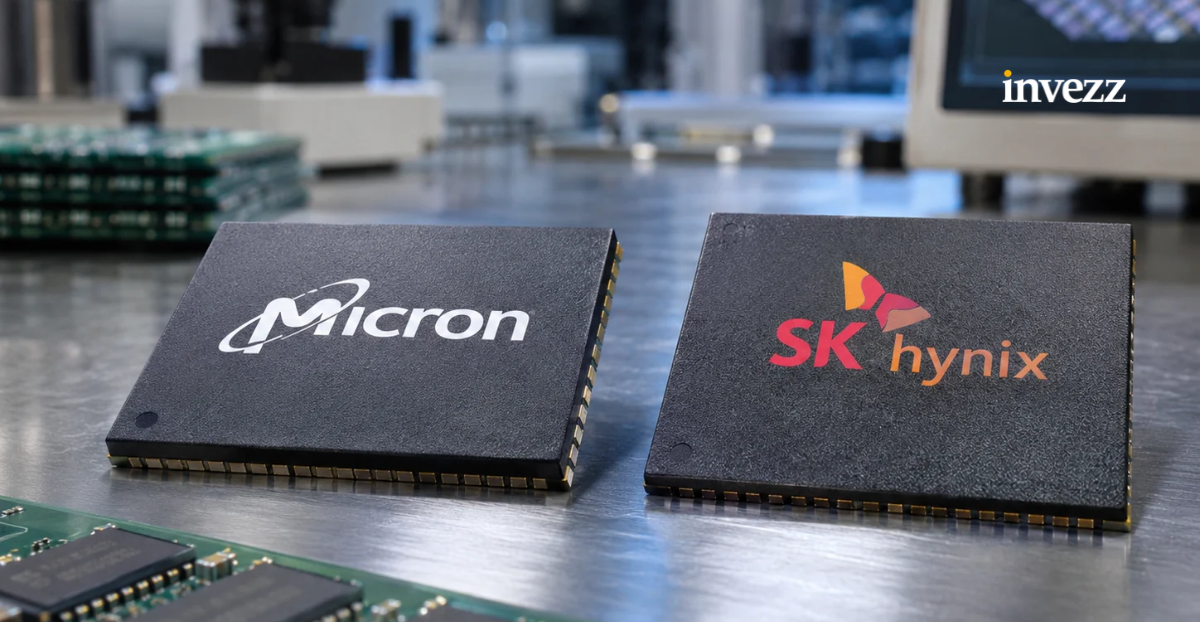
Micron Technology, SK Hynix and SanDisk shares rebounded on Friday as investors returned to technology and artificial intelligence-linked stocks, bringing some relief after a volatile week for the semiconductor sector.
Micron shares MU rose about 1.2% in early trading, while South Korea’s SK Hynix gained around 6% and SanDisk advanced nearly 5.3%.
The recovery extended across the AI trade, with Nvidia, Intel and Advanced Micro Devices (AMD) all climbing higher at open.
Nasdaq opened over 1.5% higher.
However, Friday’s gains came after a steep monthly decline.
Micron has lost more than 35% over the past month, while SK Hynix is down about 24% and SanDisk has fallen 55%.
The recent weakness reflects growing investor anxiety over whether the enormous investment in AI infrastructure will generate sufficient revenue and profits to justify the spending.
Concerns about a Democratic sweep of Congress and the possibility of tighter scrutiny of data centre construction have added to uncertainty around future chip demand.
For memory manufacturers, the central question is whether the current supply shortage and elevated prices can persist as data centre projects face potential delays and customers reconsider how much memory they need.
Analysts warn of mounting memory oversupply risks
BNP Paribas downgraded Micron to Neutral from Outperform earlier this week, warning that the risk of an “oversupply scenario is mounting” in the memory market.
Analyst Karl Ackerman also slashed his price target to $775 from $1,700.
Ackerman expects memory demand to peak earlier than previously anticipated, potentially setting the stage for excess supply as manufacturers bring additional capacity online.
He highlighted permitting delays affecting data centre construction as a significant risk.
The memory and storage industry is “heavily reliant” on data centre projects, with servers accounting for at least half of demand for dynamic random-access memory (DRAM) and NAND flash memory.
If construction is delayed, spending on servers and associated memory could also be postponed.
That would give manufacturers more time to increase supply, potentially narrowing the gap between demand and available capacity.
Another concern is that rising memory prices are prompting technology vendors to reduce the amount of memory used in their products.
Ackerman pointed to Nvidia’s decision to reduce high-bandwidth memory content in its new Vera Rubin Ultra architecture, as well as reductions in memory specifications across personal computers and mobile devices.
The consumer market presents an additional challenge because long-term volume and price agreements are uncommon in the PC and mobile segments.
That makes it harder for memory manufacturers to secure favourable pricing and protect margins when demand weakens.
GF Securities cuts 2027 DRAM price forecasts
Fresh concerns emerged on Friday after GF Securities lowered its forecast for DRAM contract prices in 2027, citing order reductions among Chinese customers.
The Hong Kong-based investment firm now expects quarterly contract price increases of 6%, 3%, 0% and 0% across the four quarters of 2027.
Its previous estimates were 10%, 7%, 5% and 3%, respectively.
The revision reflects weaker demand signals from Chinese cloud service providers, according to data from TrendForce.
In a report published on Friday, TrendForce warned that uncertainty surrounding data centre investment could weigh on DRAM demand over the next two years.
Its base-case scenario sees conventional DRAM contract price increases narrowing throughout 2027, with prices potentially stabilising in the second half before declining in 2028.
A more pessimistic scenario suggests prices could begin falling as early as the fourth quarter of 2027 if server manufacturers reduce procurement and inventories.
TrendForce cited lower server DRAM demand from Chinese cloud providers, potential restrictions on data centre development and expanding production capacity among memory manufacturers.
“The shortage of GPU has led to the server DRAM order cut from Chinese CSPs, affecting ~1% of total DRAM demand, which can be absorbed by US [cloud service providers],” GF analysts wrote in a note to clients.
“Besides, consumer DRAM demand is softer due to the order cut of eSSD and spec downgrade of consumer electronics, which will place downward pressure on consumer DRAM pricing, especially for DDR4.”
Supply constraints could support Micron and SK Hynix
Despite the downward revisions, GF Securities does not expect the memory market to move immediately into a prolonged supply glut.
The firm believes DRAM supply could remain tight until 2028, partly because manufacturers are allocating more capacity towards high-bandwidth memory used in AI systems.
That could encourage major suppliers, including Micron, SK Hynix and Samsung Electronics, to remain cautious about expanding conventional memory production.
“If demand weakness persists and prices roll over, the potential production cut is under consideration, which can better support the LTA floor price,” the analysts added.
“We remain constructive on main DRAM vendors including Micron, SK Hynix and Samsung Electronics, as we see the downward revision more limited and potential production cut to maintain price,” the analysts explained.
The contrasting outlooks leave memory investors weighing near-term demand risks against the possibility that disciplined production and continued AI infrastructure spending will keep supply constrained.
Friday’s rebound suggests buyers are still willing to return to the sector, but the durability of the recovery will depend on whether memory prices and data centre investment can withstand the emerging headwinds.
AI disclosure: AI tools assisted with research and drafting of this piece. An Invezz editor reviewed the facts, sources and wording before publication. Any opinions or analysis are Invezz’s, not those of an automated system.
The post Micron, SK Hynix, SanDisk stocks rise but what’s the verdict on demand outlook? appeared first on Invezz