
 By
Jensen Huang is back at Nvidia.
When he returned to the company’s Santa Clara headquarters on November 23, 2026, he was greeted with cheers, applause, and chants of his name from employees gathered across three floors of the office to welcome him back.
One detail stood out.
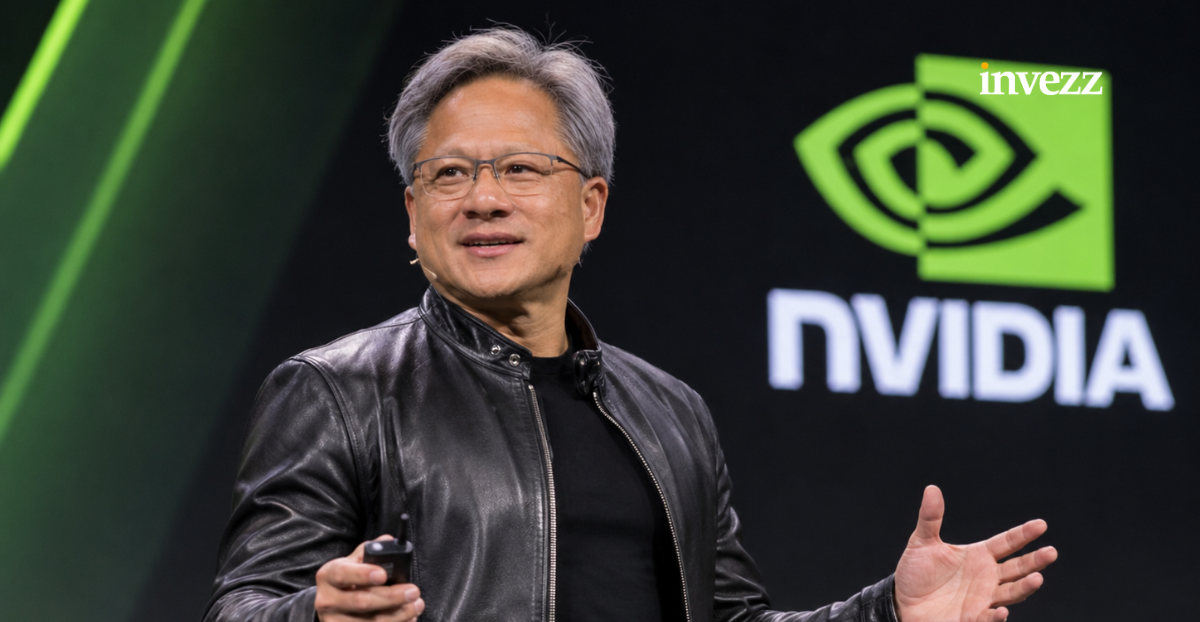
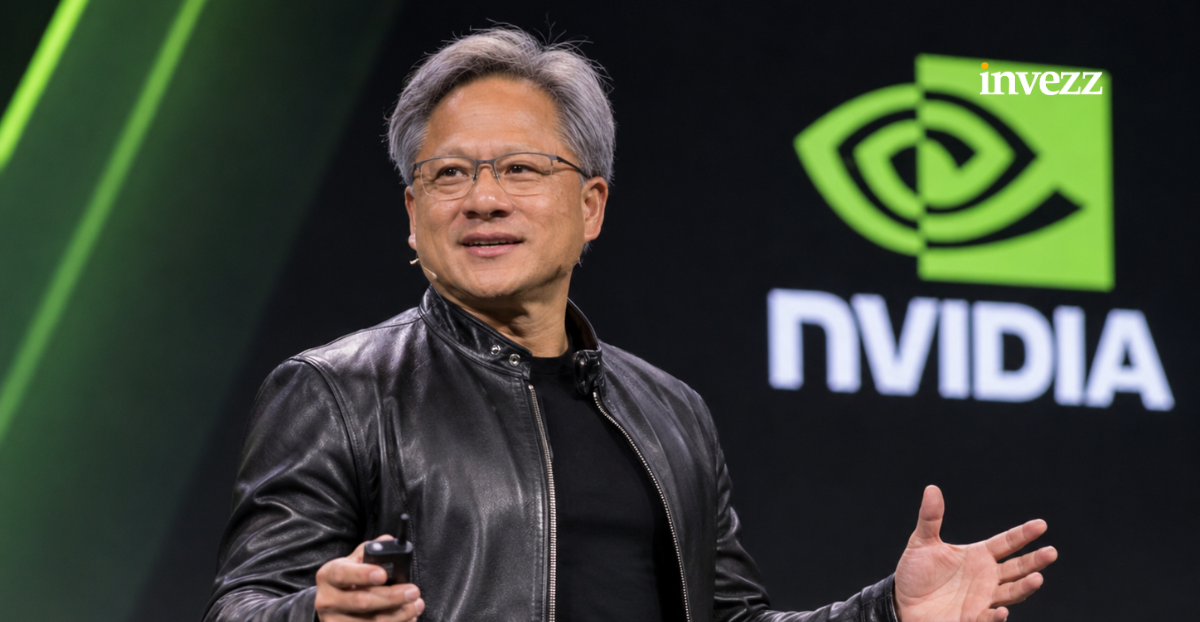
Huang had traded his trademark leather jacket — widely seen as a symbol of his distinctive persona and the unconventional leadership style that helped shape Nvidia — for a more understated navy cotton jacket.
He still stood out, but the change appeared to signal a desire to project humility rather than flamboyance.
Addressing the cheering employees, Huang said, “I am going to be a better CEO the second time around.”
During an all-hands meeting on Tuesday, Huang reportedly apologised to staff and said he was undergoing therapy.
“I made some terrible mistakes,” Huang said, according to The New York Times.
“I was unfaithful to Lori, and I hurt my kids, and of course, I hurt all of you.”
Huang also pushed back against the notion that he was a “tech bro” who stood above the company’s code of conduct.
He reportedly acknowledged violating Nvidia’s code of conduct and made a similar disclosure to the board, admitting that he had carried on affairs beyond the two that had already received widespread media coverage, The Wall Street Journal reported.
But it is not just Huang’s demeanour that has changed.
The circumstances under which he would lead Nvidia, both internally and externally, have also shifted since revelations earlier this month about his alleged relationship with a Chinese spy that triggered further disclosures about other relationships, eventually culminating in his resignation before his reinstatement 11 days later.
His reinstatement then raises a broader question: what changes for Jensen 2.0 as he reclaims the reins of the company?
The answer may lie less in his public apology and more in the governance structures, financial discipline and political constraints that Nvidia has put in place during his absence.
A different board and greater oversight
When Nvidia announced Huang’s reinstatement on Monday, it said the board would continue investigating whether he had been the target of a foreign intelligence effort.
Huang reportedly told employees on Tuesday that Nvidia had also begun a process under which his direct reports would send reviews of his behaviour to the board.
Reports in the wake of the scandal highlighted how Huang routinely humiliated and berated employees, with such behaviour becoming a prominent feature of his management style.
The scandal also brought scrutiny to Nvidia’s board, which was criticised for allowing Huang to operate with little challenge.
The company has now introduced structural changes to its governance.
For the first time, Nvidia has appointed a chair of the board, Harvey Jones.
It has also formed a National Security and Export Control Committee comprising independent directors to oversee trade compliance and national security risks.
In addition, the company is looking for a chief compliance officer who will oversee compliance matters and report to the Nominating and Corporate Governance Committee.
These changes could make Huang’s second stint different from his first.
He returns to a company with more formal mechanisms to scrutinise his conduct and decisions.
At least in the initial months, he may not enjoy the same degree of unrestrained authority that he previously exercised.
The changes also suggest that the board wants to establish clearer lines of accountability as Nvidia becomes increasingly important to the global technology industry and national security debates.
Neil Shah of Counterpoint Research described the next phase as a more disciplined version of Huang’s leadership.
“I believe this second innings Jensen Huang call it “Jensen 2.0” will be more hungry and humble,” Shah said in a post on LinkedIn.
“Jensen returns to a very different board, with an independent chair, a new National Security and Export Control Committee, NVIDIA’s first Chief Compliance Officer and an investigation that is still running,” he wrote in his report: ‘Jensen 2.0: The Beat Is Back, but the AI Split Is Here to Stay’
“His approach to the ecosystem stays aggressive, but it is now aggression with guardrails. We also expect less of the circular financing that defined the last two years,” he said.
Nvidia’s role as the ‘central bank of AI’ faces scrutiny
A glimpse of how Nvidia’s (circular) financing of the AI ecosystem — which has earned it the moniker of the ‘central bank of AI’ — may evolve came from interim chief Colette Kress during the company’s earnings call last week.
Kress indicated on Nvidia’s earnings call last week that the company would continue making investments, but also signalled a more cautious approach.
She said Nvidia had “a lot of work to understand if those are the right types of investments that we need to make,” while stressing that the company would prioritise returning cash to shareholders.
“As the market matures and additional sources of capital become available, we are rigorously evaluating future investments, commitments, and guarantees,” she said.
“We will continue to be disciplined and selective in our support,” Kress said during the third-quarter earnings call.
The chipmaker has increasingly acted as a kind of central bank for the AI boom, investing in customers and suppliers while also providing financial guarantees that help companies secure the computing infrastructure they need.
Its equity investment portfolio was worth more than $100 billion at the end of its most recent quarter.
Nvidia also provided a $105 billion backstop on an OpenAI data-centre lease in Ohio and pledged up to $125 billion in “residual-value support” for potential deals involving a consortium of Wall Street banks, although none of those deals has yet been finalised.
According to a recent PitchBook research note, the company participated in 27.2% of global venture capital deals by value year to date.
Its deal count rose from 49 in 2023 to 129 so far in 2026, while the value of deals involving Nvidia reached $219.5 billion, compared with $6.4 billion in 2023.
Kress’ comments suggested that Nvidia may be moving towards a more selective capital-allocation strategy, particularly as other sources of funding become available to AI companies.
“It may soon be harder for artificial intelligence companies to get Nvidia’s NVDA money,” wrote Jacob Robbins at Morningstar.
Manuel Pinto, head of analysis at XTB Spain, told Invezz earlier that the episode could weaken the expectation that Nvidia will use the company’s balance sheet and negotiating power to support strategic projects, if the board demands tighter controls, independent reviews or limits on new exposures.
He has called this expectation the “Nvidia put”.
“Decisions previously supported by his track record may require a more rigorous financial justification. The cost of insuring Nvidia’s debt against default had already tripled this year, indicating that markets were paying increasing attention to these risks,” he said.
Succession planning remains an open question
Huang also reportedly addressed concerns about succession planning during Tuesday’s meeting with employees.
He told staff that Nvidia had built a team that did not require succession planning in the way a conventional organisation would.
The company operates a distinct business model, he said, with multiple capable leaders overseeing different parts of the organisation.
According to one person present at the meeting, Huang argued that a formal succession plan would create unnecessary hierarchy.
China restrictions and political pressure complicate the outlook
Huang also returns to a more restrictive business environment, with political pressure mounting on both sides of the US-China technology rivalry.
Washington has tightened its grip on China’s access to advanced American chips, while Chinese state-backed media have renewed calls for technological self-reliance.
Last week, the Trump administration said it would further restrict China’s access to advanced AI chips from companies such as Nvidia.
The new rules restrict shipments of advanced chips to Southeast Asian countries, including Malaysia, Singapore and Thailand, which Chinese companies have used to access computing power for training AI models.
They also introduce new requirements for overseas data centres supplying “significant volumes of computing power” to companies headquartered in China.
The US Commerce Department on Monday added Singapore-based Megaspeed, a company associated with the alleged Chinese spy Alice Huang, to its trade blacklist.
It also added Apex Enterprise Solutions, Alibaba’s Singapore subsidiary, which has business ties to Megaspeed, to the Entity List.
Open weight AI models could regain momentum
Huang’s return has also revived attention around Nvidia’s support for open-source and open-weight AI models, an area he has championed and whose future appeared uncertain during his absence.
“I believe there is going to be a huge push for “Open Ecosystem” in AI moving forward!!” Shah said on LinkedIn.
Semafor reported that US leaders had pushed for Huang’s return partly because they viewed him as a “protector of open-source models, and a check on the increasing power of closed frontier model makers like Anthropic and OpenAI”.
Before the controversy, Huang had urged the US Congress and the Trump administration to support American companies developing open-weight AI models.
Such a position also aligns with Nvidia’s commercial interests, as a broader ecosystem of AI developers can drive demand for its chips.
The debate over open-weight models, however, has also involved concerns about national security and the potential risks of making powerful AI systems more widely accessible.
The Trump administration has supported open-weight systems, arguing that they give startups dependable and cheaper alternatives to proprietary tools from companies such as OpenAI and Anthropic.
The administration has taken steps to support the US open-weight ecosystem, including public statements from White House technology adviser Michael Kratsios.
Over the summer, it told leading AI model developers that it would not subject open-weight AI models to voluntary government safety tests, Reuters reported, a move welcomed by proponents such as Nvidia, who oppose additional regulatory hurdles.
At the same time, the administration is separately considering requiring US companies to disclose their use of Chinese-made AI models, including open-weight tools, Reuters reported last week.
Investors welcome Huang’s return, but risks remain
The market’s reaction to Huang’s reinstatement has already demonstrated how important his leadership is to investor sentiment.
Nvidia shares NVDA surged 32% on Monday, marking their biggest one-day percentage gain in 23 years and adding a record $950 billion to the company’s market capitalisation.
However, the enthusiasm faded quickly.
The shares fell nearly 6% on Tuesday and were down more than 5% in premarket trading on Wednesday.
Despite the volatility, several market participants believe Nvidia is a stronger investment with Huang back at the helm.
“$NVDA’s a better investment with Jensen 2.0. He got a second life, got his baby back and most importantly has something to prove. I still think the China curbs will impact next year’s revenue by 2-5%. That would suggest they’ll still grow in CY27 north of 60%. As for the banking AI, it’s open,” wrote Gene Munster, managing partner at Deep Water Management.
Dan Ives, partner and senior managing director at Yorkville Ives, said he was raising his price target on Nvidia to $250, with a bull-case target of $300, describing the development as “the AI Godfather Part 2 now is set with Jensen back as CEO.”
“The AI Revolution is hitting its next gear of growth with Nvidia 2-3 years ahead of any competition including China. Still lot of noise ahead, but Jensen back restores order at Nvidia,” he said.
Yardeni Research president Ed Yardeni also said Huang’s return could ease financial constraints on the AI infrastructure buildout, although he warned that political and regulatory pressure could intensify.
In his QuickTakes note, Yardeni highlighted the contrasting market reactions following Huang’s reinstatement.
“Investors appeared to focus on the political ramifications of his return on Tuesday,” Yardeni said.
He warned that Huang’s reinstatement could intensify regulatory pressure on the AI infrastructure buildout, particularly following the Democrats’ midterm sweep.
For Nvidia, the immediate challenge is therefore not simply restoring confidence in its founder.
Huang must also lead a company operating under greater board scrutiny, navigate tighter export restrictions and manage expectations around its extensive financial commitments to the AI ecosystem.
Bruno Schneller, managing partner at Erlen Capital Management, had earlier told Invezz that uncertainty around Huang’s conduct could also affect how investors assess his leadership.
“Once uncertainty surrounding an executive’s conduct or judgment enters the investment equation, investors may reassess the personal-credibility premium they previously assigned to that individual.”
He said that even after formal clearance, additional scrutiny could persist until confidence was restored through subsequent actions and performance.
“The practical test will be whether Huang’s future guidance, strategic assessments, and capital-allocation decisions continue to be accepted with the same conviction or become subject to greater skepticism and independent validation,” he said.
AI disclosure: AI tools assisted with research and drafting of this piece. An Invezz editor reviewed the facts, sources and wording before publication. Any opinions or analysis are Invezz’s, not those of an automated system.
The post What Jensen 2.0 means for Huang’s leadership, Nvidia’s strategy and NVDA stock appeared first on Invezz