
 By
By Nearly four in ten Americans say car ownership is a luxury their families are struggling to afford. In much of the United States, owning a car has become more
When fuel, insurance, maintenance, and depreciation are included, the annual cost of vehicle ownership now averages (per Lending Tree) almost $13,000 per year. Indirect costs are legion, from highway widening to tax offsets for commuter parking to kids with exhaust-related asthma.
Most buyers say they would pay more for a home in a walkable community, but only about four percent of US homes are in highly walkable neighborhoods. Areas where residents can walk to daily errands, large workplaces, and public transit command a rent and sales premium of up to 45 percent. “Substantial price and market share premiums is the definition of pent-up demand,” reads a Smart Growth America report titled “Foot Traffic Ahead.”
The scarcity of walkable housing is largely due to zoning regulations that restrict mixed-use development across roughly 98.8 percent of metropolitan land. Jobs, schools, groceries, and medical care are routinely separated by miles. Parking is a pain in cities, and mandated everywhere else. The result is an unspoken but powerful economic rule: to participate fully in American life, you must own and maintain a vehicle.
With all their social, financial, environmental, and infrastructure costs, we heavily subsidize car ownership — and it’s still driving many of us to the brink of bankruptcy.
What We Sacrificed for Speed
We haven’t arrived at this outcome by chance, nor primarily because Americans en masse choose to be a car-dependent people. For a century, our infrastructure has been subsidized and reorganized for private car ownership from the top down. With highway subsidies, zoning requirements, and minimum lot sizes, governments deliberately resculpted cities around car ownership. Any city that did not prioritize accessibility by motor car, planners predicted, “will be stifled and will perish.” Even now, governments spend far more to facilitate driving than they do on mass transit, bicycling, walking and passenger rail travel — combined.
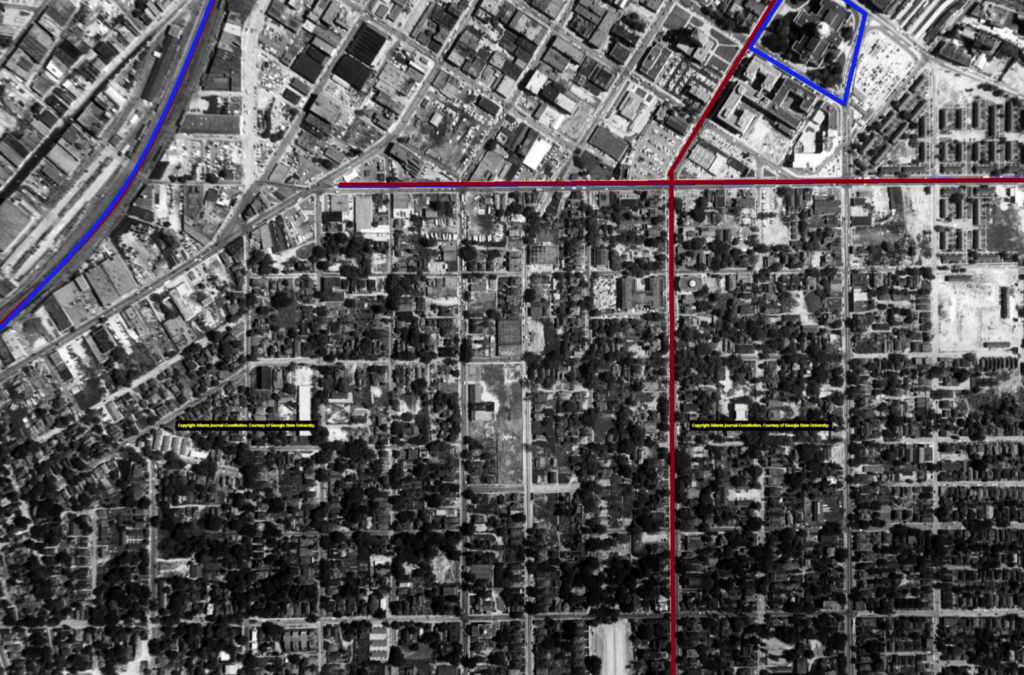
Atlanta, where I live, provides a notable example of a city that spent most of the last century conflating “car accessible” with “modern” in all its planning, projects, and priorities. National initiatives explicitly sought to embed interstate highways into the hearts of cities, cordoning off segments that would never be pedestrian-accessible again. The implicit belief that cities were unsuitable places to raise children put the planning impetus on making it easier for people to move in and out of cities daily in private automobiles.
A planning report for the interregional highway system, produced by the National Interregional Highway Committee in 1944, says so plainly:
The automobile has made partial escape from this undesirable state of affairs easy and pleasant for at least some of the population. Suburban home developments have been made attractive largely by the possibilities of quick and individual daily transportation thus afforded.
The concerns of those who might still want to live in close proximity to the city center, including what would become of the homes and businesses bulldozed for multi-lane monstrosities, were apparently beneath notice:
So long, however, as the central areas of the cities are poor places in which to live and rear children, people will continue to move to the outskirts. Undoubtedly a factor that has facilitated this movement has been the improvement of highways.
To keep traffic moving at pace, planners limited access to cities by minimizing the intersections between the highway and the city streets around it: “the ideal arterial street would have no intersections,” they wrote. The function of limited-access expressways was to fragment formerly continuous neighborhoods and deprioritize pedestrian mobility.
Cities destroyed walkable neighborhoods not simply because cars were popular, but because federal money empowered local planners to use roadworks as instruments of political will. Less-palatable political goals of slum clearance and racial redlining were obscured by promises of “congestion relief” and “plentiful parking.” (An impressive body of work details the near-surgical removal of African-American and immigrant neighborhoods, even thriving ones, for highway construction.)
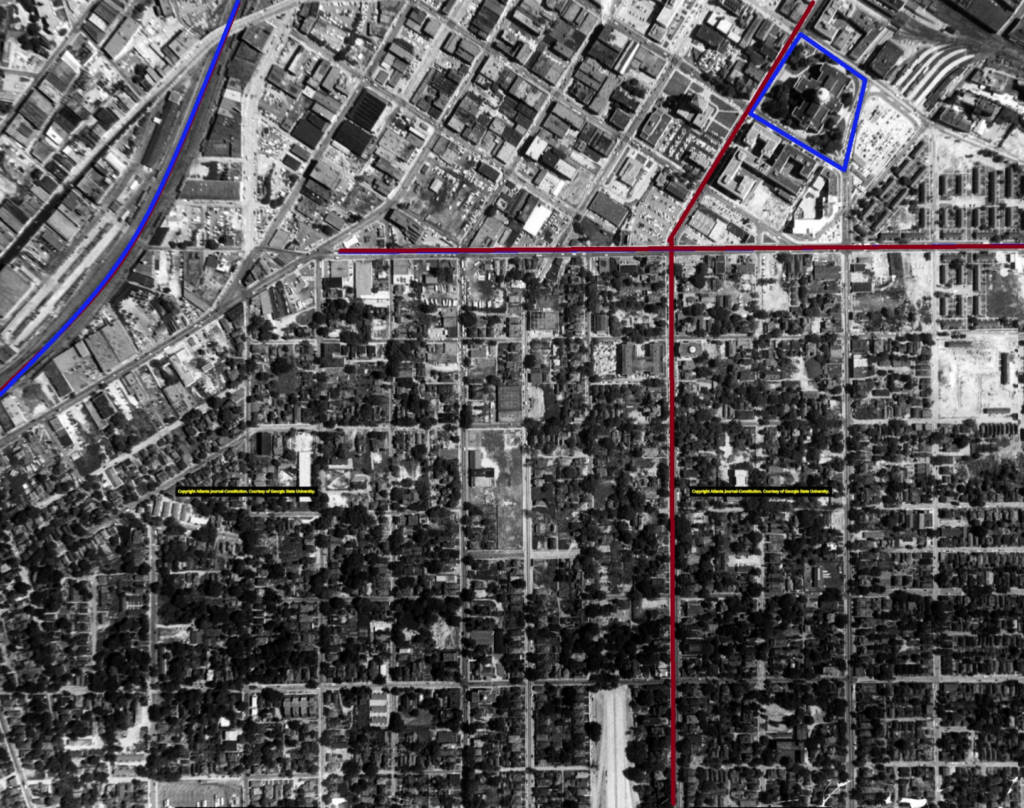
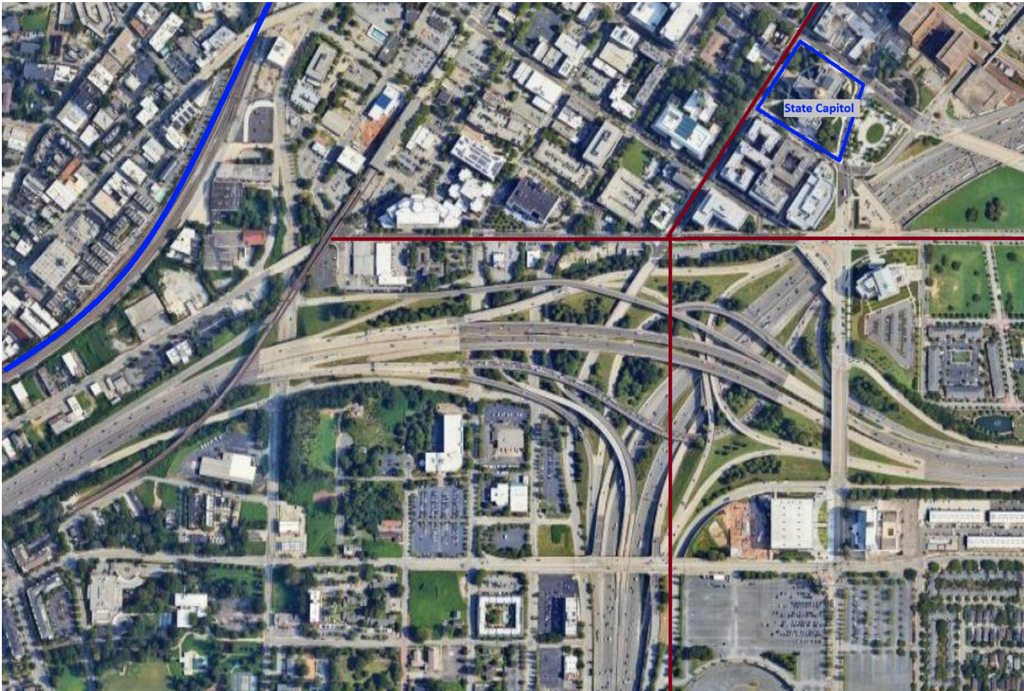
These past political sins are continuously reinforced by cities’ maintenance budgets and planning. Whatever the motivations, the car-centered city is a self-fulfilling prescription, and we’re all living in the wasteland planners designed for maximum vehicle speed and throughput.
Paradoxically, at the high end of the income scale, not owning a car is now marketed as a luxury. “Walk to everything” and “live, work, play” developments — some in the same square acres once bulldozed by highway construction and car-centered zoning rules — are now premium products. For everyone else, daily car use is almost unavoidable. It is the doorway to society, the literal vehicle of our participation. Access to a car is a class-definer partly because it allows us to reliably show up on time to jobs, and to access employment opportunities in a wider radius from where we lay our heads.
The vast majority of car buyers say the independence of movement is worth the sacrifices, but “worth it” is shaped by a society that assumes everyone drives. Concrete (so to speak) research shows that our built environment forces households to either spend heavily on cars every year or face functional exclusion from economic opportunity. Counterexamples also exist: in Manhattan, where the city was less comprehensively rebuilt around the automobile, carlessness is not predictive of poverty.
Walkability used to be ordinary. Public policy — empowered by the belief that being American meant owning an automobile — destroyed much of it. Now affluent people pay premiums to recover it. The market now treats walkability as a luxury amenity precisely because policy made it artificially scarce.
How Car Dependency Drains Household Wealth
Having a car is expensive. I say having, not owning, because almost half of Americans don’t own the vehicles they’re driving around. Ninety-two percent of US households have at least one car, but just 15 percent pay with cash. Fully 80 percent of car purchases are financed, and another significant chunk of vehicles on the road are leased.
Nearly one in five borrowers pays over $1,000 monthly — about the same number will have the vehicle repossessed. Loan terms now stretch beyond 80 months. These monthly car payments don’t factor in the other expenses associated with owning a vehicle. Car repair costs, according to the Bureau of Labor Statistics, are up 40 percent since 2019, as technically complex cars collide with tariffs. Not incidentally, car insurance has risen about the same amount, to a national average of $2,277 per year.
If the average American put the $12,000 average into mutual funds each year, instead of toward car ownership, they’d far exceed the federally recommended retirement savings at ages 30, 40, and 50. Currently, fewer than a quarter of Americans hit those savings targets, and Investopedia reports “many workers have more value in their driveways than their retirement accounts.”