

 By
By 
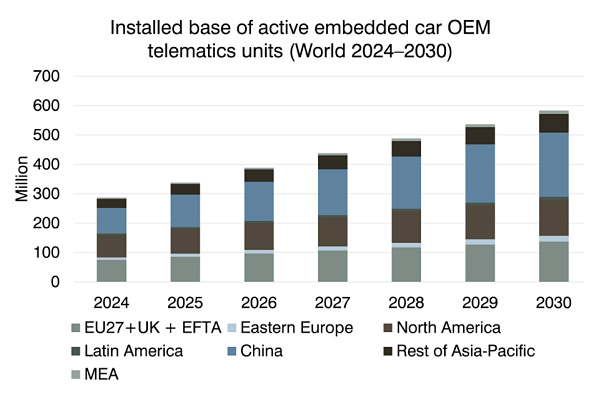
Berg Insight expects the number of connected cars equipped with embedded OEM telematics systems to reach 580 million by 2030, highlighting the growing weight of factory-installed vehicle connectivity in the automotive IoT market.
Connected car growth is often discussed through the lens of new services: remote diagnostics, software-enabled features, usage-based insurance, fleet data and vehicle apps. Yet the more strategic question for the IoT ecosystem is where the connectivity is built in, who controls it, and how long it remains operational once the vehicle is on the road.
That is why Berg Insight’s latest forecast is notable. The analyst firm expects the global number of connected cars with embedded OEM telematics systems to reach 580 million by 2030. The figure is not simply another connected vehicle headline; it points specifically to cars where the telematics capability is installed by the automaker, rather than added later through an aftermarket device or enabled only through a smartphone-based connection.
Why the embedded OEM distinction matters
The distinction is important for IoT professionals because embedded OEM telematics changes the operational model. When connectivity is designed into the vehicle at the factory, the communications stack becomes part of the product lifecycle of the car itself. That has implications for hardware sourcing, connectivity management, platform integration, cybersecurity processes and long-term service support.
This makes Berg Insight’s forecast different from broader connected car estimates that may group together multiple forms of connectivity. A vehicle with an embedded OEM telematics system represents a tighter integration between the automaker, the vehicle electronics architecture and the back-end systems that handle data exchange. For suppliers, this is a different market from selling plug-in fleet tracking units or consumer dongles. It is more closely tied to automotive design cycles, model platforms and OEM-controlled service environments.
The logical implication of a 580 million installed base is that connected vehicle operations will increasingly resemble a large-scale IoT lifecycle management challenge. These systems are not deployed for a short industrial project or a replaceable asset tracker. They are fitted to vehicles expected to remain in use for many years, often across changes in ownership, geography and service subscriptions. That longevity raises practical questions around network availability, data governance and support obligations, even when the forecast itself does not specify the technologies used.
Implications across the automotive IoT ecosystem
For automakers, the forecast underlines how embedded connectivity is becoming part of the baseline vehicle architecture rather than an isolated premium feature. The commercial value is not only in the initial installation, but in the ability to support vehicle services over time. That creates pressure to align telematics hardware decisions with software platforms, service operations and regional connectivity arrangements.
For connectivity providers, an installed base of this scale suggests a market where automotive accounts are less about simple SIM volume and more about reliability, roaming arrangements, operational continuity and the ability to support long device lifetimes. Connected cars also place different demands on mobile operators and IoT connectivity platforms than many lower-bandwidth IoT categories because the vehicle is mobile by definition and may remain active across national borders and network generations.
System integrators and platform providers face a more complex opportunity. Embedded OEM telematics data is not the same as data collected from a self-installed aftermarket unit. Integration work may need to fit within automaker-controlled interfaces and service models. For enterprises and fleet operators, the growing availability of factory-installed connectivity could reduce the need for some retrofit hardware, but it does not automatically solve access, normalization or workflow integration issues.
The broader relevance is that the connected car market is moving deeper into the mainstream IoT infrastructure conversation. A forecast of 580 million embedded OEM telematics-equipped cars by 2030 indicates that vehicle connectivity is becoming a large installed base to be managed, secured and monetized over time. For the IoT sector, the key point is not just that more cars will be connected. It is that more of that connectivity will be native to the vehicle, controlled through OEM architectures and embedded into long-term digital service strategies.
The post Berg Insight Forecast Puts Embedded OEM Telematics in 580 Million Cars by 2030 appeared first on IoT Business News.