
 By
By 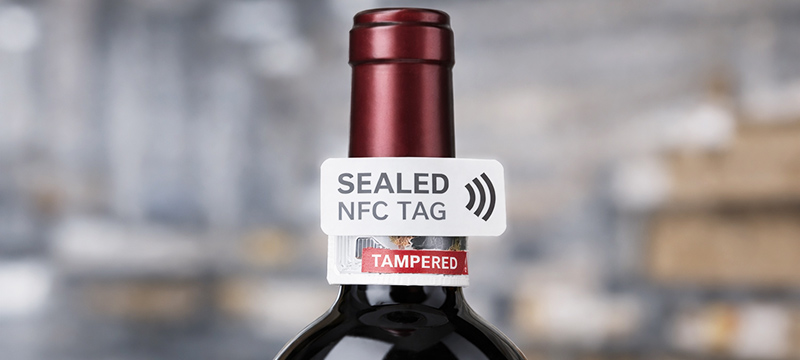
Identiv has expanded its ID-Safe range of HF/NFC tags, adding more tamper-evident and tamper-proof configurations aimed at product authentication, interference detection, and lifecycle traceability using standard NFC readers and smartphones.
In connected packaging, the hard part is rarely getting a tag to scan. The real challenge is establishing trust at the moment of interaction: can the brand, the distributor, or the end user determine whether an item is genuine, whether the pack has been opened, and whether the identifier itself has been copied or moved to another product?
Identiv is leaning into that problem with an expansion of its ID-Safe product family, a portfolio of advanced HF and NFC tags designed to support product authentication, tamper detection, and secure traceability. The company positions the expanded range for applications spanning pharmaceuticals, healthcare, retail, food and beverage, electronics, and smart packaging.
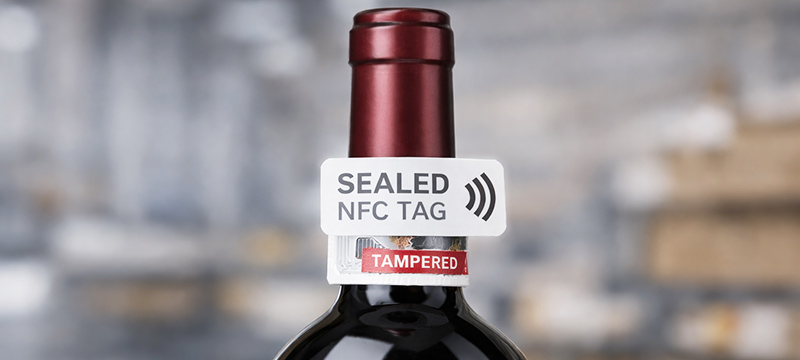
The portfolio now covers both tamper-evident NFC labels—intended to detect and record package-opening events—and tamper-proof tags built with destructible antennas to prevent removal, reuse, or product refilling. Identiv also says select configurations support encrypted authentication using high-security NFC chips, targeting cloning and more sophisticated counterfeiting techniques.
What’s distinct here: “tamper” is engineered into the tag, not bolted onto the workflow
Plenty of vendors talk about digital product passports and item-level identity, but Identiv’s emphasis is on coupling NFC identity with physical state change at the label itself. In practical terms, ID-Safe is meant to make packaging integrity machine-readable: once a package is opened or tampered with, the tag registers an irreversible state change—such as a broken antenna or altered electrical signal—signaling the product has been compromised.
That approach matters because it reduces reliance on external controls that are easy to bypass (for example, visual seals) or hard to enforce consistently across global logistics. With the tamper mechanism embedded in the NFC label/tag design, the “proof” travels with the item and can be checked wherever the supply chain has NFC read capability.
Digital identity, cloud linkage, and the operational trade-offs
Identiv says each ID-Safe tag is encoded with a unique identity and can be linked to cloud-based systems, creating a digital twin of the product. Stakeholders can scan the tag through manufacturing, logistics, and distribution to confirm authenticity and verify the product remains unopened.
One implication for IoT solution architects is that NFC-based verification shifts the trust boundary toward the endpoint. Because ID-Safe is designed to work with standard NFC-enabled smartphones or readers, authenticity and tamper checks can be distributed to more actors—warehouse staff, field technicians, retail associates, and even consumers—without deploying specialized scanning hardware. The flip side is that the backend must be designed for high-frequency, event-driven lookups and clear exception handling when a tag reports a compromised state, especially in returns and warranty workflows where disputes are common.
Where Identiv is aiming: fraud patterns beyond simple counterfeits
Identiv frames ID-Safe as a response to counterfeiting, diversion, and product fraud. The company explicitly calls out gray market diversion, warranty and returns abuse, and refilling and resale fraud—use cases where a basic unique ID is often insufficient because a genuine identifier can be harvested and replayed if the label is removable or reusable.
By pairing encrypted authentication (in select configurations) with tamper-proof, destructible antenna designs, the product line is designed to raise the cost of attack in two ways: it aims to make cloning harder at the chip level and reuse harder at the physical level. That combination is a more concrete security posture than “serialization alone,” which typically only proves that an ID exists—not that it still belongs to the original item and pack.
Evidence of market fit: luxury wine smart packaging
Identiv says the products are already deployed in an NFC-based anti-counterfeiting smart packaging solution for luxury wine producers and collectors, developed with ZATAP and Genuine-Analytics. While the announcement doesn’t provide deployment volumes or performance metrics, it does signal that ID-Safe is being applied to categories where provenance and unopened condition are central to value—and where authentication is often performed at multiple points in the lifecycle, including after sale.
What OEMs, integrators, and brands should take from this
For packaging converters and OEMs, the expanded set of configurations—with options across chip types, memory capacities, and form factors—suggests Identiv is trying to meet application constraints rather than forcing a one-label-fits-all SKU. System integrators, meanwhile, will focus on how “irreversible state change” is represented in software: mapping that state to quarantine actions, returns eligibility, or recall processes is where most deployments succeed or stall.
For brands and enterprises, the practical value is in tightening the feedback loop between the physical pack and the digital record. If implemented well, NFC-based tamper and authenticity checks can turn sporadic spot inspections into routine, distributed verification—without changing how people work too much—because the reader is often already in a pocket.
Andreas Walsner, Global Vice President Sales, Identiv, said:
“Trust in physical products can’t be assumed anymore – it has to be verified. ID-Safe brings together secure NFC-based identity, tamper detection, and tamper-proof design to enable companies to confirm authenticity and product integrity at any point in the lifecycle, anywhere those interactions occur.”
The post Identiv broadens ID-Safe NFC tags with tamper evidence and encrypted authentication for connected packaging appeared first on IoT Business News.