
 By
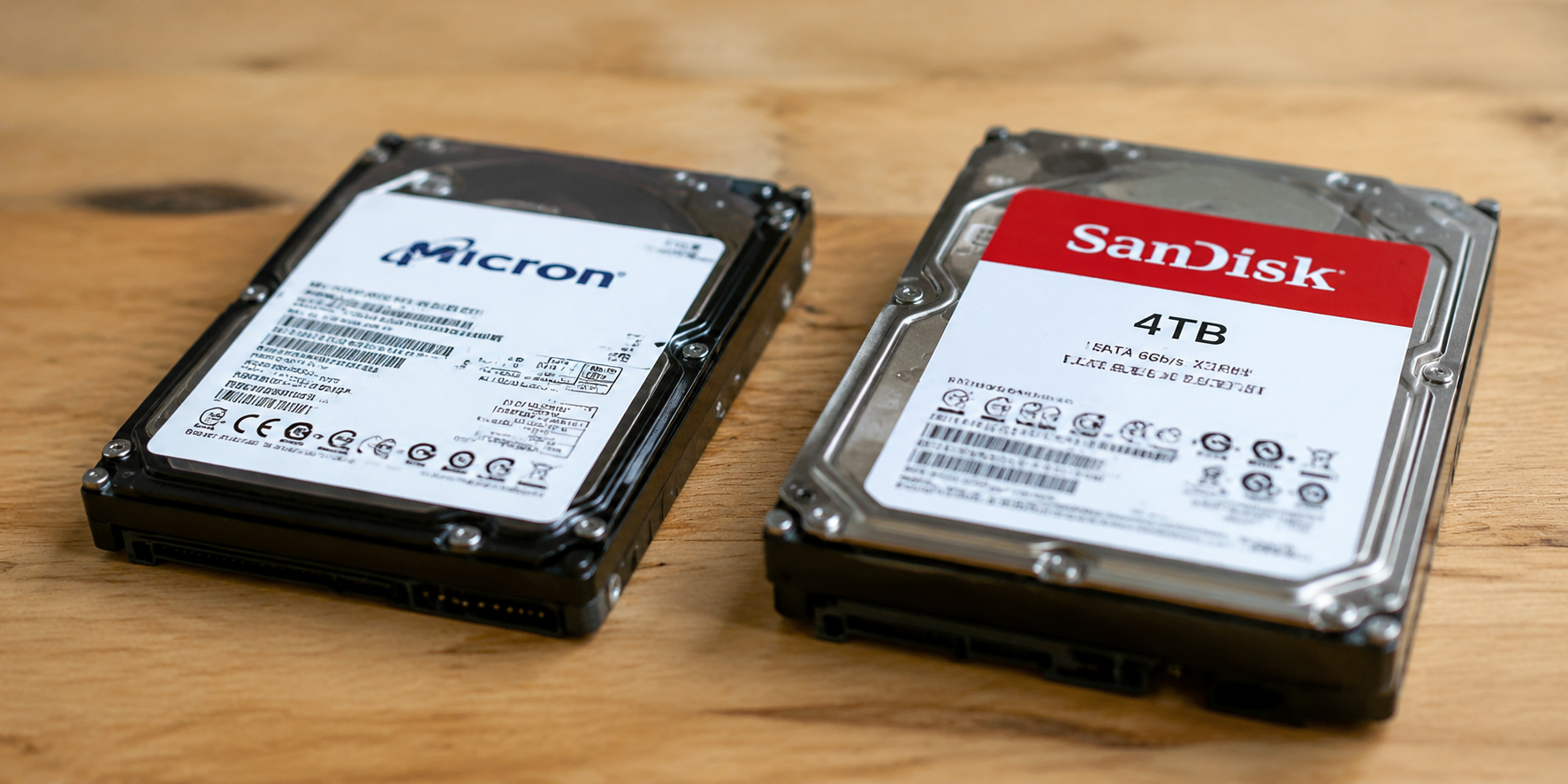
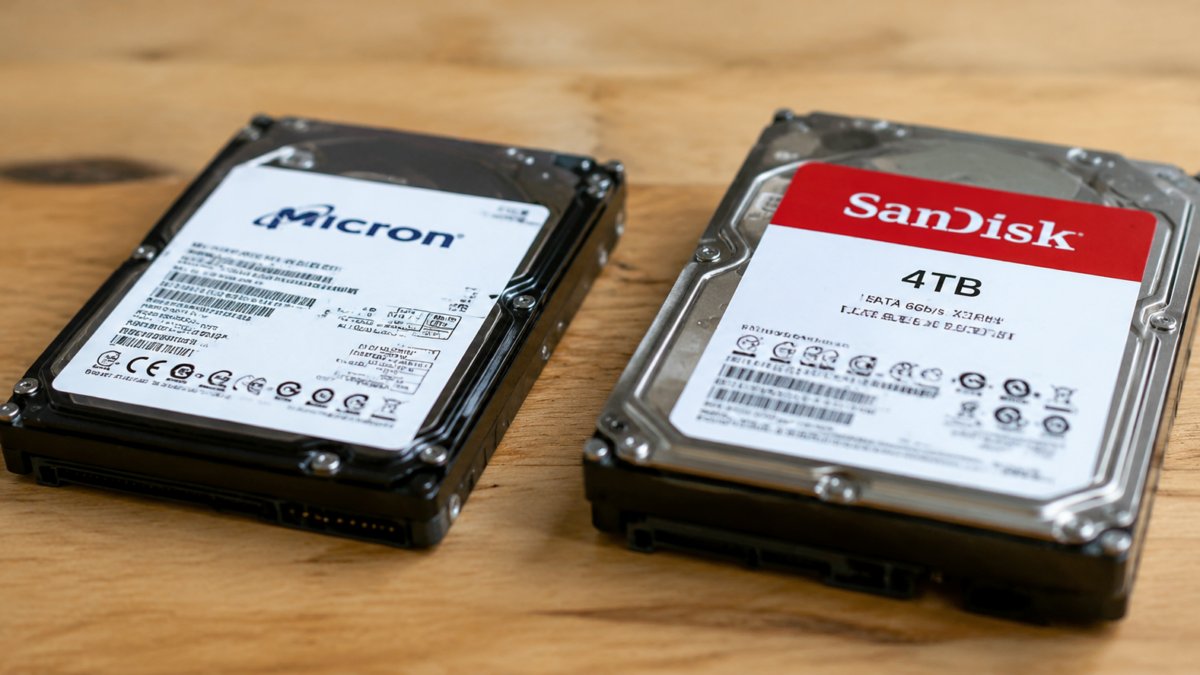
Micron and SanDisk shares rose in US pre-market trading on Monday, recovering part of last week’s heavy losses as investors returned to technology stocks following a bruising sell-off.
Micron gained 2.6% to $901.76, while SanDisk advanced roughly 4% towards $1,350.
The moves followed weekly falls of 14.6% and 17.9%, driven by concerns over Chinese competition and the cost of financing artificial intelligence infrastructure.
Easing oil prices and calmer bond markets helped revive risk appetite.
But the deeper question is whether investors punished both memory businesses too harshly when their exposure to China’s latest breakthrough is markedly different.
Why are buyers returning after the rout?
Monday’s gains reflected a broader recovery in technology stocks rather than a new announcement from either company.
Nasdaq 100 futures climbed around 1%, while Brent crude dropped roughly 1.8% towards $107 a barrel after President Donald Trump relaxed some sanctions on Russia.
The US 10-year Treasury yield also eased towards 5.085%, offering relief after borrowing costs unsettled AI-related shares.
Prashant Bhayani, Asia chief investment officer at BNP Paribas, told the Financial Times that the absence of further escalation in the Iran conflict over the weekend had helped steady market sentiment.
Those developments made last week’s steep declines look more tempting to investors willing to bet that selling had gone too far.
Still, cheaper oil and slightly lower yields do not directly improve Micron’s or SanDisk’s orders. The rebound primarily reflects a change in investors’ willingness to take risk.
Did China’s breakthrough justify the sell-off?
Chinese chipmaker ChangXin Memory Technologies, or CXMT, unsettled the sector after announcing progress on a denser, more efficient DRAM design.
The announcement raised fears that China could add capacity just as producers in the US and South Korea enjoy exceptional pricing power and profit margins.
That creates a potential competitive challenge for Micron, which sells DRAM and high-bandwidth memory used in AI systems. However, commercial production at scale remains unproven, particularly in advanced HBM.
For SanDisk, the link is weaker. Its core products use NAND flash, the storage technology found in solid-state drives, rather than the DRAM architecture highlighted by CXMT.
Technology writer Harsh Chauhan argued in The Motley Fool on Sunday that “the sell-off in SanDisk seems overdone.”
He pointed to robust demand for enterprise solid-state drives and tight NAND supply as reasons the company’s underlying outlook remains healthy.
CXMT shares themselves fell around 8% in Shanghai on Monday despite reporting strong revenue expectations.
China’s technological progress remains a long-term concern, but the market’s broad-brush reaction obscured important differences between the two US companies.
Can memory demand sustain the recovery?
Both stocks still depend on an unusually strong memory market.
Micron benefits from demand for advanced DRAM and HBM alongside AI processors. SanDisk gains from cloud operators buying enterprise solid-state drives, with supply shortages supporting NAND prices.
The danger is that today’s scarcity eventually encourages manufacturers to expand production. Memory prices have historically reversed sharply once new capacity catches up with demand.
The post Micron, SanDisk stocks jump after 15% and 18% crashes: what sparked the comeback? appeared first on Invezz