
 By
By Fluctuations in food prices are so commonplace that the entire category is excluded from the Federal Reserve’s preferred measure of inflation. From war and weather to fertilizer and labor, hundreds of unseen influences shape the prices of goods long before they reach grocery shelves. But a sustained surge in one American staple has everybody buzzing.
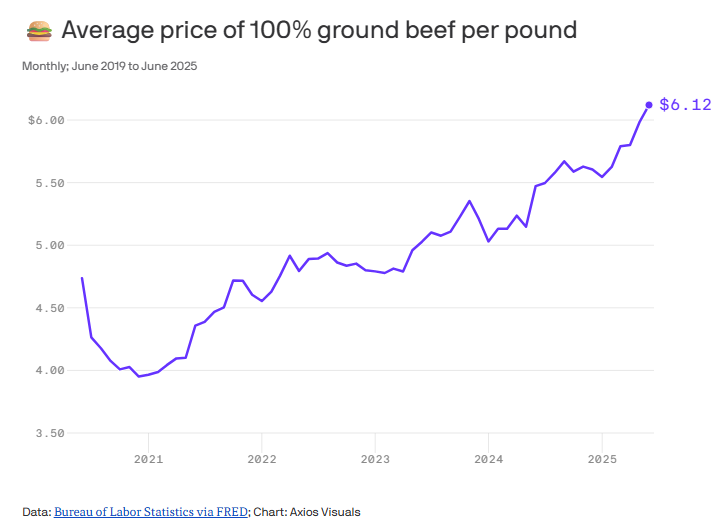
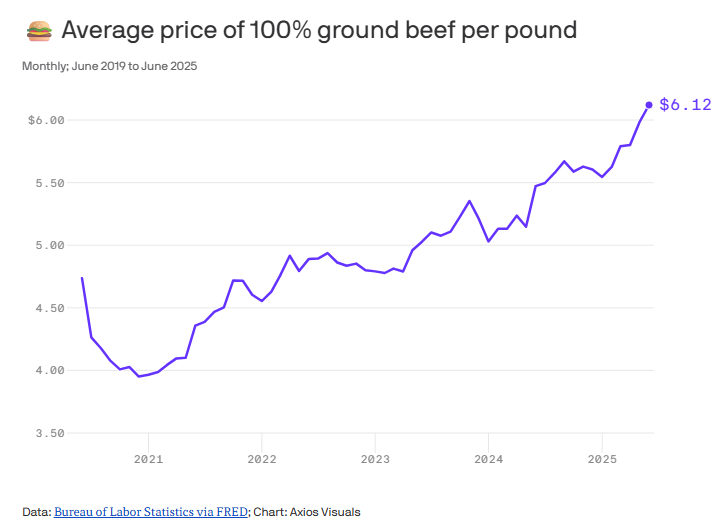
Beef prices are up 65 percent since April 2020. Ground beef has surged to $6.70 per pound as a prolonged supply shock has failed to keep up with consistent demand. Relief will not come soon. Industry experts say we are only partway through an unprecedented price increase that began in 2019, and if demand stays constant, could top $10 per pound by fall. Drought in grazing lands and cyclical shrinking of national cattle herds have flattened supply to 75-year lows. While individual beef cattle are getting heavier and meatier with grain-feeding, the actual number of animals hasn’t grown at the same clip as Americans’ dietary demand.
Timing the conception of calves for two-year growth cycles requires farmers to anticipate when feed and forage will be affordable, in hopes that the price for finished beef will cover costs. And anyone looking to expand their breeding herd is paying the same sky-high price as beef buyers. If prices drop even a little, the profitability margin disappears.
“Instead of spurring ranchers to breed heifers, high prices are incentivizing producers to sell them to pay debts,” Narciso Perez, a cattle broker in Albuquerque, New Mexico, told The Guardian newspaper. Some tariff rollbacks and carveouts have allowed more beef into the US, but ranchers aren’t happy about the increased competition.
High prices aren’t a problem, necessarily. They signal consumers to conserve and producers to expand output. Recent pushes encouraging people to eat more protein, combined with the continued buying power of the meat-eating middle class, keep demand high even as prices climb. The American Farm Bureau Federation says shortages will take years to resolve.
Are Burgers Destined to Become a Luxury Item?
High beef prices don’t just crowd out burgers at your summer cookout. The signals of upstream scarcity are fundamentally changing the margins everywhere from fast food to fine dining.
Soaring prices forced high-end steakhouses to adjust menu pricing, with many premium cuts surpassing $100 even as margins drop. More moderate steak spots, though, like Longhorn Steakhouse, have reported increased demand as the difference between steaks cooked at home and steaks at low-margin mid-tier dining establishments has all but disappeared. The average price for uncooked beef steaks in the grocery store is now about $12.74 per pound — a record high, federal data show.
Hamburger Helper dinner mixes, long a staple for strapped families, now prominently suggest on the packaging: “Try with hot dogs instead of ground beef.”
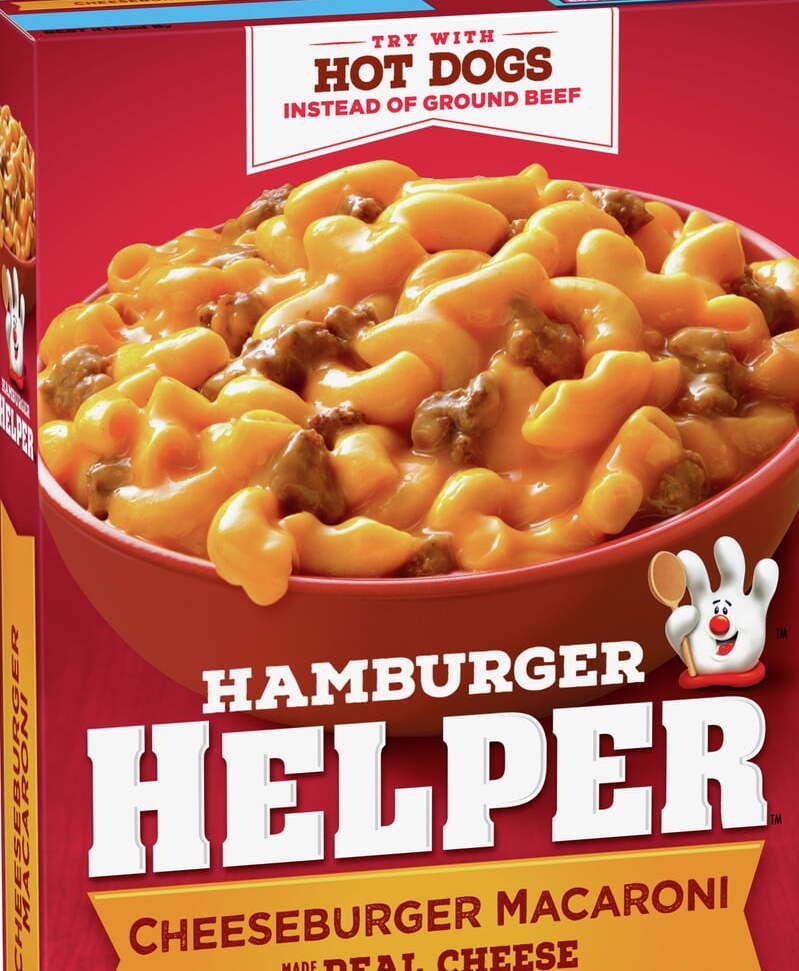
The pasta-and-cheese-sauce mixture soared in popularity in the 1970s, when inflation and beef prices last took their toll on Americans’ weeknight dinner options. The New York Times reported a 15-percent surge in sales of Hamburger Helper in late 2025, suggesting cost-conscious substitution of inferior goods is once again in vogue. The cost of making the meal with a pound of hamburger now easily exceeds $10, above the USDA estimates for a basic family meal . Even families buying in bulk and cooking at home have seen grocery costs take a larger share of take-home pay. The box price of Hamburger Helper has risen since 2020, but the pricy part of the meal is protein: swapping ground beef for a pound of Oscar Mayer beef franks lowers the total only to $8.50, while introducing more sugar, salt, and preservatives.
Even with these drawbacks, people are clearly willing to make the switch from higher-quality cuts of beef to lower-quality, and also from beef to less-expensive proteins. Sam Kelbanov writes for Morning Brew, in an article titled “Beef Is Getting Bougie”:
The likes of Raising Cane’s and Dave’s Hot Chicken have had an expansion bonanza in recent years, while burger-centric value chains like Burger King are struggling with declining margins. Meanwhile, McDonald’s recently beefed up its chicken offerings by adding sauce-lathered and seasoned McCrispy Strips to its menu.
That’s textbook substitution effect, and it isn’t just for burgers. Sales of flank steak and skirt steak are rising as buyers opt for less-expensive, tougher cuts than the traditional tenderloin or ribeye. Substitution of inferior goods is a common adaptation for families under price strain, and shifting the ingredients of your burrito or chili serves the same goal as replacing ground beef with hot dogs in Hamburger Helper.
Between Barn and Bun
While the cost of cattle is the largest determinant of beef’s soaring price at the grocery store, dozens of other inputs play supporting roles.
Transportation costs are significant. Like other groceries, beef is moved around the country overwhelmingly by trucks. Energy shocks related to the conflict in the Middle East exacerbate the expense of moving high-spoilage foods.
Fertilizer is also shipped through the Strait of Hormuz, and without affordable soil augmentation, growing the volume of grain required to sustain cattle herds becomes more costly.
Capital equipment required to keep cattle ranches running is increasingly expensive, partly due to the high cost of importing steel and other metals. Tariffs of 50 percent apply to materials coming in from China and Canada, some of our most prolific trading partners.
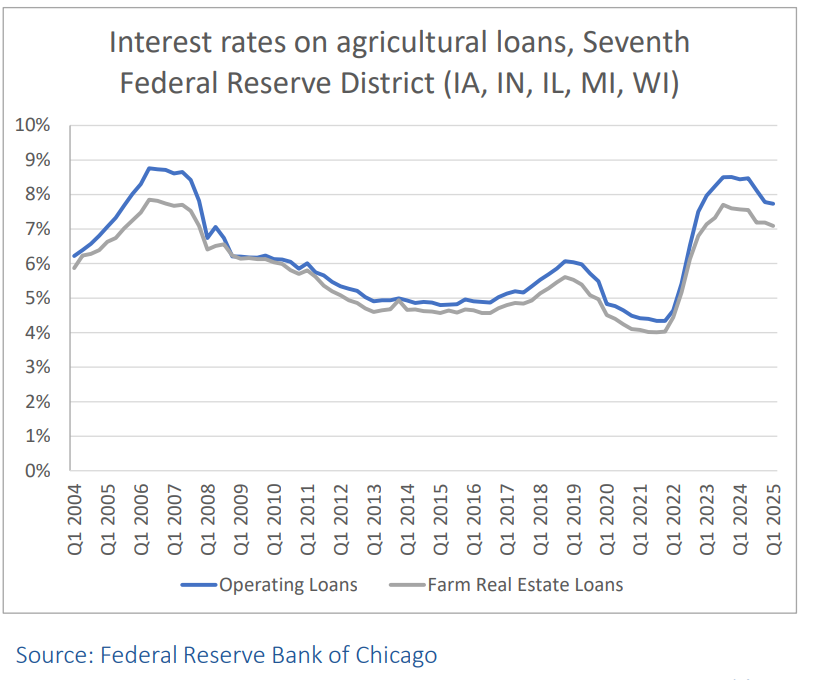
Interest on agricultural and operating loans, which many farmers and ranchers use to sustain their overhead or update equipment, has increased along with other rates in the post-pandemic correction.
Regulatory Uncertainty
In case that weren’t enough individual factors to keep track of (not to mention, say, the costs of veterinary care or grazing rights), ranchers face the threat of shifting political priorities and constant compliance headaches. Beef production intersects with many societal priorities — environmental protection, animal welfare, labor rights, food safety — that require oversight. But that puts the industry permanently in the crosshairs of unelected administrative agencies like EPA, USDA, FDA, and their various iterations of “supplemental guidance.”
Agriculture Secretary Brooke Rollins told a Fox Business reporter that the Biden Administration’s climate-protection policies constituted a “war on cattle,” and supply would take years to replenish. Unfortunately, a change of leadership hasn’t entirely lessened Washington’s interventionist appetites.
Just days ago, the Justice Department announced it would investigate alleged antitrust violations by large meatpacking companies. President Trump, continuing his habit of conducting official business on Truth Social, called for an inquiry into possible collusion, specifying “Majority Foreign Owned Meat Packers, who artificially inflate prices, and jeopardize the security of our Nation’s food supply” (sic). Similar civil and criminal probes have recently targeted poultry farmers, egg producers, and fertilizer companies. While uncovering truly anticompetitive practices is important, given the tremendous difficulty of accurately predicting and pricing these biological products in volatile markets, investigators are likely to generate as many pain points as they can resolve.
Regulatory uncertainty discourages herd expansion by making investment and innovation riskier. Multi-agency regulatory infrastructure drags down production, generating compliance costs, malinvestment, and deadweight losses.
Burger Boom and Bust
Economy-wide, though, demand for beef continues to climb, even as one in four adults have cut back on meat for ethical, health, or financial reasons. Substitution is happening at the margins, but not enough to offset total demand. Beef processing remains at around half of its full capacity.
Prices are doing their job: signaling scarcity and forcing substitution. But when supply takes years to respond and return on investment is uncertain, those signals translate into prolonged tradeoffs rather than rapid price relief. The market will adjust — but not before your summer burger budget does.