

 By
By 
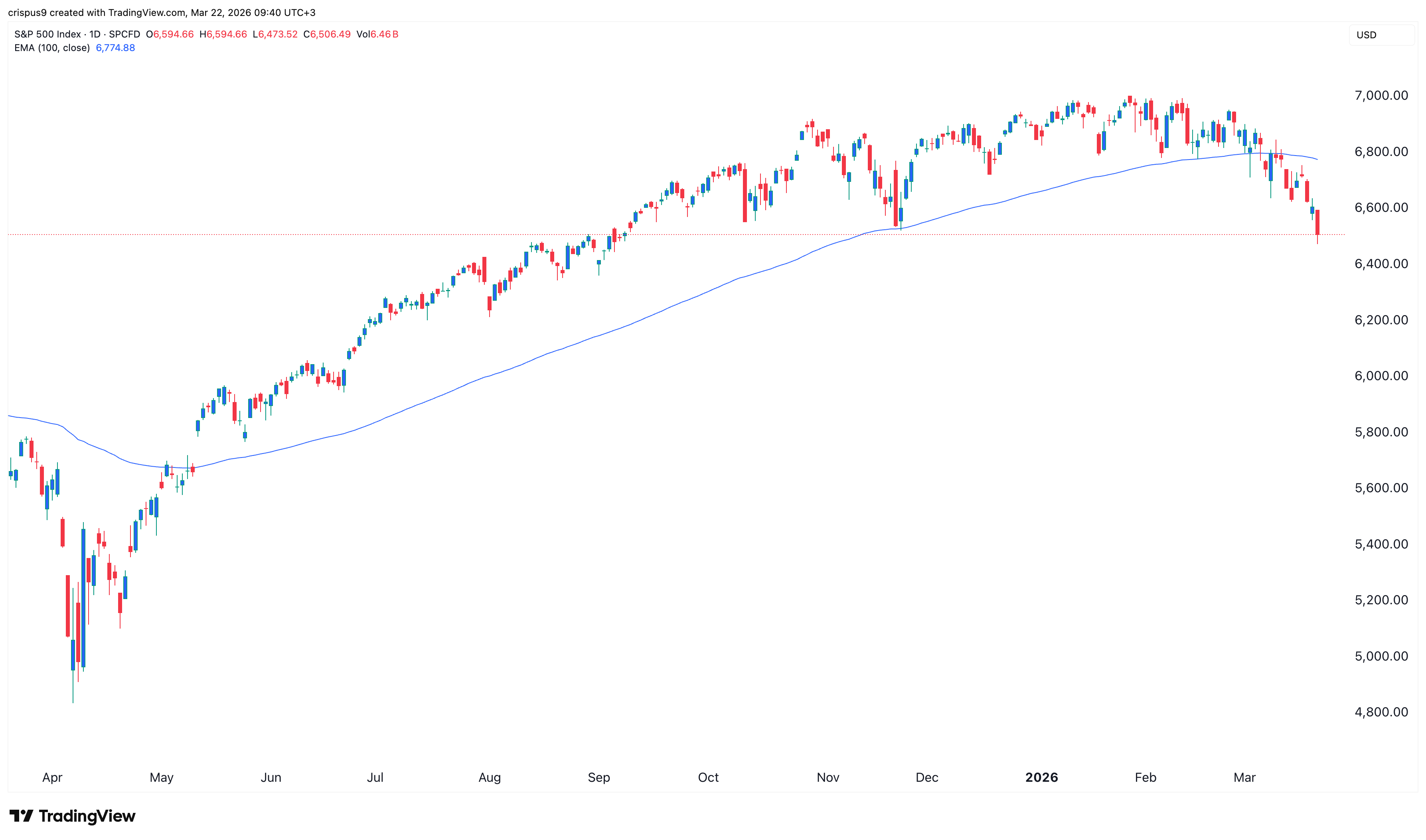
The S&P 500 Index and the VOO ETF have slumped this month as the war in Iran has gained momentum.
It dropped to $6,500 on Friday, its lowest level since September 10 last year. It has slumped by ~7% from the year-to-date high.
JPMorgan warns on the S&P 500 Index
As the S&P 500 Index has slumped, analysts at JPMorgan are cautioning that it may continue falling in the foreseeable future.
In a note on Friday, the bank’s strategists lowered their target from $7,500 to $7,200, warning that the ongoing Iran war will have an impact on American equities. The analysts noted that:
“Geopolitical concerns and higher energy prices for longer will drag global growth lower and inflation higher. We recommend investors to stay invested with downside hedges in equities, and we hold to these hedges given the modest correction year-to-date.”
The main concern is that the war has led to major disruptions that have pushed energy prices much higher.
Brent, which was trading at $55 earlier this year, has jumped to over $108, while the West Texas Intermediate (WTI) has moved to $97.
Soaring energy prices are hurting several major companies, especially those in the airline industry.
In a statement on Friday, United Airlines warned that it would slash 5% of its schedule as jet fuel prices continued soaring.
The rising energy prices have continued rising in the past few weeks, leading to higher inflation in the country.
As a result, the Federal Reserve will likely hold interest rates steady between 3.50% and 3.75%.
It may also hike interest rates this year, which explains why US bond yields have risen.
At the same, there are concerns about the rising US public debt, which jumped to a record high of $39 trillion.
Worse, the Pentagon has asked for $200 billion to fund its Iranian war efforts, further straining the economy.
The S&P 500 Index has also slumped because of the ongoing concerns about the private credit industry. Indeed, some of the biggest alternative assets stocks have continued falling.
For example, Blue Owl Capital stock has dropped to $9 from the all-time high of $25. Other companies like Ares and Blackstone have continued falling.
All these factors have led to substantial fear in the stock market. The Fear and Greed Index has dropped to the extreme fear zone of 14, the lowest level in months.
Will US stocks rebound this year?
Therefore, the question is whether the S&P 500 Index and key ETFs like SPY and VOO will rebound in the coming months.
Historically, these plunges are usually the best opportunities to buy the dip or dollar cost average (DCA).
In most cases, the stock market often rebounds whenever the Fear and Greed Index tumbles to the fear zone.
A good example of this is what happened last year when Donald Trump announced his reciprocal tariffs against other countries.
The index tumbled and then rebounded after he announced negotiations.
One potential catalyst that will supercharge the stock market will be talks of ending the war.
Trump has hinted that he was about to end the war, which he claims is way ahead of schedule.
Signs that the war is about to end will be bullish for the stock market as it will lead to lower crude oil and natural gas prices.
Another bullish catalyst for the stock market will be corporate earnings.
Data compiled by FactSet shows that analysts expect the first quarter earnings growth wtoill be 12.5%, marking the sixth consecutive quarter of earnings growth.
Therefore, the most likely scenario is where the S&P 500 Index and top ETFs like SPY and VOO remain under pressure in the near term and then rebound this year.
The post Will the S&P 500 Index and VOO stock rebound or crash further? appeared first on Invezz